
Reviewed · TOURS
NAI NAMI: Nairobi Storytelling Tour with Street Children
Nai Nami is interesting because it turns a simple city walk into real, personal street-level storytelling. The guides are former street children, and the tour is built around how they survived, then how the Nai Nami project helped them find work, income, and a different path.
I love the small-group feel (max 8), because it makes it easier to ask questions and actually connect. I also love the food payoff, a local lunch plus soft drinks that lands right after the heavier parts of the walk. One thing to consider is that the stories are honest and can be emotionally intense, so this is not a light, casual stroll.
Key highlights to look for

- Former street children as guides: the tour centers on their lived experiences, not generic facts.
- Small group, max 8: you get calmer pace and more time for questions.
- Downtown Nairobi route with story-linked stops: National Archives to Karikor, plus Memorial Park and the railway area.
- Safety focused, multiple guides: many guides move as a team to keep you watched while you walk in busy areas.
- Local lunch and soft drinks included: you eat Kenyan food at the end, so you are not searching for a meal.
- Phone-friendly, camera-restricted: you can use your phone, but picture rules apply in town.
What Nai Nami Means, and why the guides shape everything

Nai Nami literally means Nairobi with me. That name is not marketing fluff. It is the point of the whole experience: you are not just looking at Nairobi, you are seeing it through the eyes of people who grew up without the safety net most of us assume exists.
The concept is simple and powerful. The tour aims to give disadvantaged youths from slums a job, income, and future. That matters for you as a visitor because it changes the vibe. You are not paying to watch a performance. You are paying for access to real lives, plus a chance to support work that keeps coming.
What makes this special, according to the consistent praise, is the guiding team. You may meet leaders such as Typhoon, Priest, or Moses, and other guides like Tsunami, Quick, King, Daniel, and Quick show up in the tour mix. The names change, but the role stays the same: former street kids guiding you through streets they know by heart, with a mix of humor, memory, and careful attention to your comfort.
More days out of Nairobi:
- Nairobi National Park Half-Day Tour; Free Wi-Fi connection
★ 5.0 · 878 reviews - Nairobi: National Park & Optional Elephants & Giraffe Center
★ 4.8 · 874 reviews - Nairobi National Park Half-Day Game Drive
★ 4.5 · 738 reviews
Price and logistics that make the tour feel “worth it”
The price is $45 per person for about 2 hours 30 minutes. For Nairobi, that is not bargain-basement cheap, but it is also not a big jump for a guided, small-group walk that includes a meal. Where the value comes from is threefold:
- You get a guide with direct access to parts of town most visitors would not feel comfortable exploring alone.
- You get included lunch and soft drinks, so the tour cost covers more than just walking and talking.
- You get a low ceiling on group size (max 8), which keeps the experience personal rather than rushed.
You’ll also get a mobile ticket, and confirmation is sent at booking time. If you like to plan ahead, note that this experience is commonly booked about 28 days in advance, so it is smart to lock it in once your Nairobi dates are firm.
Where you start: Hilton Hotel, KICC area, and the exact meeting point
The tour starts right in the Nairobi CBD, meeting in front of the Bata Shop at Hilton Hotel. It is near the KICC tower, so it is easy to orient yourself.
This meeting point is practical for two reasons. First, it reduces first-day confusion in a city center full of roads and shortcuts. Second, it puts you close to major landmarks mentioned during the walk, like the National Archives area.
The tour ends back at the same meeting point, so you do not get stuck figuring out how to return when your legs are tired. You’ll still want to plan for a normal downtown walking pace, because this is a walking tour through crowded streets.
Stop by stop: what each location adds to the story

A different day out of Nairobi:
- Nairobi: Historic and Modern Highlights Walking Tour
★ 4.8 · 703 reviews - Safari Tour; Nairobi National Park
★ 4.5 · 594 reviews - 3 Days Masai Mara Group Joining
★ 5.0 · 486 reviews - Elephant Orphanage and Giraffe Center Tour with Options
★ 4.5 · 457 reviews
National Archives area, where their story begins
Once you start, your route passes the National Archives. This stop is where the guides connect the dots between Nairobi you see on postcards and Nairobi they lived inside. For them, this area ties into their earliest street memories, which is why the tour starts this way. It is not random geography. It is the moment they frame the origin of their street life.
The key takeaway for you is mindset. You are learning how they experienced the city, not just what happened to them. The goal is understanding how survival works in small choices: where to sleep, where to move, how to stay unseen, and how to stay safe.
Memorial Park and a sad landmark you cannot ignore
Next is Memorial Park, known for a sad event. This part of the walk reminds you Nairobi is layered. It is not only everyday hustle, it also holds national memory and tragedy in public space.
The drawback here is timing and tone. This is not the place to expect light conversation. If you tend to get uncomfortable with serious topics, give yourself emotional space and pace your questions.
Also, even if you do not know the full background of the park at first, the guide will help you connect the meaning to the rest of their story.
A big statue photo moment, with phone rules in mind
You’ll have a chance to take a picture of a big statue. The tour rules also say cameras are not allowed for taking photos in town, but your phone is fine. So treat the statue moment as a phone photo stop, not a full camera session.
Practical tip: charge your phone before you head out. And keep it accessible, but not in a way that invites you to stop for long.
Crossing the railway station area, cold nights and survival tactics
Then you cross the railway station area. Here, the guides share what it was like to survive cold nights on the streets. This stop hits hard because it is specific. Instead of broad statements, you hear the small, real details that make street life terrifying: the cold, the exposure, the uncertainty, and the daily problem-solving.
This is also where the tour’s “small-group safety” comes into focus. The guides are not only telling stories, they are moving with purpose. That matters when you are walking through busy parts of a major city.
Karikor area and its big market, their homebase
You pass through the Karikor area, including its big market. This was described as a homebase when the guides lived on the streets. For you, that means you are seeing a place that is both everyday commerce and personal history.
Karikor is also a useful reality check for how Nairobi functions at street level. Markets are not just tourist texture. They are how people find food, jobs, information, and community. Your guide helps you see the market as infrastructure, not scenery.
If you dislike crowded market environments, go slowly and follow the guide’s pace. Do not drift ahead to take in everything at once.
Jeevanjee Gardens, the return walk and the aftertaste
On the way back, the route passes Jeevanjee Gardens. This is a calmer closer to the center of the city, and it helps you transition from heavy stories into the final part of the tour: the meal.
It also gives you a “full-circle” feeling. You started near the archives with beginnings, moved through street survival and homebase territory, and ended with a space that feels more like a pause than a pressure point.
Lunch and soft drinks: eating Kenyan food after the tough talk

The tour includes a local lunch and soft drinks. This is not an add-on for convenience. It is part of the pacing. After hearing stories about survival, you want a real meal to reset your body and your attention.
Reviews consistently point to the lunch being delicious and a good chance to eat authentic Kenyan food. Even if you think you already ate well in Nairobi, this lunch still helps you experience the city in a different way, through what the guides and local community treat as normal.
Practical note: with a 2 hours 30 minutes timeline, the group pace is steady. So eat well, but do not over-order if you get the chance to choose options during lunch.
How safe and supported you should expect to feel

I’m glad the tour is designed with safety in mind, and the reviews back that up. People highlight feeling safe and well looked after at all times, and they describe the guides acting as a team while walking through busy downtown areas.
One reviewer specifically described Tsunami as a traffic cop, the person who keeps things moving with a plan. That style shows up in many of the guide descriptions: humor, order, and attentiveness to where you are standing, not just where you are walking.
Still, be smart. This is downtown Nairobi, and it can be crowded. Treat it like any big-city street walk:
- keep your phone secure
- avoid flashing jewelry
- keep your valuables minimal
The tour’s own guidance also says do not carry flashy jewellery, and it strongly suggests you keep belongings in check.
Tips that will help you enjoy the walk more

Nai Nami has a clear set of expectations. If you follow them, the experience will feel smoother.
Wear good shoes. No sandals and no high heels. The route includes street crossing and market-adjacent paths, and comfort matters more than style.
Bring the right document. You are asked to carry a copy of your passport (main page plus the visa stamp page) or the original passport. This is one of those details that can save you a headache on the day.
Skip the camera. Taking photos in town is not allowed, but your phone is fine. Bring a charged phone, and be ready for the guides to tell you when photo moments are possible.
Leave valuables at home. The tour advises against flashy jewellery. That also helps you blend in and focus on the conversation.
Be ready for a serious, real conversation. This tour is built on street life stories and personal transformation. You might find parts heavy, and that is normal.
Who should book Nai Nami, and who should skip it

This is a strong fit if you want Nairobi beyond the usual sights. You will enjoy it if you like human stories, asking questions, and learning how people survive and rebuild.
It is also a good match if you care about ethical tourism in a practical way. Your money supports job and income opportunities for the guides through the Nai Nami project.
Consider skipping if you want a carefree, history-only walkthrough with no emotional weight. This is honest storytelling. It will likely affect you, in a good way, but it is not designed to feel light.
Minimum age is 14, so it is not a fit for younger kids.
Should you book Nai Nami? My take
If you want one Nairobi experience that feels personal, real, and worth your time, I’d say book Nai Nami. The combination of small group size, former street children leading you, and an included local lunch makes it a strong value package.
Do it when you have the energy to listen. Wear comfortable shoes. Keep your phone ready but follow the photo rules. Then show up curious, not just sightseeing. You’ll leave with a different understanding of Nairobi than the one you started with.
FAQ
Where do I meet for the tour?
You meet in front of the Bata Shop at Hilton Hotel in Nairobi CBD, near KICC tower.
How long is the Nairobi Storytelling Tour?
It runs for about 2 hours 30 minutes.
What is included in the $45 price?
The price includes a personal guide, local lunch, and soft drinks.
Is there a group size limit?
Yes. This tour has a maximum of 8 travelers.
Is a camera allowed?
A camera is not allowed for photos in town, but your phone is fine.
What is the cancellation policy?
You can cancel up to 24 hours in advance for a full refund. If you cancel less than 24 hours before the start time, the amount paid is not refunded.
Recently reviewed from Nairobi
- Amboseli Day Trip from Nairobi★ 4.5 · 3 reviews
- Nairobi city tour★ 4.5 · 3 reviews
- Ngare Ndare Day Trip★ 5.0 · 3 reviews
- Day Trip To Crescent Island And Hells Gate National Park★ 5.0 · 3 reviews
- Crescent Island Day Tour From Nairobi★ 5.0 · 3 reviews
- 1-Day Amboseli Safari★ 5.0 · 3 reviews
- 13-Day Uganda Mgahinga Gorilla Trek, Maasai Amboseli Park★ 5.0 · 3 reviews
- 4 days group joining budget safari to Maasai Mara only★ 5.0 · 3 reviews
Tours, compared.

Nairobi National Park Half-Day Tour; Free Wi-Fi connection
Read our review →


Elephant Orphanage and Giraffe Center Tour with Options
Read our review →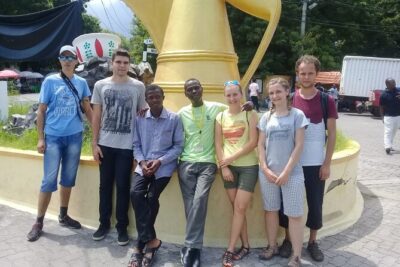
Walking Tour Through Old Town Mombasa and Fort Jesus
Read our review →
Day Tour to Amboseli National Park & Maasai Village
Read our review →
Tour: Giraffe Center and Nairobi National Park
Read our review →