
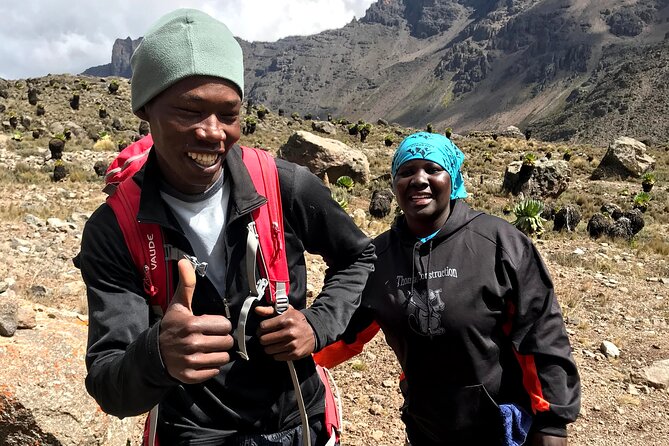
Reviewed · 5-DAY EXPERIENCES
5 Days Mt. Kenya Sirimon route out Chogoria Route with Peak Circuit
Mount Kenya is one of Africa’s great altitude adventures, and this Lenana summit trip gives it a clean story line. You start on the Sirimon to Chogoria side, hike through forest into moorland, do a Peak Circuit acclimatization day, then get an early push for the summit and a long descent by bamboo forest.
What I like most is how much the hard work is handled for you. Meals and camping gear are provided, so you can plan for fewer carried items, and English-speaking mountain guides with porter support help keep the trip focused on moving well and staying safe.
One thing to think about before you commit is timing and altitude. You start early, you will spend long hours on your feet on travel days, and the whole experience depends on workable weather up high.
Key points to know before you go
- Lenana summit at about 4,985 m with an early-morning start timed for sunrise photos
- Peak Circuit acclimatization day with ridges, scree sections, and high-altitude tarn views
- Sirimon route up, Chogoria route down, so you get two different feels on the mountain
- Camping setup is included, with tents and mats, plus meals planned for the full trek
- Private transport from Nairobi and a guided, camp-based itinerary inside Mount Kenya National Park
- Past teams praised for guide leadership and food, with named examples like David and Richard, and chefs John and George
Why Lenana via Sirimon and Chogoria makes a great 5-day mission
This trek is interesting because it is not just a point-to-point hike. You stitch together three high-altitude “acts” in five days: forest to moorland on the way up, a proper acclimatization day around the Peak Circuit, then a summit morning and a full descent finish.
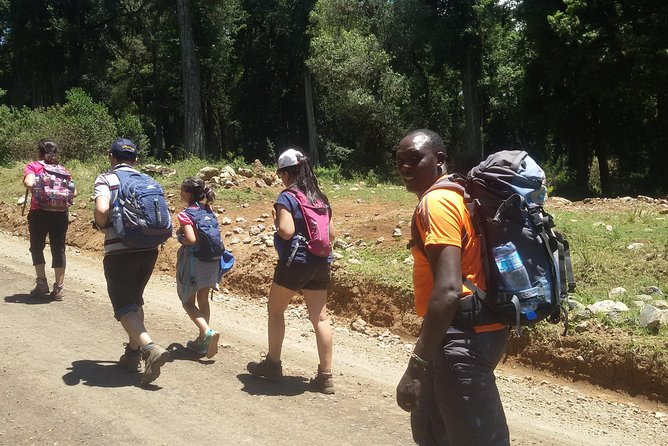
I also like the rhythm of the itinerary. Day 1 and Day 2 build you gradually from forest into open country, then Day 3 gives your body a chance to adjust before the Lenana attempt. That matters on Mount Kenya, where altitude can turn a normal hike into a struggle fast.
Finally, it is a private setup. Only your group participates, and the pacing is guided by your team, not a crowd schedule. For many people, that is the difference between a stressful climb and a trip that actually feels fun.
More Nairobi trips to compare
- 5 Days Masai Mara, Lake Nakuru & Naivasha Budget Joining Safari
★ 5.0 · 229 reviews - 5 Days Lake Naivasha, Lake Nakuru, & Masai Mara
★ 5.0 · 101 reviews - 5-Day Masai Mara Lake Nakuru and Naivasha Small-group Safari Tour
★ 5.0 · 55 reviews
Price and what $960 really covers on this trek
At $960 per person, the value comes from what is bundled. You are not only paying for a guide, you are paying for the full mountain operation: private transport, park fees and taxes, camping equipment (tents and mats), porter support, and an English-speaking guide team.
You also get your core food plan. The schedule includes breakfasts every day (5), lunches every trekking day (5), and dinners for four nights. That is a big deal because food and cooking logistics are usually where budget plans fall apart on multi-day hikes.
What you still need to budget for is mostly personal choices. Tips to guides and porters are not included, and you will cover your hotel in Nairobi before and after the trek. Also, you bring your own personal clothing and equipment, with an equipment list shared upon request.
If you want the simplest math, this itinerary saves you time and decision-making. Instead of figuring out camps, transfers, and meal logistics on your own, you show up and hike.
Day 1: Nairobi to Old Moses camp through forest and wildlife chances
Day 1 has two phases, and both set your tone. You leave your Nairobi hotel at 6:30 am, travel to Nanyuki by private transport, then meet your guide, cook, and porters there. From Nanyuki you drive onward to Sirimon Gate at about 2,650 m, check in, and start hiking.
The hike itself goes through rain forest to Old Moses Camp at about 3,300 m. Expect around 9 km and roughly 3 hours of walking. You’ll have a picnic lunch along the way, and once you reach camp you get time to acclimatize with a short walk of about one hour.
There is also a wildlife note worth keeping in mind. The route has a chance to spot big game like buffalo, elephant, water bucks, and other animals, depending on conditions. Even when you do not see animals, the forest start is still a relief, because it feels cooler and less exposed than moorland.
Practical takeaway: your Day 1 goal is not fitness records. It is steady movement, gentle pacing, and arriving at Old Moses without going too hard.
Day 2: Old Moses to Shipton’s Camp, moorland pacing and river crossings
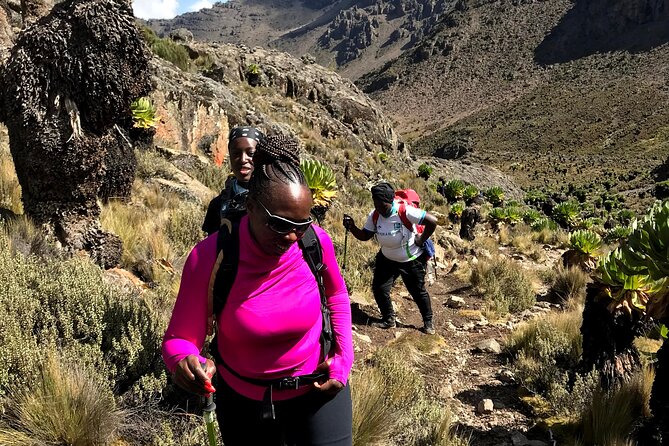
Day 2 is longer and more exposed. After breakfast you start a relatively easy hike through moorland vegetation, crossing the Ontulili River before turning right and contouring through the moorland. You will also cross the Liki North River and continue uphill toward Mackinders Valley.
What I like here is how the day sets you up for the views without demanding a brutal effort. You reach Shipton’s Camp at about 4,200 m after roughly 16 km and about 6 hours of hiking. Lunch is served along the route.
As you climb, you are moving from dense forest comfort into open high country. That means wind and cold can show up more quickly than you expect, even if the morning starts mild. Your pace becomes more important than your speed, because the higher you go, the more every stop matters for breathing.
At camp, you are already at a significant altitude step. Your body will not feel “normal” if you push too fast. Treat this as your get-to-camp day, not your challenge day.
More days out of Nairobi:
- Nairobi National Park Half-Day Tour; Free Wi-Fi connection
★ 5.0 · 878 reviews - Nairobi: National Park & Optional Elephants & Giraffe Center
★ 4.8 · 874 reviews - NAI NAMI: Nairobi Storytelling Tour with Street Children
★ 5.0 · 792 reviews - Nairobi National Park Half-Day Game Drive
★ 4.5 · 738 reviews
Day 3 Peak Circuit acclimatization to Austrian Hut: the high-altitude training you can feel
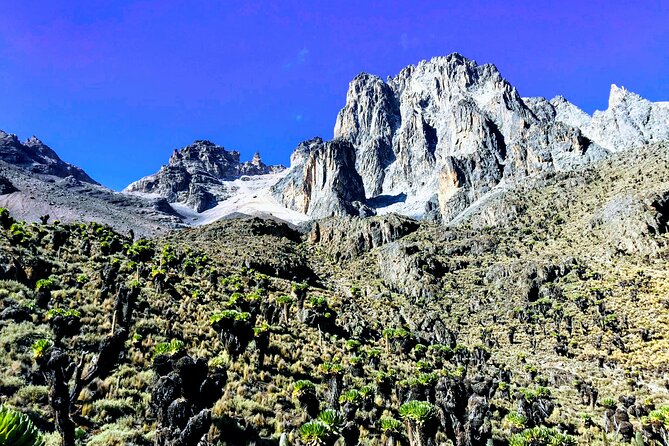
This is the day that makes the whole summit push smarter. You start breakfast, then begin the Peak Circuit at about 9:00 am from Shipton’s Camp.
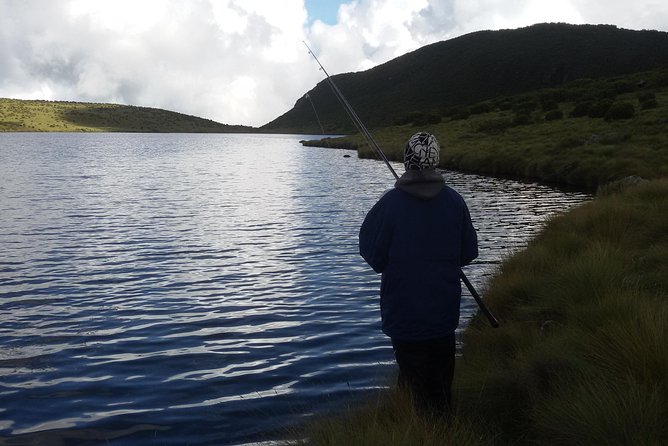
The trail leads you toward Kami Camp below the north face of Batian, then you climb up toward a ridge around 4,600 m. You will hike through scree sections, reach Hausberg col around 4,590 m, and then descend into the upper Hausberg valley. You rest at the oblong and Hausberg tarns, then continue toward a crest area called Arthur’s Seat, with a series of rock ledges along the way.
Even though this day is labeled acclimatization, it is not a lazy walk. It is a working day at altitude. The win is that you spend hours higher up before the summit morning, so your body learns the rhythm of exertion at elevation.
Also, there are sight lines worth expecting. The route gives big “scope” views up and out, and you may see parts of the wider Mount Kenya region, including lodges and valleys visible from ridges.
Practical takeaway: use this day to practice your summit habits. Go slow, drink water, and keep your effort consistent. This is the kind of day that pays you back later.
Day 4 summit attempt at dawn: Point Lenana sunrise, then the long descent to Chogoria
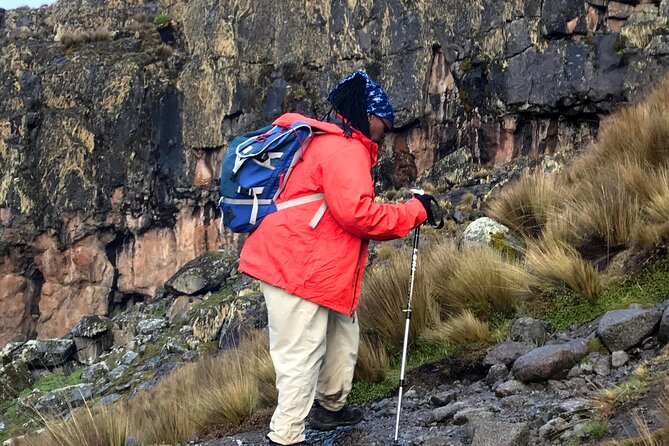
Day 4 is the headline. You wake at about 4:30 am for tea and biscuits, then start the summit attempt for Point Lenana at about 4,985 m.
The timing is built for sunrise photos and clear views. If the weather cooperates, you can get dramatic dawn light, and the climb can include a possible sighting of Kilimanjaro peaks (Kibo and Mawenzi) from the summit area. Visibility at dawn is never guaranteed, but you are aiming for that moment when the sky gives you its best show.
After the summit, you descend to Mintos Hut for a full breakfast. Then comes the longest and most demanding part of the plan, dropping down toward Chogoria Bandas around 2,800 m.
This is listed as about 8 hours, 24 km, with roughly 195 m ascent and about 2,085 m descent. Along the descent you pass viewpoints that can include Lake Ellis, Mugi hills, Vivien Falls, and the Giant Billiards table seen at a distance.
That descent is where having good footwear and a steady pace pays off. Your legs will feel it. Your best strategy is controlled steps and frequent short rests, not long breaks that cool you down too much.
Practical takeaway: you do not need to sprint after the summit. Your job is to safely keep descending until the trail finishes at Chogoria Bandas.
Day 5: 10 km bamboo exit to Chogoria and the ride back to Nairobi
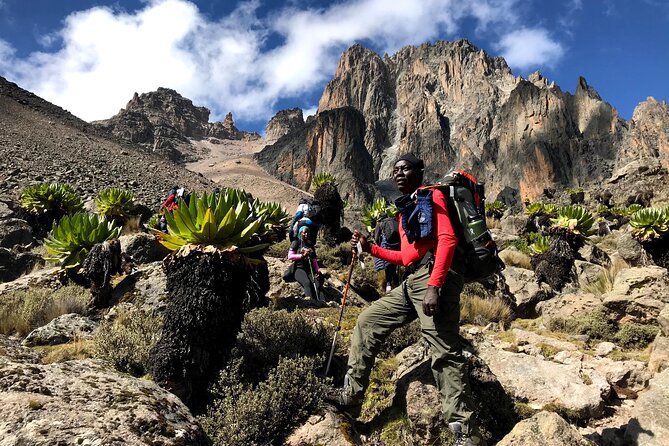
Day 5 is shorter in altitude terms and mostly focused on getting down and out. You start with a 10 km walk through bamboo forest, then you are picked up by private transport in Chogoria.
You say farewell to the porters after you reach the pickup point, then drive back to Nairobi. The itinerary calls for arrival around 3:00 pm, passing through agricultural country.
One downside to be aware of: Nairobi lodging is on you. The trek ends in Nairobi with an overnight hotel at your own cost, although the team can arrange it if you want.
Practical takeaway: plan a comfortable afternoon and evening once you get back. You will still be tired, even if the hiking day felt “short.”
Guides, cooks, and porters: the support that turns logistics into confidence
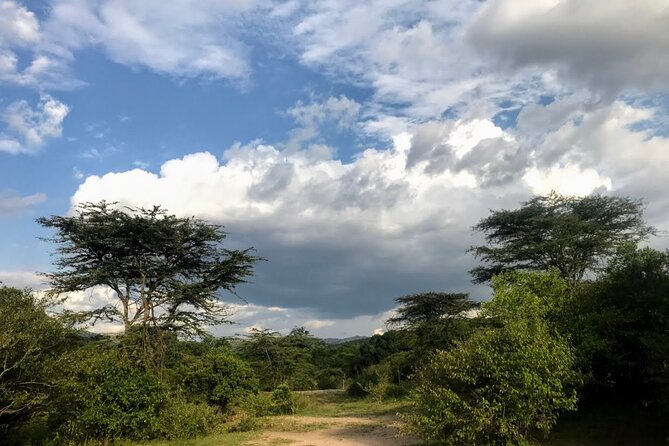
This trip’s biggest strength is that you do not carry the full burden of running a multi-day camp. Porter support is included for the climb, and camping gear like tents and mats is also provided.
That support affects how you feel day to day. If you have ever tried to manage your own camp logistics at altitude, you know how much time and mental energy it costs. Here, you focus on walking, breathing, and taking in the views.
On the people side, the company has shown real field competence. Past team examples include a lead guide named William and a guide named David praised for getting people to the peak and back safely. Another named guide is Richard, and one booking mentions the owner James coordinating the right route choice based on experience. Chefs John and George are also specifically credited for food support, and that kind of praise usually means meals were timely and practical, not just tasty.
You should still pack smart and follow your guide’s pacing. But the human support system is a major reason this trek tends to feel manageable even when the altitude is serious.
What to expect physically: moderate fitness, long walking days, and altitude timing
The activity is aimed at people with moderate physical fitness. The distances and time estimates back that up.
Day 2 is the first big “time on trail” day at 16 km and about 6 hours. Day 3 is not only long, it includes scree and ledges that ask for careful footing. Day 4 combines a summit effort with a major descent, and that descent makes the day feel longer than the clock time.
Altitude also shapes how you should judge effort. You will climb from about 1,795 m in Nairobi to 3,300 m on Day 1, 4,200 m on Day 2, around 4,790 m on Day 3, and then summit near 4,985 m on Day 4. That is a lot of vertical change in a short window, which is why Peak Circuit day is so important.
Practical advice: bring a steady attitude. If you treat the hike like a series of controlled walks, you do better. If you treat it like a race, you pay in breath, energy, and tempers.
Money checklist: what you bring, what you pay separately
Here is the quick “do not get surprised” list.
Included:
- Private transportation, plus park fees and taxes
- Camping equipment, tents, and mats
- Porter support for the climb
- English-speaking mountain guides and 5 days of mountain operations
- Meals: breakfasts, lunches, and dinners as scheduled
Not included:
- Tips for guides and porters
- Nairobi accommodation before and after the trek
- Personal clothing and equipment (you receive an equipment list on request)
If you like planning cleanly, ask for the equipment list early. Your packing choices will affect comfort more than you think, especially for cold mornings and wind on exposed moorland.
Weather and your best flexible mindset
This experience requires good weather. That is not fine print, it is part of how Mount Kenya works. If conditions are poor, the plan can be adjusted, or the experience may be canceled and rescheduled, with a full refund option in certain cases.
Even in good weather, mountain conditions can change fast. Start early on summit day, but keep layers ready. Bring what your team recommends and do not count on the sun to keep you warm at higher elevations.
Should you book this 5-day Arch Trek Mount Kenya plan?
Book it if you want a structured, private route to Lenana, with an actual acclimatization day and a smooth logistics package. The value is strong because camping equipment, porters, guides, park fees, and meals are included, so you are paying for a system, not just a walking plan.
Skip it or think twice if you dislike long walking days and cold mornings. Day 4 includes a summit early start and then a significant descent, and that is a demanding day even for people with moderate fitness.
If you are excited by high-altitude hiking and you want a team to handle the moving parts, this is the kind of trip that turns effort into a memorable win.
FAQ
How high do we reach on this trek?
You attempt the summit of Point Lenana at about 4,985 meters during the 5-day itinerary.
Which routes are covered on the mountain?
The trek uses the Sirimon route up, includes the Peak Circuit for acclimatization, and finishes the descent via the Chogoria side.
Is this a private tour or a shared group?
This is a private tour, only your group participates.
What time does the trek start, and is pickup included?
The start time is 6:30 am, and pickup is offered via private transportation from your Nairobi hotel.
What is included in the price?
The price includes private transportation, all fees and taxes, camping equipment (tents and mats), porter support for the climb, English-speaking mountain guides, 5 days of mountain service and operations, and planned meals including breakfasts, lunches, and dinners.
What is not included?
Tips to guides and porters are not included. Accommodation in Nairobi before and after the trip is also not included, as well as personal clothing and equipment (an equipment list is shared upon request).
What kind of fitness level do I need?
The experience is listed for travelers with a moderate physical fitness level.
Are meals covered while camping?
Yes. Lunch and dinner are provided on trekking days, and the itinerary includes five breakfasts, five lunches, and four dinners.
What happens if weather is bad?
The experience requires good weather. If it is canceled due to poor weather, you are offered a different date or a full refund.
Recently reviewed from Nairobi
- Amboseli Day Trip from Nairobi★ 4.5 · 3 reviews
- Ngare Ndare Day Trip★ 5.0 · 3 reviews
- Nairobi city tour★ 4.5 · 3 reviews
- Day Trip To Crescent Island And Hells Gate National Park★ 5.0 · 3 reviews
- Crescent Island Day Tour From Nairobi★ 5.0 · 3 reviews
- 1-Day Amboseli Safari★ 5.0 · 3 reviews
- 13-Day Uganda Mgahinga Gorilla Trek, Maasai Amboseli Park★ 5.0 · 3 reviews
- 4 days group joining budget safari to Maasai Mara only★ 5.0 · 3 reviews
5-Day Experiences, compared.
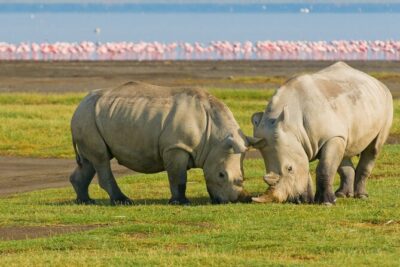
5 Days Masai Mara, Lake Nakuru & Naivasha Budget Joining Safari
Read our review →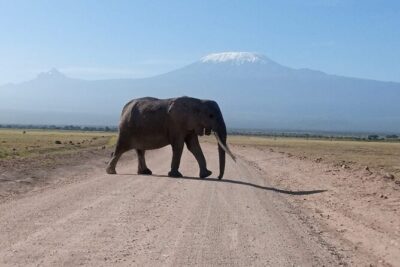
5 Days Lake Naivasha, Lake Nakuru, & Masai Mara
Read our review →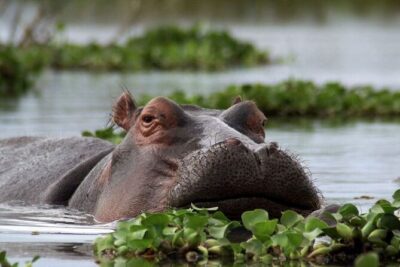
5-Day Masai Mara Lake Nakuru and Naivasha Small-group Safari Tour
Read our review →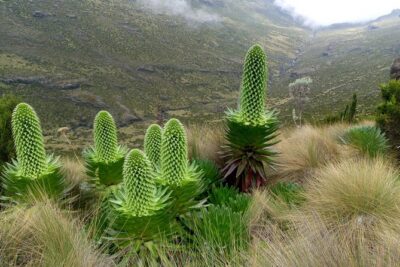
Olpejeta, Lake Naivasha, Masai Mara 5 Days Private Kenya Jeep tour
Read our review →
5-Day Lakes and Masai Mara Plains 4 x 4 Safari
Read our review →Browse the lists this tour appears in