
Reviewed · HISTORICAL TOURS
Nairobi History and Modern Culture 3 Hours Tour
Nairobi is a city of fast opinions and deeper layers, and this tour works because it stitches them together in a tight walking loop through the center. I like that you get a quick culture-and-city-slang lesson in Swahili basics, so you can actually start talking instead of just pointing. I also love the practical photo moments and the KICC rooftop view, which helps you understand where things sit.
The main thing to consider is that you will be walking in a lively central area, and you may encounter persistent soliciting from people outside the tour. The guide’s advice on how to handle it matters, and it helps a lot if you’re confident saying a firm NO.
Key highlights you’ll feel right away

- Small-group pace (cap of 12) that keeps questions coming and makes the stops easier to enjoy
- Swahili slang basics so you can greet people and navigate with more confidence
- Central-city tour loop that links colonial-era street names to today’s Nairobi scenes
- KICC helipad viewpoint for aerial photos and a clearer mental map of the city
- Guide-led street photo plus photo ops at major monuments, markets, and viewpoints
- Fruit salad and shoe cleaning included, tiny perks that make walking days more comfortable
A Nairobi Starter Loop that Feels Like Orientation, Not a Lecture

This is the kind of tour I recommend when you’re trying to get your bearings fast. You start in the core, you see key landmarks clustered close together, and you get context that helps the city click. It’s not just dates and plaques. It’s what these places meant, who uses them today, and how the modern city breathes around them.
The guides behind it are part of the appeal. In the feedback, Dennis (also written as Prof. Dennis) stands out for how clearly he connects history to what you can see right now. Simon Njuguna also gets high marks for making the information feel fun and easy to follow. Even when people call it a good walking tour, the consistent theme is that you leave with a better mental map than you had at the start.
More Historical Tours in Nairobi:
- Nairobi: Historic and Modern Highlights Walking Tour
★ 4.8 · 703 reviews - Nairobi Historical Walking City Tour
★ 5.0 · 258 reviews - Full Day Nairobi Cultural and Historical Tour
★ 5.0 · 153 reviews
Price and time: is $30 worth it for a central Nairobi tour?
At $30 per person for roughly 2 to 3 hours, this feels like a smart use of limited time. You’re paying for more than walking. You’re paying for a guide to connect scattered landmarks, plus the convenience items that add up quickly in the real world: pickup and drop-off, bottled water, and included comforts like fruit salad and shoe cleaning.
The only obvious cost wrinkle is the KICC entry component. The rooftop viewpoint at Kenyatta International Convention Centre has admission not included, so bring a little extra cash or card readiness for that. If you skip it, you’ll miss the best “photo and map in one moment” payoff.
Pickup, pace, and how the small-group format helps you learn
You’ll get pickup and drop-off, and the transfers are described as door-to-door with an air-conditioned vehicle. That matters in Nairobi because the center can be hectic fast, and you don’t want to lose your energy tracking down meeting points while taxis and matatus compete for space.
The tour runs as a small group capped at 12 people. That size is ideal. It’s big enough that the experience feels social, but small enough that the guide can adjust the pace when you have questions or want a slower look at details like street names, monuments, and market layouts.
Plan for short stops. Many of the locations are about 5 to 10 minutes, which is great if you want an overview. It also means you should decide early what you want most: fast orientation, or more time for photos at fewer stops.
The itinerary from Jeevanjee Gardens to City Market: why this start works

You begin at Jeevanjee Gardens, and this is a strong opening stop because it frames the “before and after” feel of Nairobi’s center. You learn the history of the garden and see what people are doing there now. You also pick up the colonial-era street names around it, which is useful later when you’re reading signs or trying to make sense of directions.
This stop is short, about 10 minutes, so it’s more of a setup than a deep dive. The value is that it gives you a lens. After you understand the garden’s role in the area, the next stops make more sense as parts of the same city story.
More Nairobi trips to compare
- 3 Hours Nairobi National Museum
★ 4.0 · 4 reviews
City Market curio shops: souvenirs with context (and a practical reality check)

City Market is next, about a 20-minute block. You’ll walk through the market’s four divisions and learn its history, then you get time to shop the curio shops.
This is where the tour earns its keep for first-time visitors. Markets can feel chaotic if you’ve never been here, but with a guide you understand the layout and what’s worth looking at. You also get a few minutes to do the fun part: buy something real, not just a generic postcard.
Practical reality check: markets are active, and prices can move depending on who you are and how you bargain. If you’re shopping, keep your time box in mind. You don’t want to miss the later stops because you got caught up comparing carvings.
Jamia Mosque and McMillan Memorial Library: seeing daily life and architecture
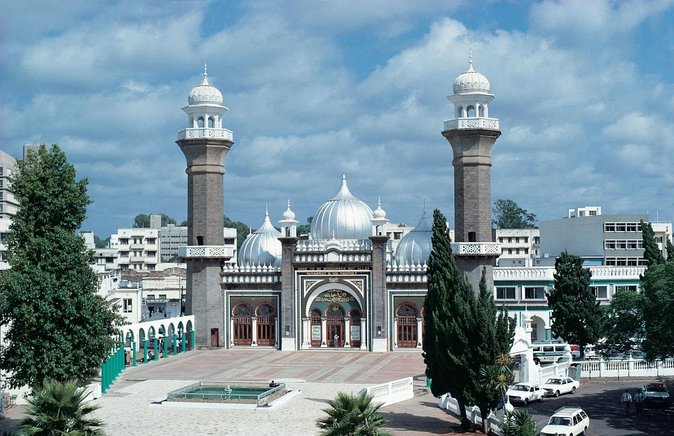
Jamia Mosque is brief, about 10 minutes. But it’s not only about looking. You see the mosque and its activities. That’s important because it changes how you view religious spaces. Instead of a “photo stop,” it becomes a living place.
Next is McMillan Memorial Library, also around 10 minutes. The focus is on what makes the building structurally unique and how it connects to Kenya’s constitution. Even in a short window, this stop gives you a sense of how public institutions shaped the city and how the architecture signals something about power, education, and civic life.
If you’re the type who likes meaning behind buildings, these two stops deliver a lot for the time. If you prefer only outdoor panoramas, you might still enjoy them because they add contrast.
Kenyatta Avenue, memorials, and the street-level Nairobi you actually notice

Kenyatta Avenue is one of the main entrances into the city, so this is a natural “main street” transition. You’ll see key monuments including the Askari monument and an African war veterans memorial obelisk. Along the way, you’ll also spot banks, Forex bureaus, and restaurants.
This stop is about 10 minutes, so don’t expect a museum-level experience. Do expect a fast overview of how the central business district works day-to-day, and how memorials coexist with cash transfers, dining, and quick errands.
Then you shift to Sarova Stanley Nairobi, a major landmark hotel, where you’ll learn that it’s the oldest hotel in the city and hear its history. You also look along Kimathi Street, which helps connect big icons to the surrounding street life.
Dedan Kimathi statue and Moi Avenue matatu culture: independence story meets motion

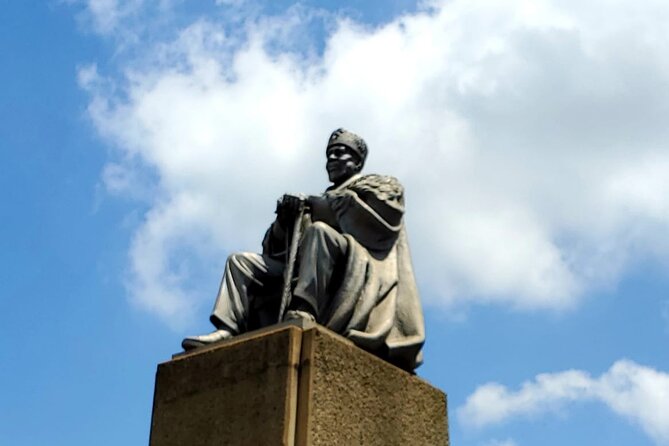
At the Dedan Kimathi statue, you get a short, focused look at an iconic figure in Kenya’s fight for independence and his role in the Mau Mau movement. This is only around 5 minutes, but it’s a meaningful stop because it gives you a name to anchor the independence story.
You’ll then hit Moi Avenue for a quick glimpse of matatu culture. This is another short stop, around 5 minutes, but it’s one of the most Nairobi-feeling moments because it puts you close to the buzz of street life.
If you want one memory that feels like Nairobi rather than just Nairobi’s monuments, it’s often this part. The energy is real, and the guide’s context helps you read what you’re seeing.
KICC rooftop viewpoint: the photo payoff, the stairs note, and the admission item
Kenyatta International Convention Centre is the big view stop, about 30 minutes. You’ll take photos at the Jomo Kenyatta statue and then head up to the helipad for an aerial view.
This is where your city map finally clicks. From that height, you get a visual thread to other sites you’ll likely visit later, including the British railway area, Parliament buildings, Uhuru Park grounds, and Holy Family Basilica Catholic church.
Two practical points:
- KICC can involve stairs. One review specifically noted stairs in the Kenyatta tower area, so if your legs are tired, plan for it.
- The entrance ticket at KICC is not included, so budget for it.
Timing tip from common sense and the tour pacing: if you can, choose a morning slot when you’re fresh. If you’ve already been out and your energy is low, a 30-minute view stop plus stairs can feel longer than you expected.
The Galton-fenzi Memorial: the quirky directions moment that helps you navigate later
Before you end back near Jeevanjee Gardens, you stop at The Galton-fenzi Memorial. This is a quick 10-minute stop where you learn about directions and distance of major cities in the world.
It sounds small, but it’s actually great for first-time orientation. Nairobi becomes less of a blur when you can quickly understand where other cities sit relative to you, and it gives the walking loop a satisfying final “wrap your head around the world” moment.
What’s included, and why those extras matter in real life
This tour includes several items that make the experience smoother:
- Pickup and drop-off so you don’t spend your good energy wrestling with transport
- Fruit salad for a quick snack reset during a walking-heavy day
- Shoe cleaning which is genuinely useful if you’re walking on sidewalks that can be dusty or uneven
- Professional street photo plus natural photo opportunities at each major stop
- Bottled water since you’ll be moving around in the city center
The fruit salad and shoe cleaning are small, but they’re also a sign that the tour is built for comfort, not just ticking boxes. If you’re doing other Nairobi plans the same day, those little extras can keep you from feeling run down.
Swahili slang basics: the easiest way to feel less lost
A highlight is a basic vocabulary lesson with Swahili slang. Even if you only remember a few phrases, it helps you interact with confidence. And in a busy central area, confidence is practical.
You’ll also get guide recommendations on Nairobi’s best eateries and hangouts. That’s a big deal for planning after the tour. You don’t just leave with landmarks. You leave with places to eat and places to spend time that fit how visitors actually travel.
Safety and street behavior: what to do about soliciting outside the tour
One caution that comes up is soliciting from beggars during the walk. No guide can control everyone on the sidewalk. What matters is that you have a plan.
The approach that works is simple:
- stay focused on your guide and the route
- do not engage in back-and-forth
- if someone insists, say NO firmly and keep moving
If you feel uncomfortable with street pressure, bring a clear mindset. A firm boundary is not rude. It’s just efficient, and it keeps your tour time from getting stolen.
Also, keep your valuables secure and avoid flashing phones for long periods at crowded curb areas. The tour includes a photo component, so you can still get photos without making yourself a target.
Day planning: make this your first Nairobi activity
This tour is built for first-timers and also works as a layover tour. It’s short enough that you can do it between other plans, and it gives you context you’ll use later when you explore independently.
If you’re arriving with limited time, I’d treat this as your “orientation layer.” Afterward, you can make smarter decisions. You’ll know what areas feel like, where memorials and major streets are, and how the city’s layout connects.
If you want extra food stops, you might be able to customize depending on your guide and time. At least one guide experience mentioned adding a fish market visit and time for coffee. That’s not guaranteed for every run, so keep expectations flexible and ask your guide what time they have.
Should you book this Nairobi history and modern culture tour?
Book it if you want:
- a focused, 2 to 3 hour intro to central Nairobi
- quick context behind major landmarks
- a small-group format and a guide who makes history feel connected to what you see
- rooftop photos at KICC, plus the street photo included in the package
Skip it or reconsider if:
- you hate walking and stairs and won’t enjoy a moderate pace
- you strongly dislike busy central streets and the idea of occasional outside soliciting will stress you
- you’re not interested in memorials, institutions, mosques, and market areas, because this tour’s strength is variety
My final take: for $30, the value comes from the built-in orientation and the included comforts. It’s the kind of tour that helps Nairobi stop being random and start feeling readable.
FAQ
How long is the Nairobi History and Modern Culture tour?
It runs about 2 to 3 hours.
What does the tour cost?
The price is $30 per person.
Is pickup and drop-off included?
Yes, pickup and drop-off are included, and you’ll use an air-conditioned vehicle for transfers.
What is included in the tour price?
Included items are bottled water, fruit salad, shoe cleaning, a professional street photo, and the pickup and drop-off.
Is there an entrance fee during the tour?
Kenyatta International Convention Centre has admission not included.
Where does the tour start?
The meeting point is CJ’s Koinange St, Nairobi, Kenya, and the tour ends back at the meeting point.
Is the tour suitable for most people?
Most travelers can participate.
Can the tour be customized or used for a layover?
Yes, it can be customized and works well as a layover tour.
What if I need to cancel last minute?
You can cancel for a full refund if you cancel at least 24 hours before the experience starts. If you cancel less than 24 hours before, the amount paid is not refunded.
Recently reviewed from Nairobi
- Amboseli Day Trip from Nairobi★ 4.5 · 3 reviews
- Nairobi city tour★ 4.5 · 3 reviews
- Ngare Ndare Day Trip★ 5.0 · 3 reviews
- Day Trip To Crescent Island And Hells Gate National Park★ 5.0 · 3 reviews
- Crescent Island Day Tour From Nairobi★ 5.0 · 3 reviews
- 1-Day Amboseli Safari★ 5.0 · 3 reviews
- 13-Day Uganda Mgahinga Gorilla Trek, Maasai Amboseli Park★ 5.0 · 3 reviews
- 4 days group joining budget safari to Maasai Mara only★ 5.0 · 3 reviews
Historical Tours, compared.



Nairobi Walking tour:Explore History Culture and Traditions
Read our review →

Nairobi Cultural and Historical City Tour with a Local
Read our review →
Nairobi souvenir Shopping and Historical Half day Tour
Read our review →
Half-Day Cultural Tour to Bomas of Kenya in Nairobi
Read our review →
Browse the lists this tour appears in