

Reviewed · WALKING TOURS
Nairobi City Walking Tour with Traditional Kenyan Lunch
Nairobi can feel like a city that moves fast, so I like the idea of slowing down with a 5-hour walking route that ties together everyday neighborhoods and big national landmarks. You get a shaded pause in Uhuru Park, then you’re walking right past symbols of Kenya’s political life.
What I especially like is the mix of history stops with a chance to eat a traditional Kenyan lunch with a drink included, not just snack your way through the day. One possible drawback to factor in is the lunch stop, since one guide run (led by Clinton) had a complaint that the restaurant did not match expectations for a Kenyan meal.
Key highlights worth your attention
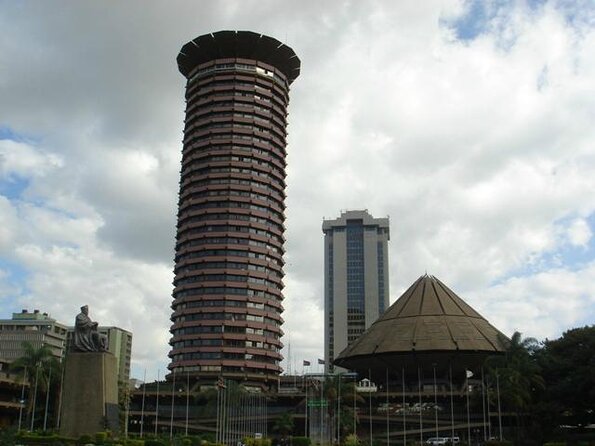
- Small group size (max 12) makes it easier to ask questions and keep a steady walking pace
- Uhuru Park close to the business district gives you a calmer feel before you hit the major government sites
- Memorial stop at August 7 Memorial Park tied to the 1998 US Embassy bombing, plus time around the National Archives area
- Walk past parliament and the Mzee Jomo Kenyatta Mausoleum, with the Kenyatta Conference Centre also in the mix
- Local public transportation included, so you’re not just watching Nairobi from the curb
- Carbon neutral tour run by a B Corp certified company focused on travel as a force for good
A 5-hour Nairobi walk that mixes parks, power, and real street life

This is the kind of tour that helps you get your bearings fast. You start in Nairobi’s CBD and spend your morning and/or late-morning moving at walking speed, then using public transport when the route needs it. That means you’re not only seeing monuments, you’re seeing how people get from one part of the city to another.
I also like the “both sides of Nairobi” formula. There are serious stops connected to Kenya’s political story and major events in modern history. Then you get breaks in quieter green space and time around areas where local routines show up in the background.
And there’s a practical, modern touch: the tour is carbon neutral and run by a B Corp certified operator that says it uses travel as a force for good. If you care about that kind of accountability, this is one of the easier ways to check the box.
More City Tours in Nairobi
- Nairobi Historical Walking City Tour
★ 5.0 · 258 reviews - Nairobi: Private 4-Hour City Tour
★ 4.5 · 68 reviews - Nairobi Cultural and Historical City Tour with a Local
★ 5.0 · 67 reviews
Price and what $45 buys you (it’s more than a basic city walk)
At $45 per person for about 5 hours, this is priced like a mid-range guided experience. The key value is not only the route, it’s what’s included: a local English-speaking guide, local public transportation, and lunch with a drink at a local restaurant.
Let’s translate that into why it matters. If you book a similar half-day walking tour elsewhere, you often pay the guide fee but still end up buying transit and lunch separately. Here, lunch and transit are folded in, so you’re budgeting once and moving on.
One more detail that affects value: the tour has a maximum of 12 travelers. In cities like Nairobi, smaller groups help a lot with flow on sidewalks and at busy meeting points. Less crowding also makes it easier for your guide to tailor the conversation.
Meet at Hotel Boulevard, start at 9:00, and get moving
The tour meets at Hotel Boulevard Nairobi, City Centre CBD, Harry Thuku Rd, and it starts at 9:00 am. The nice part is that the end time is designed so the experience returns you back to the meeting point.
Because it’s near public transportation, you can usually reach the start area without a long, expensive detour. You also use local transport during the tour, so you’re not stuck in sightseeing mode the whole day. You’ll be out in the city the way locals do.
One planning note that’s not dramatic, but it’s important: the tour recommends modest clothing, and dress standards are conservative. Nairobi can be warm, but you’ll be more comfortable in clothing that respects local norms.
Uhuru Park, parliament viewpoints, and the Jomo Kenyatta Mausoleum
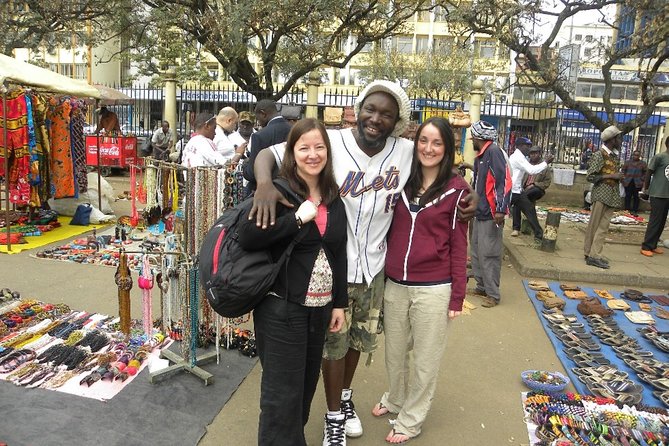
The first major segment starts in the middle of it all. After a quick intro with your local guide, you head into Uhuru Park, located near Nairobi’s business district. This stop works because it gives your eyes a rest. Trees, open paths, and shade make the morning feel less like you’re cramming sightseeing into one long sprint.
From there, the walk threads into the political center. You head past the parliament buildings and then toward the Mzee Jomo Kenyatta Mausoleum, a moment that’s more reflective than the typical “photo and move on” stop. Your guide’s job here is not to overload you with names, but to explain why these places matter and how they fit into Kenya’s national identity.
The Kenyatta Conference Centre also comes into the route. Even if you’re not attending an event there, seeing it from the outside helps you understand how Nairobi’s government and business world overlaps in space.
A realistic consideration: this is a walking tour, so you should be ready for steady movement. There’s no suggestion of a full stop-and-start schedule. If you prefer a sightseeing day with lots of long seated breaks, you might want a different style of tour.
More Walking Tours in Nairobi
- Nairobi: Historic and Modern Highlights Walking Tour
★ 4.8 · 703 reviews - Nairobi Downtown Walking Tour
★ 4.7 · 208 reviews - Nairobi Walking Tour: Downtown & City Tour
★ 4.8 · 32 reviews - Day tour to Hells Gate, Lake Naivasha and Crescent Island Walk
★ 5.0 · 26 reviews
August 7 Memorial Park and the National Archives focus

Next comes a stop that turns the volume down in a different way. August 7 Memorial Park commemorates the 1998 US Embassy bombing. Even without going into extreme detail, the setting and context make it a serious pause in the middle of a city day.
This part of the tour is also where you may notice how your guide runs the route. The plan includes time around the Kenya National Archives and other city-center sites, and it can shift based on interests and the route your guide chooses. If you’re the kind of person who likes stories connected to documents, memorials, and official spaces, this segment tends to land well.
The National Archives stop is not just about buildings. It’s also an opportunity to see Kenya’s artistic traditions and regional handicrafts connected to the wider cultural story of the country. That matters because you’re not only learning about events. You’re also seeing how creative expression and regional identity show up in everyday cultural products.
Because this segment includes memorial space and archives-related areas, keep your expectations grounded. This isn’t a theme park experience. It’s a guided, respectful city walk where understanding is the main souvenir.
How the local transport piece changes your Nairobi day

One of the smartest inclusions is the use of local public transportation during the tour. That’s where Nairobi starts to feel less like a list of landmarks and more like a lived-in city.
In at least one group run led by Clinton, there was a highlight tied to the matatu or bus ride. That makes sense. When you take local transport, you see movement patterns, how people carry their day, and how the city functions between the “major stops.”
What you should do to make this part easy is simple:
- Wear comfortable shoes.
- Keep your valuables secure and close.
- Be ready for normal city travel conditions, which can feel chaotic compared to home.
This is also why the tour works better when you’re open to interaction. If you’re willing to look, listen, and ask your guide what you’re seeing, the transport segment becomes part of the learning instead of just a transfer.
Traditional Kenyan lunch, what’s included, and how to handle taste differences

Lunch is built into the tour as a key moment, not a rushed add-on. You’ll eat at a local restaurant and the package includes a drink, either soda or juice. That’s a solid baseline, since you’re not gambling on finding food after you’ve been walking for hours.
Now, the balanced part. A previous experience led by Clinton included a complaint about the lunch stop not matching expectations for a Kenyan meal, with the person saying it felt more Somali than Kenyan and that the guide had difficulty recommending something from the menu. I wouldn’t treat that as a guarantee for all days, but it is a fair heads-up that “local lunch” can mean different things depending on the restaurant your guide selects.
So what should you do?
- If you have dietary limits, say so early.
- When you sit down, ask what the house specialty is, and don’t be shy about making a clear request.
- If you care specifically about a certain dish, ask for options rather than trusting menu guesses.
If you handle it like a food conversation instead of a checklist meal, lunch usually turns into one of the most enjoyable parts of the day.
Guides, group size, and why the personality matters

This tour lives and dies by the guide. And in past runs, you can see why it has such high scores. Lennox was mentioned as very friendly and able to answer questions, with the effect that Nairobi felt more interesting and easier to understand.
Even when things don’t go perfectly on the operations side, the tour itself tends to be rated highly for the guide-led learning component. One separate issue that came up involved an Urban Adventures manager not following through with an appointment, which can shake confidence if you rely on perfect timing. That’s the kind of thing you can reduce by confirming your start details before the morning of your tour.
Since the group is capped at 12 travelers, you’ll usually have space to ask follow-ups. A smaller group also makes it easier for the guide to adjust pace if someone needs a slower lane.
Carbon neutral, B Corp operator, and what that means for you in practice
You might care most about the walking route and lunch, and that’s fair. Still, I like that this tour explicitly calls out being carbon neutral and operated by a B Corp certified company. For some people, that’s a way to choose experiences that align with values beyond the itinerary.
In practical terms, it doesn’t change the sights in front of you. But it does change the kind of operator you’re supporting. If you prefer companies that take responsibility for travel impact, this is a nice checkbox.
Who this tour is for, and who may want a different option
This works best if you:
- Want to see Nairobi’s main civic and cultural landmarks on foot
- Like hearing context, not just snapping pictures
- Enjoy local food in a casual setting, even if the exact restaurant choice can vary
- Prefer using local transport as part of the experience
It may not be ideal if you:
- Need hotel pickup, since it is not included and you start at the meeting point
- Are bringing children or teens under 18, because they are not permitted on this tour
- Want a very flexible stop-and-start day, since the tour follows a set route structure and timing
The modest clothing note is also a clue. You’ll be walking through areas where conservative standards apply, so pack accordingly.
Should you book this Nairobi city walking tour with lunch?
I’d book it if you want a focused half-day that gives you both big landmark context and city-day texture. The mix of Uhuru Park, the political core with parliament and Mzee Jomo Kenyatta Mausoleum, plus the seriousness of August 7 Memorial Park and the National Archives stop makes the day feel like more than sightseeing.
The biggest reason to pause is the one lunch caution. If your holiday mission is a very specific version of Kenyan cuisine, you should plan to ask questions at the restaurant and be ready to adjust.
Also, if you’re the type who likes a guide who can answer questions and steer you through the story, this tour tends to deliver. Mentions of guides like Lennox point to the guide experience as a real strength.
If you’re okay with that trade-off, you’ll likely leave feeling like you understand Nairobi’s center better, not just visited its highlights.
FAQ
How long is the Nairobi City Walking Tour?
The tour lasts about 5 hours.
What is the price per person?
It costs $45.00 per person.
What is included in the tour?
Included are a local English-speaking guide, sightseeing highlights in the city center including parliament-related sights and the National Archives area, lunch with a drink (soda or juice), and the use of local public transportation.
Is hotel pickup included?
No, hotel pickup and drop-off are not included. The tour starts at the meeting point and ends back there.
Where do I meet the guide and when does the tour start?
You meet at Hotel Boulevard Nairobi, City Centre CBD, Harry Thuku Rd, Nairobi, Kenya. The start time is 9:00 am.
Is lunch included, and what do I get?
Lunch is included at a local restaurant, along with a drink (soda or juice).
Does the tour allow children or teens?
No. Children and teens under 18 years of age are not permitted.
Can I cancel for a refund?
Yes. You can cancel for a full refund up to 24 hours in advance of the experience start time.
Recently reviewed from Nairobi
- Amboseli Day Trip from Nairobi★ 4.5 · 3 reviews
- Nairobi city tour★ 4.5 · 3 reviews
- Ngare Ndare Day Trip★ 5.0 · 3 reviews
- Day Trip To Crescent Island And Hells Gate National Park★ 5.0 · 3 reviews
- Crescent Island Day Tour From Nairobi★ 5.0 · 3 reviews
- 1-Day Amboseli Safari★ 5.0 · 3 reviews
- 13-Day Uganda Mgahinga Gorilla Trek, Maasai Amboseli Park★ 5.0 · 3 reviews
- 4 days group joining budget safari to Maasai Mara only★ 5.0 · 3 reviews
Walking Tours, compared.

Walking Tour Through Old Town Mombasa and Fort Jesus
Read our review →
Nairobi Walking tour:Explore History Culture and Traditions
Read our review →



Browse the lists this tour appears in