
Reviewed · MALINDI & WATAMU
Watamu: Sunset Mangrove Canoe Tour with Coconut Drink
This sunset mangrove canoe tour in Watamu is interesting because it blends three things most trips separate: traditional canoe time, wild shoreline life, and a village stop that feels part of the local routine, not a staged show. You spend the golden hour on the water, then you warm up (in a good way) with a fresh coconut or a drink from the palm in the Giriama community.
Two parts I really like are the canoe ride through the mangrove creek and the animal spotting that is tied to what the tide is doing. As the day fades, you also get a clear view of the sun setting behind Green Island, with the water picking up those pastel colors.
One thing to weigh carefully is the walking. If you go at low tide, expect a longer stretch across mudflats, plus the ground can look and feel very muddy. If you have mobility limits, this is also not suitable, and the boardwalk leading in can be affected by maintenance (noted for February 2026).
Quick take: what makes this Watamu mangrove tour special
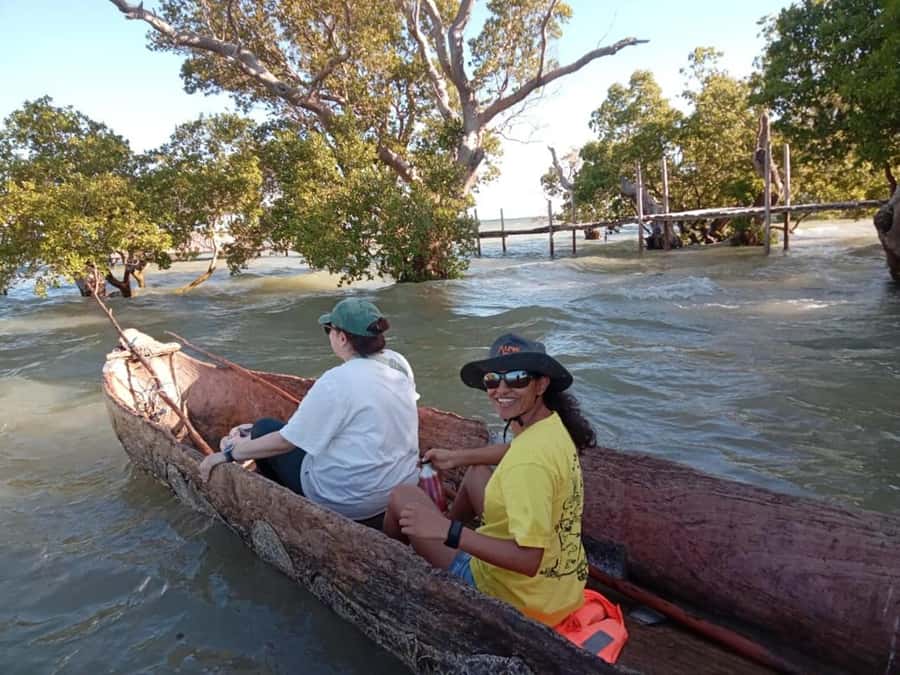
- Traditional dugout canoe travel, like local fishermen do, not a glassy, tourist-style boat
- Birdwatching with 65 species in the same creek you are paddling through
- Mudflat life on foot, including thousands of little crabs during the walk
- Mangrove root critters, like frogfish or mudskippers and oysters on the roots
- Sunset over the lagoon behind Green Island, timed around the late afternoon
- Village refreshment in Giriama, with a freshly picked coconut or palm wine
Timing and tide choices: low tide vs high tide in plain terms
This tour runs about 210 minutes, and it’s scheduled so you can watch the sunset around 4:00 PM if you do not specify a tide preference. If you do communicate a preference when booking, the day adjusts around what you want from the experience.
Low tide means more time on the mudflats before you reach the canoe. That extra walking is where you get the most shore-level action, including those thousands of small crabs scrambling away as you step. You’ll also notice the mangroves and creek system look different at low water, like a whole other world showing on the bay floor.
High tide cuts down the walking. The walk starts from a point nearer the meeting point, and then you head into the canoe route sooner. If you want the canoe and sunset more than the muddy shore part, high tide is usually the more comfortable option.
Either way, the “real show” is still on the water. The tour is built around the sunset phase, then moving back to the Giriama village afterward.
More around Malindi and Watamu:
- Watamu: Learn Kenyan Cusine with Jonathan
★ 4.1 · 8 reviews - From Kilifi, Watamu, Malindi: Tsavo East Day Safari
★ 3.4 · 4 reviews - Malindi; Robinson’s Island and seafood lunch; Marafa Hell’s Kitchen
★ 5.0 · 3 reviews
From mangrove boardwalk to mudflats: what the first stretch feels like
The start combines land and water in a way I find honest. You don’t just get dropped at a boat and told to look up. You walk into the mangrove environment and understand the setting with your own feet.
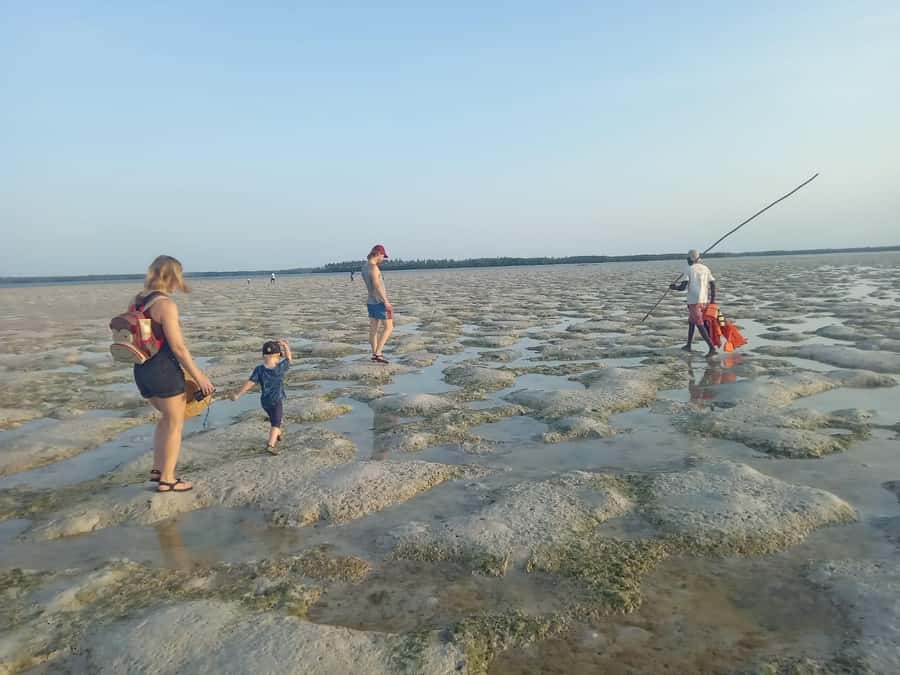
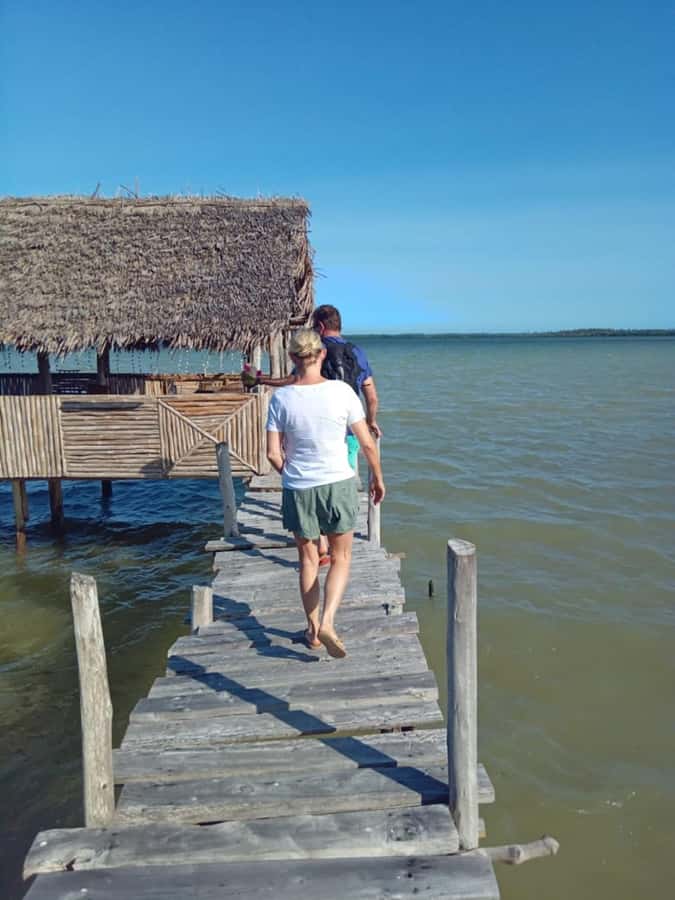
You’ll begin on the boardwalk and then cross the mudflats left behind by the lowering tide. The walk is part of the learning, because you are seeing how the shoreline works when the water level changes. You may see crabs scurrying, and you are walking through the exact area where the ecosystem is active.
Important practical note for 2026: from February 2026, the boardwalk is listed as under maintenance and temporarily inaccessible to guests. That can change how you reach the water or where you start your walk. If you are booking around that time, ask what the substitute route is and wear shoes that can handle rough, wet ground. The tour is still about the same mangrove experience, but the approach to it may be different.
If you go at low tide, expect longer walking on ground that can feel unusual, almost lunar. One review even flagged the mud and the very long path required to get back to a canoe when tides are low. That’s not a reason to skip, but it is a reason to dress and plan for it.
Boarding the dugout canoe: what you will notice immediately
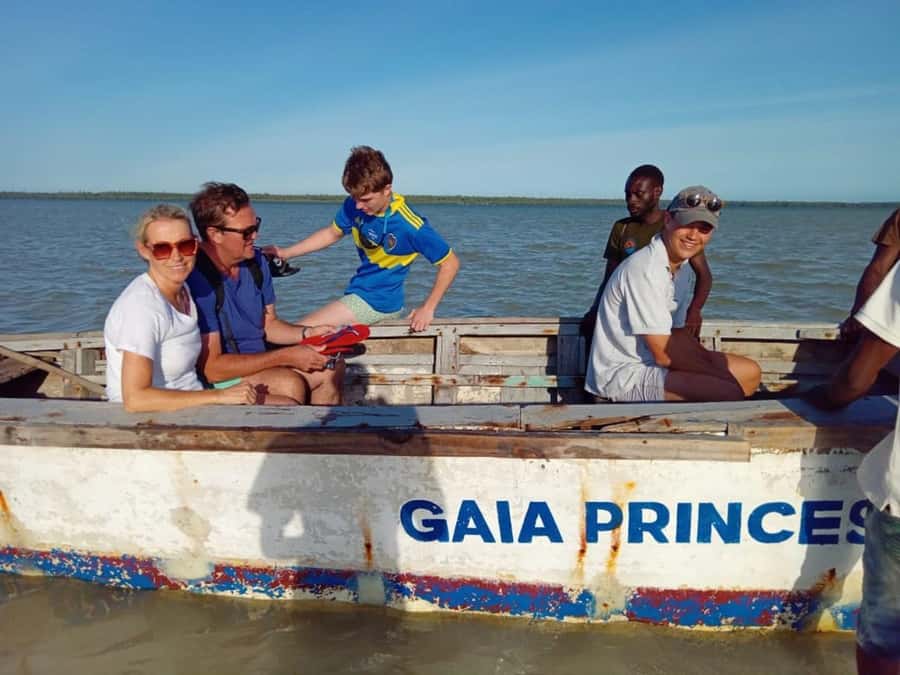
Once you reach the water, you board a traditional dugout canoe. The idea here is that the trip feels like it belongs to the creek, not like an imported sightseeing product.
You ride along with the pace of local fishing routes. Instead of large engines and loud systems, your speed depends on the guide pushing forward and steering through the mangrove channels. You’ll feel the narrowness of the waterway, the rhythm of paddling, and the sense that you are moving through a living shoreline.
This is also the point where bird spotting becomes more realistic. Birdlife tends to show up where food sources concentrate, and mangrove edges and creeks are exactly that.
If you have binoculars, bring them. The tour experience is built around seeing wildlife, and binoculars help you actually identify what you are looking at rather than just noticing movement.
Birdlife you can actually focus on, not just scan for
One of the biggest selling points is the birdwatching component: 65 different species reported in the creek waters. That number is your clue that you are not just getting a general “look, birds!” moment. The guide should be actively pointing things out as you go.
In practice, this matters because birds can be quiet until you are in the right place at the right time. On a canoe in mangroves, you are slow and low, and the guide can spot movement in branches and water edges. You’ll likely hear birds before you see them, and then you’ll see what they were reacting to.
Your best approach is simple: don’t stare at the water nonstop. I find it helps to do a loop, scanning water for movement, then pausing to check branches and roots. If you’re taking photos, use short bursts and accept that some birds will show up for only seconds.
More Kenya trips to compare
- Diani: Sunset Canoe Tour along the River with Mangroves
★ 4.8 · 65 reviews - Watamu Marine Park & Sudi Island Mangrove Forest Canoe Ride.With sea food lunch
★ 4.5 · 31 reviews - Diani Beach: Kongo River Sunset Experience in a canoe
★ 4.4 · 31 reviews - Diani: Sunset Cruise along Kongo River on Wooden Canoe boat
★ 4.6 · 20 reviews
Mangrove forest critters: mudskippers and oysters on roots
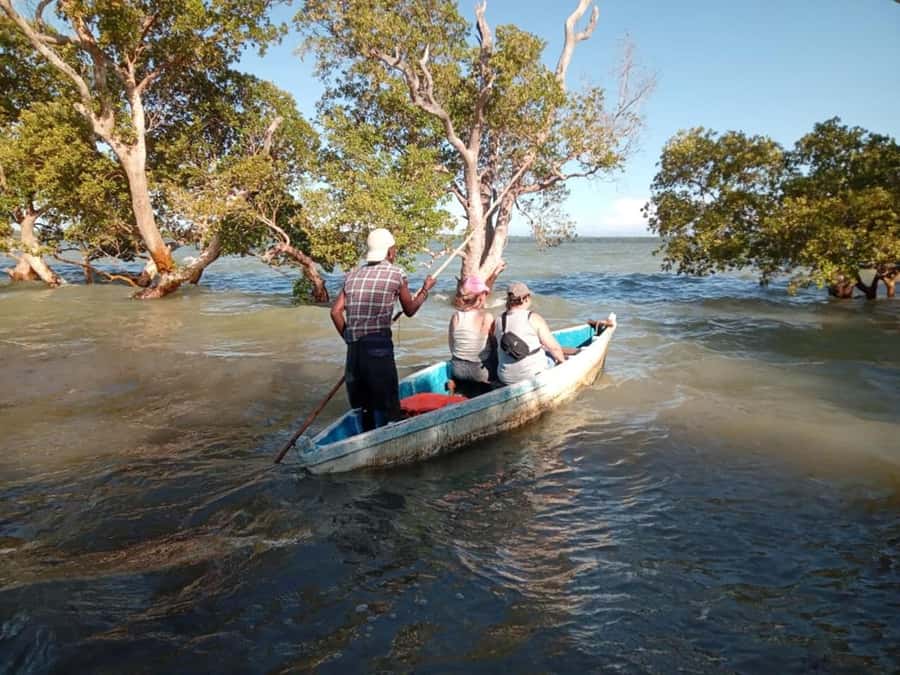
The tour does more than birds. It looks at what the mangroves feed and house.
You may see frogfish or mudskippers, also called amphibious fish. These are the kind of animals that make the mangrove ecosystem feel unreal in the best way, because they are connected to water and shore at the same time. As you paddle deeper into the mangrove forest area, the guide points out the features that help you spot them.
You’ll also be shown oysters growing on mangrove roots. That detail is small but powerful. It ties the ecosystem together: trees provide structure, roots hold moisture and surface area, and shellfish can attach and grow right there. It’s the kind of nature lesson you can understand without a textbook, because you’re seeing the environment at work.
If you love “hands-on nature,” this is one of the best parts of the tour because you are looking at the mangrove roots up close, not just viewing mangroves from a beach.
The sunset over Green Island: why the timing matters
After the wildlife and forest part, you shift into the sunset phase. The tour is structured so you see the sun set behind Green Island, with pastel colors spreading across the water and the mangrove-lined horizon.
This is where late-afternoon light is not just a nice extra. The entire experience changes once the sun starts dropping. Shadows lengthen, birds may settle into places where you can spot them, and the water starts reflecting colors more gently.
To make this portion work for you, plan to be present in the moment. Put your phone away once or twice and just watch the way the light moves across the ripples. Photos will happen too, but the scene is better when you give it your full attention for a minute.
Sunset views are part of the tour because the local guides know the creek rhythm. Go at the scheduled time and let the tour pace carry you.
Giriama village stop: coconut refreshment and a real community feel
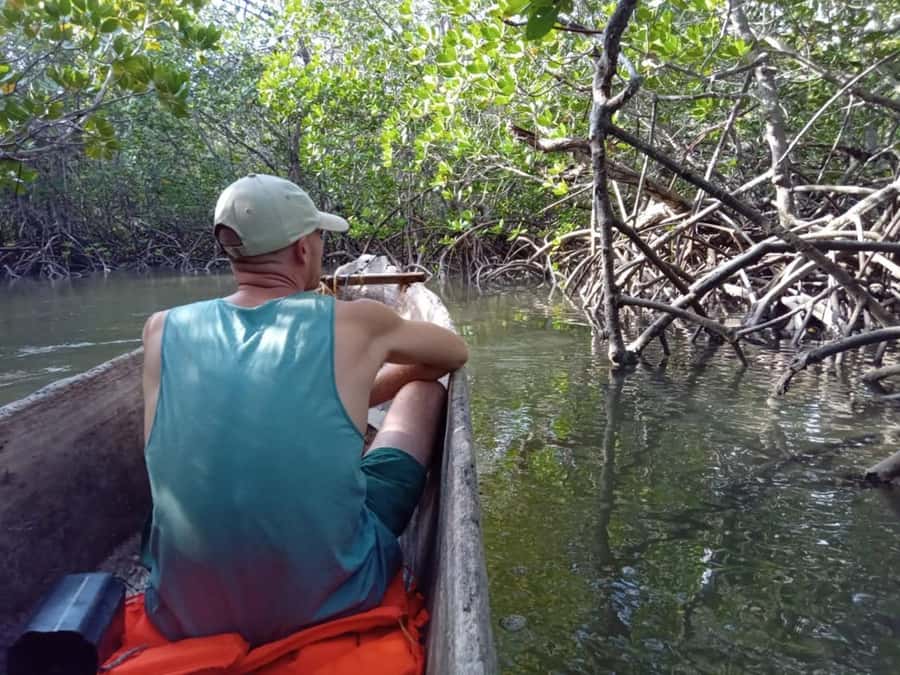
Once the sun has dropped behind Green Island, you head back and finish with a visit to the Giriama village. This is not described as a meal stop, but it is a meaningful transition from nature into daily life.
You’ll get a refreshment: either a coconut just picked from the palm or a glass of palm wine. I like that this feels tied to place and season rather than being a generic drink. It also gives you a breather after walking and canoe time.
Food details can vary, but at least one guide experience included delicious food offered as an option. If you care about extra eating, ask what is available on your day. What is clearly stated is that meals are not included, so don’t build your budget assuming a full lunch is part of the package.
One review highlighted guides Harrison and John as especially strong, with explanations about village life and the surrounding mangroves, including the importance of repopulating areas with younger mangroves. That kind of local conservation story is the difference between a nature walk and a lesson you remember later.
Guides and local explanations: what makes the best days better
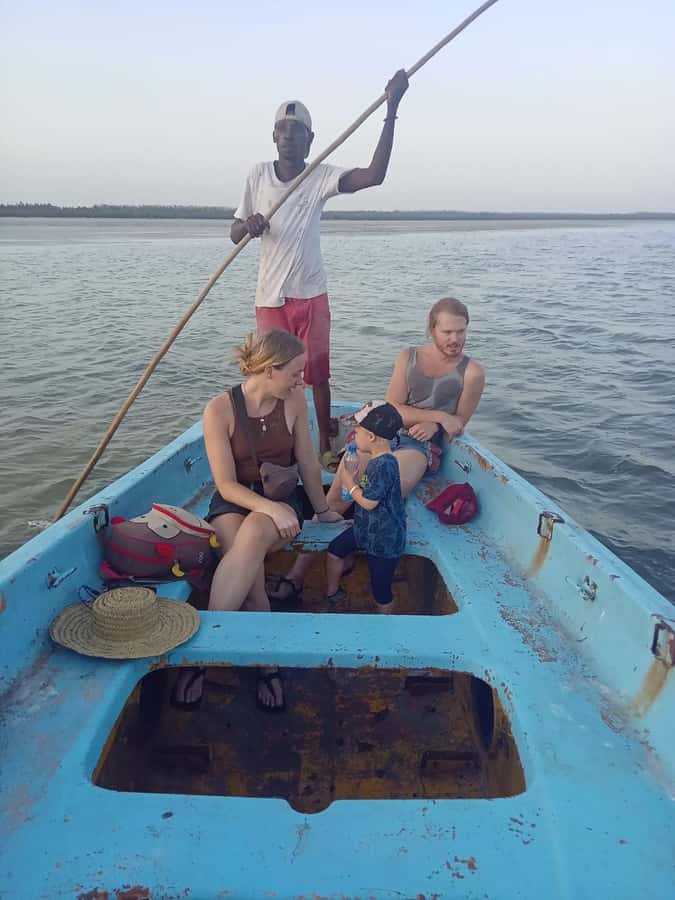
This tour is led by a live guide who speaks Swahili and English. That matters because mangroves and mudflat wildlife can be confusing if you only have guesses. A good guide makes the whole trip click: where to look, what to notice, and why it matters.
On some days, the guide experience is reported as genuinely outstanding, especially with Harrison and John called out for being generous with village context and wildlife insight. Even if you get a different guide, aim to treat the trip like an interactive conversation. Ask simple questions like what to watch for in the birds, and what you are likely to spot at your chosen tide.
The tour is also built around specific observations you can only get by moving slowly through the creek and roots, so guide explanations should feel naturally connected to what’s right in front of you.
Price and value: what you get for $20 in Watamu
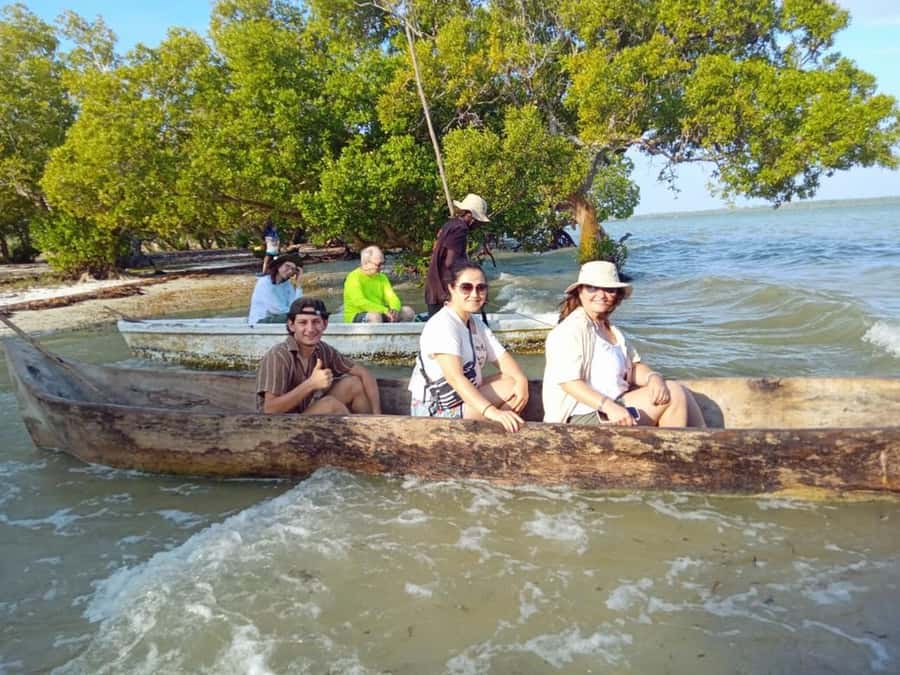
At $20 per person, this tour is priced as a strong value if you want real nature plus a village interaction. You are getting a lot of “moving parts” in one go: a walking entry through mangroves and mudflats, a canoe ride in a traditional dugout, bird watching with a high species count focus, sightings like mudskippers and oysters on roots, sunset viewing behind Green Island, then a village refreshment with coconut or palm wine.
What is not included is simple: meals. Also, transportation to the starting point is not included, though pickup can be arranged for an additional cost depending on distance by car, tuktuk, or motorcycle.
So the value is best when you plan your transport smartly. If you’re staying far from the meeting area, the transfer cost can narrow the deal. One review even said the transfer price ended up higher than the visit, so it’s worth checking the total cost before you agree.
Logistics to get right: pickup, timing, and choosing the right tide
A smooth tour day comes down to a few details.
First, confirm pickup if you need it. One unhappy review described being forgotten for hotel pickup and ending up in a different tuk tuk arrangement, then being asked for extra money later. That doesn’t mean it will happen to you, but it does suggest you should get everything clear in advance: pickup time, pickup place, and the cost if there is one.
Second, decide on low tide vs high tide based on your tolerance for walking. Low tide is more atmospheric and wildlife-heavy on the mudflats, but it’s also the most physically demanding part. High tide is easier on your feet.
Third, pay attention to the boardwalk maintenance note for February 2026. If your trip overlaps with that period, ask about how the walk is handled and whether the route changes.
Finally, remember the tour has a fixed sunset logic. If you go late, the sun part may not land the way you want. Plan to be ready on time, with sunscreen and water sorted.
What to bring so the tour feels comfortable
This one is short on guesswork. Bring:
- Camera
- Sunscreen
- Water
- Insect repellent
- Binoculars
Wear comfortable clothing and shoes, because you’ll walk and you may cross rough, wet mudflats depending on tide. If you get cold easily, consider a light layer, since late afternoon can feel cooler on the water. The tour isn’t listed as requiring special gear, but your best comfort will come from basics and good footwear.
Also keep an eye on insects. Mangrove areas can bring mosquitoes, and that’s exactly when repellent earns its spot in your day bag.
Is it worth booking? My practical recommendation
Book this tour if you want a traditional canoe mangrove experience paired with actual wildlife time and a guided sunset. The best fit is for you if you enjoy nature details, like birds and shoreline animals, and you also like learning about local life in places like Giriama village.
Skip or choose carefully if:
- you struggle with uneven walking or mobility issues (the tour is not suitable for people with mobility impairments)
- you hate muddy ground and long walks, especially at low tide
- you are far from the pickup point and the transfer cost might erase the low $20 price value
If you do book, I’d make two moves before you go. First, tell the operator your preferred tide so the walk matches your comfort level. Second, confirm pickup details and the total price including transport if you need it.
When it clicks, this is the kind of Watamu outing that feels grounded in place: mangroves, birds, roots, and then a calm village refreshment as the sun drops behind Green Island.
FAQ
What time does the sunset tour usually run?
If you do not specify low tide or high tide, the experience takes place around 4:00 PM to allow participants to enjoy the sunset over the lagoon.
How does low tide change the experience?
Low tide means a longer walk that includes exploring the mudflats, with a more distinctive setting and the chance to observe mudflat wildlife like crabs.
How does high tide change the experience?
High tide means less walking. The canoe portion begins from a point nearer the meeting point.
What wildlife will I be able to see?
You’ll focus on bird watching with reports of 65 species in the creek, and you may also see amphibious fishes such as frogfish or mudskippers, plus oysters growing on mangrove roots.
What refreshments are included?
You’ll get a coconut refreshment or a glass of palm wine in the Giriama village.
Is pickup included in the price?
Pickup is listed as included, but it also notes that organizing pickup may have an additional cost depending on the distance and transport type.
Is this tour good if I have mobility issues?
No. The tour is not suitable for people with mobility impairments, since it includes walking across mudflats and canoeing.
Recently reviewed from Kenya
- Watamu: Learn Kenyan Cusine with Jonathan★ 4.1 · 8 reviews
- From Mombasa/Mtwapa/Diani/Tiwi: Tsavo East Full-Day Safari★ 4.3 · 130 reviews
- Swahili Carved Doors Tour by Woman Woodcarver: Lamu Island★ 5.0 · 4 reviews
- Private Tour to Amboseli National Park★ 3.3 · 3 reviews
- Shimba hills tropical rain forest day trip★ 4.6 · 3 reviews
- Overnight safari to Tsavo East from Mombasa / Diani Beach★ 5.0 · 3 reviews
- Private Safari Day-Tour in Amboseli National Park★ 4.1 · 7 reviews
- Nairobi Walking tour:Explore History Culture and Traditions★ 4.8 · 222 reviews
Malindi & Watamu, compared.
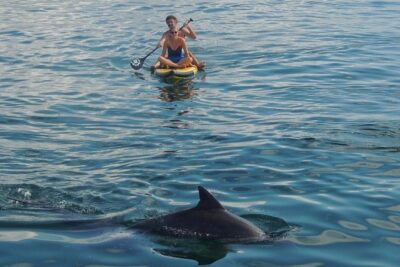
Watamu Marine Park & Sudi Island Mangrove Forest Canoe Ride.With sea food lunch
Read our review →
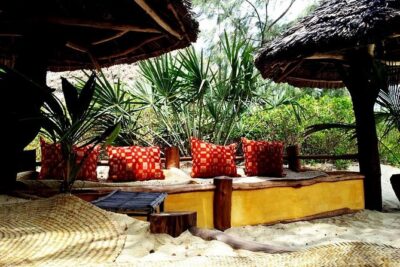
Tour Malindi & Robinson Island & Marafa Hell’s Kitchen
Read our review →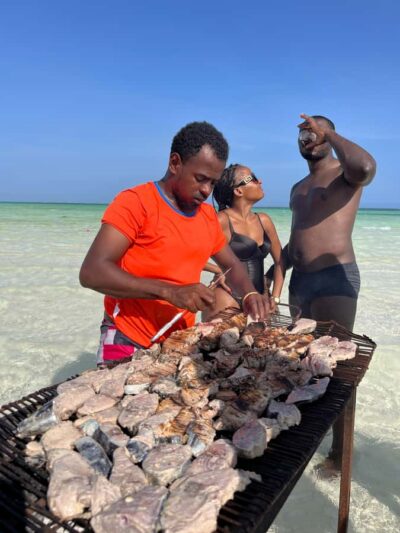
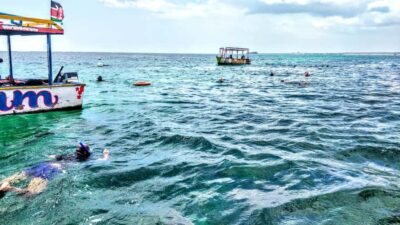
Blue Safari: Snorkeling at Watamu Marine Park & Seafood
Read our review →
Day tour to Tsavo East National Park from Malindi/ Watamu
Read our review →Browse the lists this tour appears in