

Reviewed · WALKING TOURS
Nairobi City Walk Tour
Nairobi hits you with contrasts fast, and this city walk is a smart way to see those contrasts on foot. You get a bilingual guide (John, with English and Spanish) who explains how the city’s daily life connects to big landmarks, and I really like that most stops are free to enter. One consideration: the schedule is tight, and the rooftop stop at the Kenyatta International Conference Center has admission that is not included.
The route is built around classic central-city anchors, from Jamia Mosque and the McMillan Memorial Library to Uhuru Park and the Cathedral Basilica. I also like the relaxed group size, with a maximum of 50 people, so the experience stays human-sized, not a cattle line.
If you dislike walking or want long museum time at every stop, this may feel a bit like “see it, learn it, move on.” Still, with a guide who answers questions clearly and keeps you moving, it is a great way to get oriented quickly.
Key things to know before you go

- Bilingual guidance in English and Spanish with a certified guide (John and sometimes Samson support, depending on the group)
- 12 central stops in about 2 hours 40 minutes, including parks, markets, faith sites, and government buildings
- Mostly free admissions so you spend time seeing, not paying at every door
- Two market stops that help you shop for traditional crafts with context, not guesswork
- One rooftop viewpoint option at KICC with admission not included, so expect a possible extra cost
A city-walk that mixes faith, markets, parks, and government in one loop

This tour works because it treats Nairobi like a living city, not a theme park of famous photos. In one afternoon, you pass through places people actually use: worship spaces, a university, public monuments, and markets where crafts come from communities across Kenya. That gives you a feel for how Nairobi’s modern core sits next to long-standing cultural identity.
You start with Jamia Mosque, then swing into the quiet importance of a historic library. After that, the city wakes up again at the markets, where you can browse Maasai items and learn how souvenirs tie to real people and real traditions. Then you get a breather in the parks and end with big civic landmarks, including the Parliament area and the city view from KICC.
The “value” part is not just the low price. It is that you are paying for guided sense-making across a dense area. Instead of taking random photos and hoping you guessed the story right, you get the context as you walk.
More City Tours in Nairobi
- Nairobi Historical Walking City Tour
★ 5.0 · 258 reviews - Nairobi City Walking Tour with Traditional Kenyan Lunch
★ 5.0 · 106 reviews - Nairobi: Private 4-Hour City Tour
★ 4.5 · 68 reviews
Price and time: why $20 can work if you like structure
At $20 per person, this is priced like a budget-friendly orientation walk. The reason it works is the mix of included guidance plus a stop list designed for quick learning. You are out for about 2 hours 40 minutes, and the schedule assigns short windows at each stop, from roughly 10 to 20 minutes.
That pacing matters. If you enjoy a “drive-by with explanations,” you will like it. If you prefer slow, lingering museum time, you might feel rushed at some points. Still, many of the sights are outdoor or pass-through style, so you do not spend your time only waiting in line. You also get a mobile ticket and all fees and taxes included, so you are not piecing together extra costs.
One extra cost to remember: Kenyatta International Conference Center is listed with admission ticket not included for the rooftop view. If you want that top-level city look, you should be ready to pay on the spot.
Who your guide is, and why it affects the whole tour
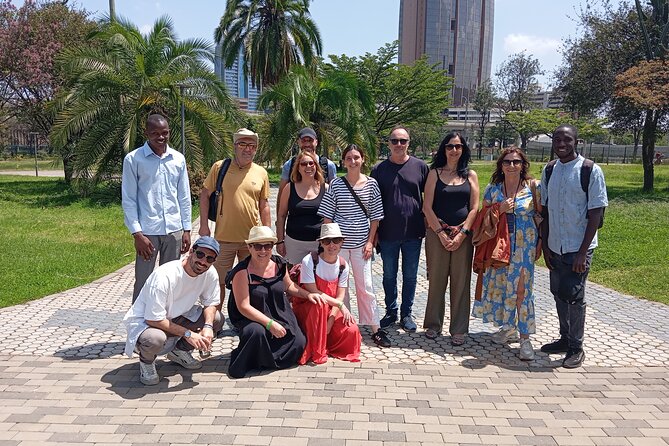
This is a guided experience built around storytelling and practical navigation. You are traveling with a certified guide speaking English and Spanish, which is a big deal in a city like Nairobi where context can make the difference between seeing a building and understanding why it matters.
In the feedback, John shows up again and again as the guide people loved for clear explanations and a friendly, high-energy style. Some groups also mention Samson, which suggests the tour is supported by more than one person at times. Either way, the consistent theme is that questions are welcome and answers come in a clear voice, not vague hand waving.
If you have any worries about “Do I understand this city fast enough,” this tour is designed to reduce that stress. You get a walking route that keeps you moving, and a guide who can connect dots in real time.
Stop-by-stop Nairobi: Jamia Mosque to McMillan Memorial Library

Your first major stop is Jamia Mosque, described as the biggest mosque in Kenya. This is a powerful opening because it tells you Nairobi’s history of faith and community life right away. Even if you are not trying to memorize every detail, the scale alone sets the tone for the city walk.
Next you move to McMillan Memorial Library, a historic library built in 1929 to remember William Macmillan by his wife. Libraries can be easy to overlook in travel, but this one is worth your attention because it represents how education and civic life formed during earlier eras of Nairobi’s growth.
What I like about this early sequence is the balance. You go from a large religious landmark to a cultural and educational site, both with free admission. That keeps the tour from feeling like you are only chasing architecture. You start with ideas: faith, learning, and public life.
Possible drawback: both of these stops are only around 10 minutes each in the itinerary. If you want to study inscriptions closely or read every display, you might need to come back later on your own.
More Walking Tours in Nairobi
- Nairobi: Historic and Modern Highlights Walking Tour
★ 4.8 · 703 reviews - Nairobi Downtown Walking Tour
★ 4.7 · 208 reviews - Nairobi Walking Tour: Downtown & City Tour
★ 4.8 · 32 reviews - Day tour to Hells Gate, Lake Naivasha and Crescent Island Walk
★ 5.0 · 26 reviews
City Market and the Maasai Market: where souvenirs meet context
After the library, the tour shifts to the markets, and that is where a lot of people’s favorite moments tend to happen. City Market is positioned as a place for traditional items made by different communities, with a notable focus on Maasai crafts. Think of it as a first taste of the souvenir shopping style in Nairobi.
Then you come to the Maasai Market, which is described as one of the best spots for Maasai items and also items from other tribes in Kenya. This is where the guided part pays off. Markets can be fun, but also confusing if you do not know what you are looking at. With context from your guide, you can shop smarter and ask better questions.
You are given around 20 minutes at each market stop. That is enough time to browse, pick up something small, and ask for explanations without turning it into a full shopping expedition. If your plan is to buy one or two meaningful souvenirs rather than collect a bag of everything, this timing is ideal.
Practical consideration: markets are social spaces, and you may get more attention if you stop to photograph items or ask lots of questions. Keep it friendly, keep moving when it feels crowded, and you will get more out of the experience.
University of Nairobi and Uhuru Park: Nairobi gets greener, fast

The tour continues to the University of Nairobi, described as the oldest and biggest university in Eastern Africa. A university is more than classrooms. It is also a symbol of ideas and the future of a city. Seeing it on foot in the middle of your walk helps you connect “education” with the rest of Nairobi’s daily rhythm.
Then you head to Uhuru Park, a beautiful park located in the middle of Nairobi city. This stop functions like a reset button. After markets and institutional buildings, the park gives you space to breathe, take a few photos, and notice how much green exists inside the city core.
Why this pair works: you get both structure and escape. The university represents long-term building, and the park offers immediate calm. It is a good reminder that Nairobi is not only concrete and commerce.
Time check: Uhuru Park is listed for about 15 minutes. If you want a longer sit-down, you can do that after the tour. But as part of a walking loop, it hits the sweet spot.
Cathedral Basilica, Parliament, and the civic side of Nairobi
Next, you visit the Cathedral Basilica of the Holy Family, described as a Catholic church in the city center. This gives you another layer to Nairobi’s faith landscape. You are already coming from Jamia Mosque, so switching to a major Christian landmark helps you understand the city’s religious diversity without feeling like a lecture.
After that, the tour moves to Parliament of Kenya, described as a tower where members of parliament meet. The emphasis here is civic power, the place where decisions come together. Even if you do not have a background in Kenyan politics, seeing the landmark as part of a walking route helps you understand where national governance sits in everyday city space.
This section can feel more “look at the building, move on” compared to the markets. That is normal for a city walk. Still, if you like landmarks that represent how a country organizes itself, you will enjoy this part.
Tip for your photos: angles matter more here than you might expect. The guide’s pacing helps you catch views while the group is still together.
Rooftop city views at KICC: what is included and what to expect
One of the most popular reasons people do a city walk is the payoff view, and this tour offers that at Kenyatta International Conference Center (KICC). The itinerary notes a clear view of the city from the rooftop, but the admission ticket is not included.
That means you should treat KICC as an optional moment you plan for, not a guaranteed “no extra cost” stop. If you decide to pay for the rooftop access, you will likely get the best skyline perspective of the entire walk.
Even without the rooftop, the KICC stop is valuable because it signals a modern Nairobi landmark in the middle of older institutions. It is a visual reminder of the city’s growth and the way Nairobi’s center blends eras.
Nairobi Railway Museum, National Archives, and Jeevanjee Gardens
The last part of the walk leans into Nairobi’s timeline. You stop at Nairobi Railway Museum, described as built by the British with help from the Indians, with 1985 linked to the creation of Nairobi. This kind of story can be hard to piece together on your own, so having it placed inside your day’s route helps the narrative stick.
Then you visit National Archives on Moi Avenue, where artifacts are kept and where there is documentation of Kenyan government history since independence. Archives are not always glamorous, but they are how you verify stories. Seeing where those records live makes the city feel less like rumor and more like documented reality.
Finally, you end at Jeevanjee Gardens, a small park in Nairobi. It is a gentle close to a walk that has covered faith, markets, education, and national institutions.
Time is short at each stop, roughly 10 minutes each for the museum and archives and 10 minutes for Jeevanjee Gardens. If you want deeper reading, you can treat the tour as a map to follow later. If you want the big picture quickly, this ending fits perfectly.
Logistics that actually help: meeting point, group size, and getting around
The tour starts at Carrefour St. Ellis, PR7F+G34, Wabera St, Nairobi, Kenya and ends back at the meeting point. That makes it simpler to plan the rest of your day, especially if you have a fixed dinner reservation.
You also get a mobile ticket, which is handy if you are juggling a lot of phone-based travel. The tour is described as near public transportation, which matters in Nairobi because it helps you return easily if you need a break or want to continue exploring after the walk.
Group size is capped at 50 travelers, and that tends to keep the pace manageable. It is not a private tour, so you will still feel like you are part of a group. But the guide support you get should be enough to keep your questions from getting lost.
Good to know: the tour notes that most travelers can participate. That is helpful, but it still is a walking tour through a central area, so comfortable shoes are a smart move.
Who this Nairobi City Walk tour is best for
I think this tour is a strong match for you if you want:
- A fast way to understand how Nairobi connects culture, civic life, and modern landmarks
- A guided route that reduces the guesswork of where to go next
- A chance to shop for traditional items with context from a guide who can explain what you are seeing
- A bilingual experience in English and Spanish
It may be less ideal if:
- You prefer long stays at fewer sites
- You hate market environments, noise, or shopping pressure
- You need fully detailed museum time at every stop
If you have limited time in Nairobi, this is a practical first or second day activity. It helps you get your bearings before you choose where to go deeper.
Should you book? My quick decision guide
Book this tour if you want an organized, walkable overview of central Nairobi with mostly free admission stops and a guide who answers questions clearly. At $20, the value comes from the structure: you cover a lot of ground and you get context along the way, not just photos.
Consider skipping or pairing it with your own plans if rooftop views are a must for you and you want all costs included, because KICC admission is not included. Also, if you know you will want to linger, plan extra time on your own for the stops that catch your eye.
Overall, this is a solid “learn the city on foot” option. It is the kind of tour that helps you feel like you can talk about what you saw, not just point at it.
FAQ
How much does the Nairobi City Walk Tour cost?
The price is $20.00 per person.
How long is the tour?
The duration is about 2 hours 40 minutes.
Where does the tour start and where does it end?
It starts at Carrefour St. Ellis (PR7F+G34), Wabera St, Nairobi, Kenya. It ends back at the same meeting point.
Is transportation included?
No. Private transportation is not included.
What’s included in the price?
All fees and taxes are included, and you get a certified guide (English and Spanish). You also receive a mobile ticket.
Are admissions included for all stops?
Most stops are free to enter. The Kenyatta International Conference Center rooftop admission is marked as not included.
What group size should I expect?
The tour has a maximum of 50 travelers.
What languages are offered?
The certified guide provides English and Spanish.
When should I book?
On average, this tour is booked about 15 days in advance.
What is the cancellation policy?
You can cancel for free up to 24 hours in advance for a full refund. If you cancel less than 24 hours before the start time, the amount paid is not refunded.
Recently reviewed from Nairobi
- Amboseli Day Trip from Nairobi★ 4.5 · 3 reviews
- Nairobi city tour★ 4.5 · 3 reviews
- Ngare Ndare Day Trip★ 5.0 · 3 reviews
- 1-Day Amboseli Safari★ 5.0 · 3 reviews
- Day Trip To Crescent Island And Hells Gate National Park★ 5.0 · 3 reviews
- Crescent Island Day Tour From Nairobi★ 5.0 · 3 reviews
- 13-Day Uganda Mgahinga Gorilla Trek, Maasai Amboseli Park★ 5.0 · 3 reviews
- 4 days group joining budget safari to Maasai Mara only★ 5.0 · 3 reviews
Walking Tours, compared.

Walking Tour Through Old Town Mombasa and Fort Jesus
Read our review →

Nairobi Walking tour:Explore History Culture and Traditions
Read our review →

Nairobi City Walking Tour with Traditional Kenyan Lunch
Read our review →

Browse the lists this tour appears in