
Reviewed · WALKING TOURS
Diani: Market and Street Food Walking Tour
This walking tour stands out because it turns a simple stroll into a real slice of everyday life in Diani, with food and local craft in the mix. I like how the guide leads you through the market first, then uses that context while you taste what people actually eat. One consideration: it is a lot of walking in warm weather, and the food stops are very local, so come ready for strong flavors and a hot pace.
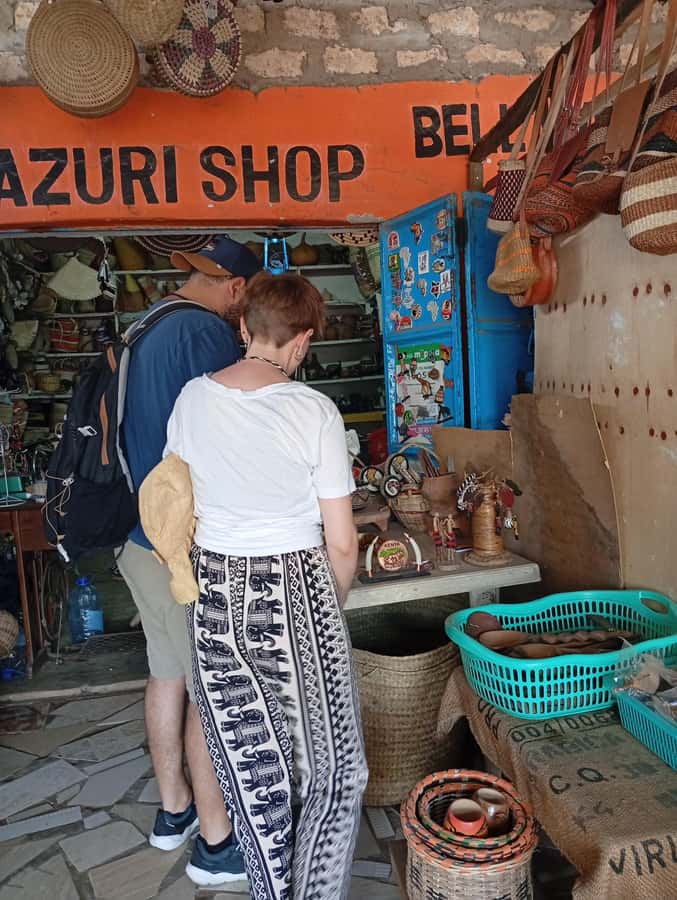
My other favorite part is the human side of it. You get a guided explanation of how people trade at the market, you’ll pass a souvenir shop, and you can try on a traditional Swahili dress and learn how the tailoring works. If you’re expecting big sightseeing monuments, this is more about culture through food and conversation, not landmark hopping.
Key things to know before you go
- Small group (max 10) means you can ask questions and actually hear what’s going on at each stop
- Ibiza Market visit comes with a guided walkthrough, plus a clear sense of who sells what and why
- Multiple tastings cover a starter, main dishes, and a snack, so you’re not just having one bite
- Swahili dress fitting gives you a hands-on look at the tailoring process, not just a photo opportunity
- Palm wine tasting takes place at a local bar, so plan to try it as part of the experience
Entering the world of Diani food, not just eating on the go
If your time in Diani is short, this kind of tour is a smart move. It saves you from the usual trap of wandering around hungry, guessing what’s safe, and paying restaurant prices for half the story.
Here, the meal is connected to place. You start at a cafe meeting point, then walk into the market area where you can see ingredients, packaging, and trading rhythms. That context changes how you taste everything later, even the humble staples.
You also get a guide with a job to do. Expect English explanations on how the market works and who the local people are who trade there, then guided tastings at a local restaurant and bar. The group stays small, limited to 10 participants, which matters if you want more than a quick handoff to a waiter.
More Diani Beach trips to compare
- Traditional Kenyan Cooking Class & Local Market Tour
★ 5.0 · 129 reviews - Memorable Daily KIBERA Slums/Toi Market Tour with Locals (2 hours)
★ 5.0 · 29 reviews - Mombasa City Tour,Fortjesus,Oldtown,Tusks and Spice Market.
★ 4.8 · 19 reviews
Meeting point at Tsunami Garden Cafe, then straight into the market
You meet at Tsunami Garden Cafe, where a lady greets you by name in front of the entrance. It’s an easy setup, and it keeps you from playing phone tag with a tour operator before you even start walking.
From there, the tour flows on foot. The first meaningful time block is the 30-minute food market visit, which is where your guide sets the tone. You’re not just walking past stalls, you’re being shown how trading happens and why certain foods show up again and again in daily meals.
You’ll also pass a souvenir shop and a tailoring shop along the way. That matters because it makes the walk feel like a route through the neighborhood’s economy, not a straight line from one food counter to another.
Ibiza Market: what to watch for as you walk and listen
At the market, the experience is less about being a fast shopper and more about being a careful observer. You’ll learn about the history of the market and the local people who trade there, and you’ll likely notice how the layout supports different kinds of sellers.
Here’s what I’d pay attention to while you’re there:
- Which ingredients are being sold in bulk versus small portions
- How stalls present spices, grains, and starchy staples that later show up in the dishes you’ll try
- How people move through the market area, with quick decisions and practical needs
It also helps that the tour includes time specifically for the market visit. In many food tours, market time is rushed. Here, you get a full 30 minutes to actually take it in before you sit down to eat.
Street food tasting: your “starter, main, snack” shortcut

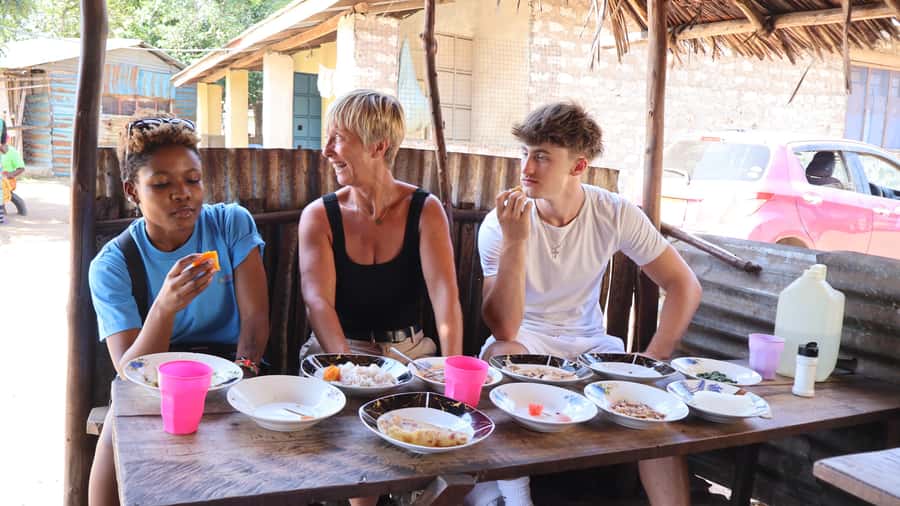
After the market walk, you’ll head to a local restaurant for street food tasting. This is the moment where the tour stops being educational and starts becoming delicious in a very direct way.
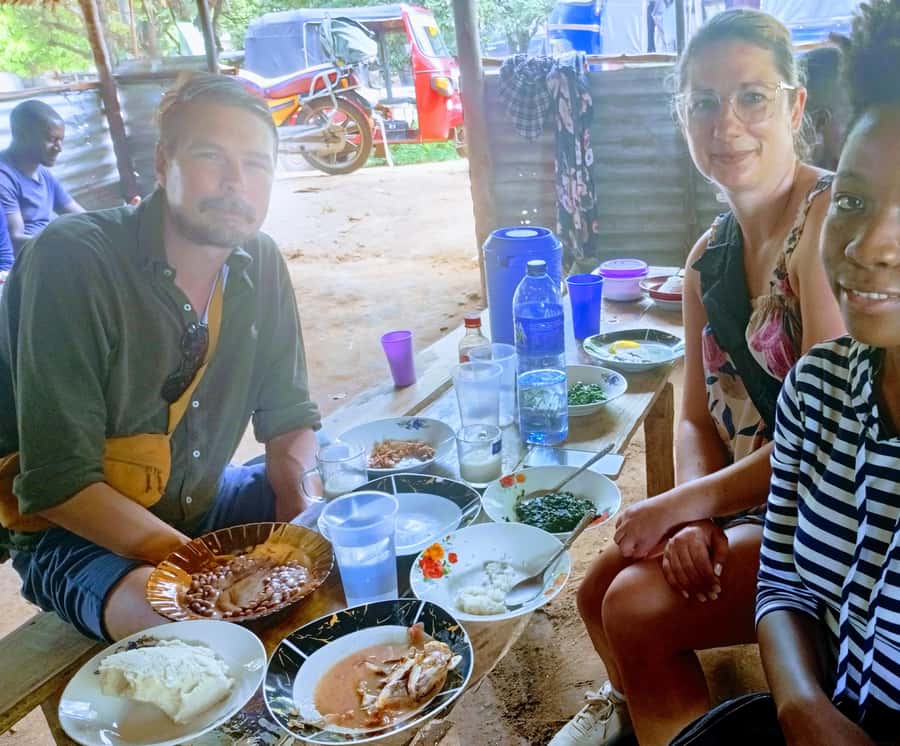
The tasting starts with a cup of Swahili porridge made from wheat, cardamom, and coconut milk. That combination is a great warm-up. It gives you sweetness and spice in one go, so when the savory dishes arrive, your palate is already primed.
Next come the main meals, and the tour doesn’t treat them like a single option. You’ll try combinations like:
- Chapati and coconut rice with coconut beans
- Ugali with sukumawiki
Ugali is a big deal in East African cooking because it acts like an anchor starch for many meals. Sukumawiki is a leafy green dish, which means you’re not only tasting carbs, you’re also getting the flavor of greens and how people balance the plate.
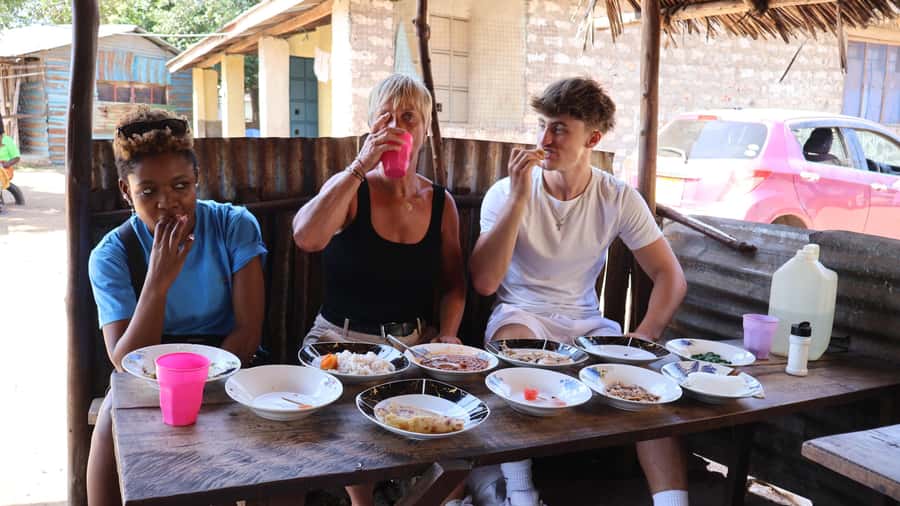
Then the tour finishes with a snack: Viazi Karai. Think of it as a street-food-style bite that keeps you going without turning the tour into a food coma marathon.
One practical note from the vibe of the experience: the restaurant and bar are described as extremely local spaces. If you prefer polished menus and quiet lighting, you might find the atmosphere plain. If you want authentic, normal everyday dining, that’s exactly what you’re aiming for.
A different day out of Diani Beach:
- PILLI PIPA DHOW, the genuine product, snorkeling tour to Kisite Marine Park
★ 4.5 · 217 reviews - Full-Day Special Wasini Island Tour with Snorkeling and Lunch
★ 4.5 · 184 reviews - Full Day Dolphin Watching with Snorkeling in Wasini
★ 5.0 · 88 reviews - Diani Beach: Glass Boat Cruise to Robinson Island
★ 4.6 · 69 reviews
The Swahili dress fitting: small detour, big learning
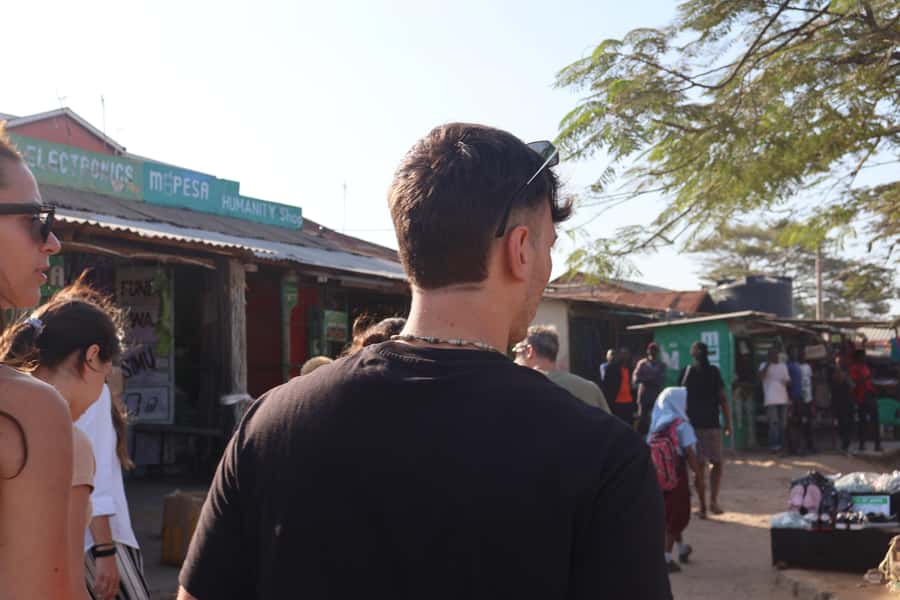
One of the most memorable parts is the tailoring stop. You’ll pass a tailoring shop, where you can sample deras, the women’s Swahili dress, and learn about how the dress started and how the tailoring process works.
Even if you don’t buy anything, this kind of stop changes how you see the region. Clothing here is not just fashion. It reflects local craft, daily wear traditions, and the skill involved in making a garment fit and look right.
I like that it’s built into the walk instead of being a separate show. You’re already moving through the neighborhood economy, then you get a short, focused explanation while you try the clothing. It’s the kind of interaction that’s hard to replicate if you travel on your own without a guide.
Palm wine at a local bar: how to approach the tasting
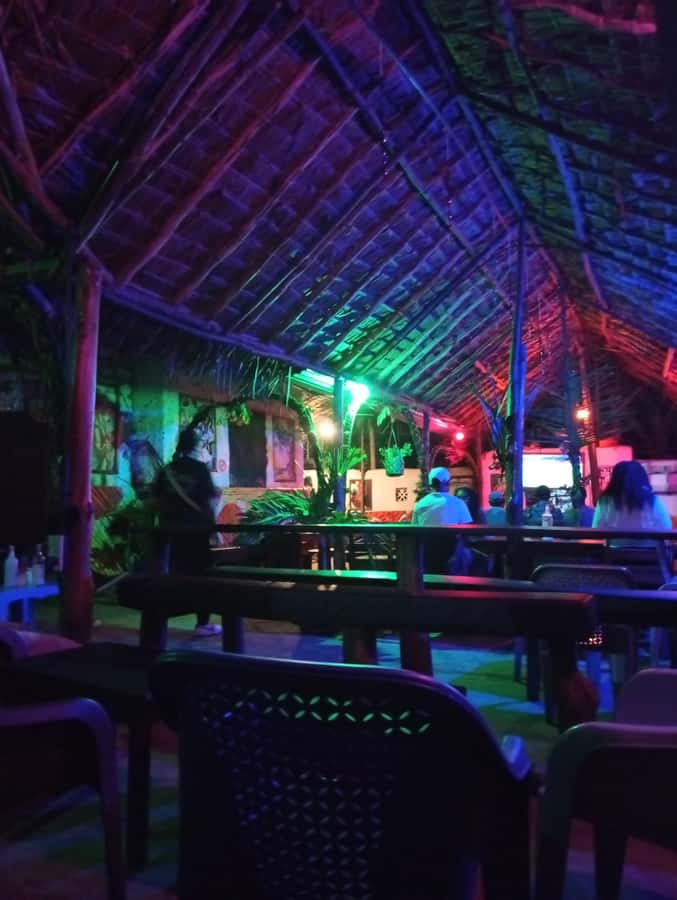
The final food-and-drink stop happens at a local bar on Diani Beach, where you’ll do a palm wine tasting for around 30 minutes. This is where you get to relax a bit after the walking and the meals.
Palm wine is distinctive, and you might love it or find it strong. Either reaction is valid because the point here is cultural, not just flavor. The guide helps set expectations, and you can purchase more if you want to keep the tasting going.
What you should know before you go is simple: this is a local bar experience, not a cocktail lounge. Keep it friendly and casual. Stick to whatever the guide recommends, and be mindful of your comfort level if you’re sensitive to alcohol.
Also, the tour notes that smoking is not allowed, and alcohol and drugs are not permitted. That’s worth respecting so everyone can enjoy the final tasting in good spirits.
What you will eat and drink, in plain order
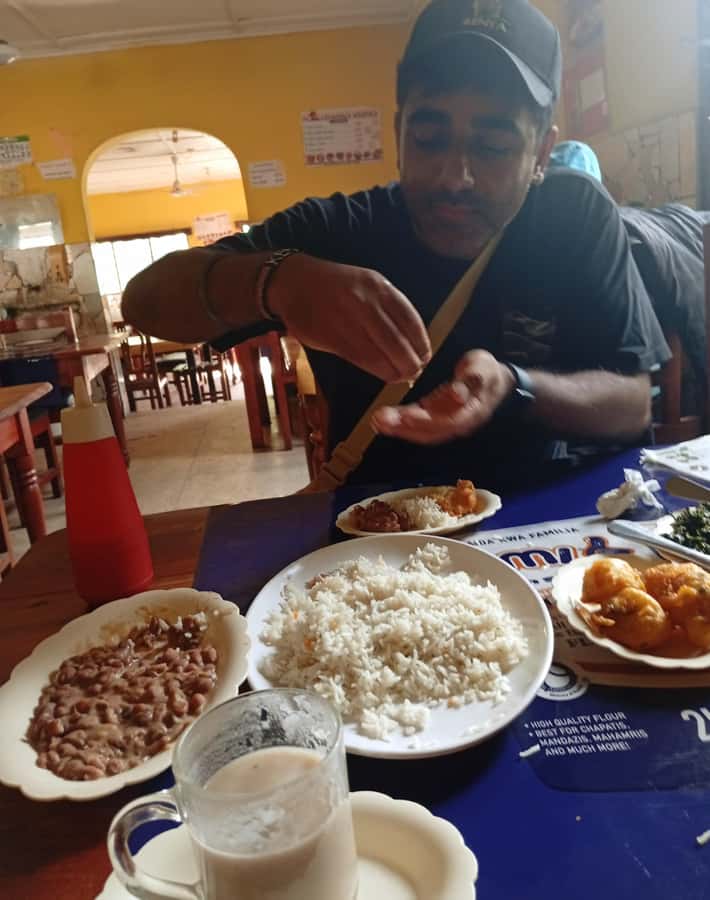
Here’s the flow you can expect in a clean sequence, so you know what to plan for in your stomach and your photos:
- Swahili porridge starter, made with wheat, cardamom, and coconut milk
- Main dishes including chapati and coconut rice with coconut beans
- Another main: ugali with sukumawiki
- Snack: Viazi Karai
- Drink: palm wine tasting at a local bar
This is helpful because you’re not guessing what counts as included. The tour is built around multiple tastings, so $30 is not “paying for one dish,” it’s paying for a set menu of local staples, plus guided context.
Price and value: is $30 fair for 90 minutes?
At $30 per person for 90 minutes, this tour is priced for convenience and guided access, not luxury dining. For that money, you get a local guide, market time, street food tastings, and a palm wine tasting.
That combination is usually the real value. A guide helps you:
- Know what you’re eating and why it matters locally
- Feel more confident ordering at local places
- Avoid the awkwardness of “Is this the right place?”
Also, the group is small, limited to 10 participants. In practical terms, smaller groups often mean you spend less time waiting and more time actually tasting.
The one cost to keep in mind is transportation. Hotel pickup and drop-off is not included, so you may spend extra on a taxi or short ride to Tsunami Garden Cafe. If you’re already nearby, that cost disappears, and the $30 becomes an even better deal.
Who this tour suits best, and who should pass
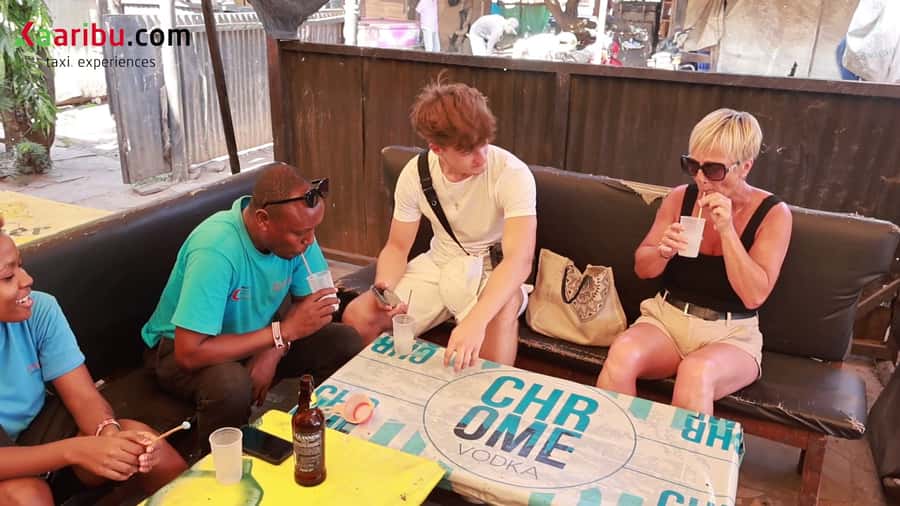
This tour fits best if you like food that feels local, not curated for tourists. If you enjoy learning how daily life works through markets, kitchens, and neighborhood bars, you’ll probably have a great time.
It also suits you if you appreciate hands-on cultural moments. Trying on a Swahili dress and learning tailoring details is a standout feature, especially if you prefer interaction over passive sightseeing.
Skip it if any of these apply:
- You use a wheelchair, since the tour is not suitable for wheelchair users
- You have food allergies, because the tour is not suitable for people with food allergies
- You’re traveling with young children, since it is not suitable for children under 3 years, or babies under 1 year
- You want a quick, low-walking experience, because it’s a hot walk in warm conditions
Practical tips that make the walk easier
Do yourself a favor and prepare for the weather and the walking. The tour can include a hot walk, and you’ll be moving between market and food stops.
Bring:
- Comfortable shoes (you will walk, and you’ll want traction)
- Sun hat (helps a lot on a bright day)
- Camera (market scenes, dress fitting, and food moments)
- Water (hydration matters before you feel thirsty)
Wear light layers if you can. Since the tour is 90 minutes, it is short enough that you don’t need a big bag, but long enough that heat can catch you if you show up unprepared.
And a smart move: ask your guide about what you’re about to eat. If your guide is someone like Tina, she’s known for clearly explaining what’s happening and keeping the tone upbeat. Even without that exact guide, you can expect English explanations, since the tour language is English.
Should you book this Diani market and street food walking tour?
Book it if you want a high-efficiency taste of Diani: market context, multiple local dishes, plus palm wine, all in one guided loop. The small group format and the inclusion of the tailoring dress fitting are strong reasons to choose this over eating randomly on your own.
Don’t book it if you mainly want sightseeing. This is food and culture on foot, and the pacing stays focused on tasting rather than visiting famous buildings. Also skip if you have food allergies or mobility limits, because the tour is not suitable for those situations.
If you’re a “show me how people actually live” type of traveler, this tour is a good fit. You’ll leave with fuller taste memories than you’d get from a single restaurant meal, and you’ll understand a bit more about how the market and local craft tie into daily life.
FAQ
How long is the Diani Market and Street Food Walking Tour?
The tour lasts 90 minutes.
Where is the meeting point?
You meet at Tsunami Garden Cafe. A lady will stand in front of the cafe and greet you by your names.
What’s included in the tastings?
The tour includes street food tasting and a palm wine tasting, plus a market visit and souvenir shopping opportunity.
Is the tour guided in English?
Yes. The tour has a live guide and the tour language is English.
What should I bring, and what is not allowed?
Bring comfortable shoes, a sun hat, a camera, and water. Smoking and alcohol and drugs are not allowed.
Is the tour suitable for kids or people with food allergies?
It is not suitable for children under 3 years, babies under 1 year, wheelchair users, or people with food allergies.
More Walking Tours in Diani Beach
- Nairobi: Historic and Modern Highlights Walking Tour
★ 4.8 · 703 reviews - Walking Tour Through Old Town Mombasa and Fort Jesus
★ 5.0 · 393 reviews - Nairobi Historical Walking City Tour
★ 5.0 · 258 reviews - Nairobi Walking tour:Explore History Culture and Traditions
★ 4.8 · 222 reviews
Recently reviewed from Diani Beach
- Wasini island: Marine Park, Dolphin Watch & Village Tour★ 2.5 · 6 reviews
- Wasini Day Tour★ 4.5 · 45 reviews
- Tsavo East 1 Day Safari, Beach To Beach In 4wd Jeep★ 5.0 · 14 reviews
- Diani Beach: Glass-bottom Boat Ride with Underwater Show★ 4.0 · 4 reviews
- PILLI PIPA DHOW, the genuine product, snorkeling tour to Kisite Marine Park★ 4.5 · 217 reviews
- Full Day Dolphin Watching with Snorkeling in Wasini★ 5.0 · 88 reviews
- Mombasa City Tour – Fort Jesus, Old Town, Spice Town & Craft★ 5.0 · 3 reviews
- Kisite Mpunguti Day Trip. A day of Oceanic Wonders★ 5.0 · 37 reviews
Walking Tours, compared.

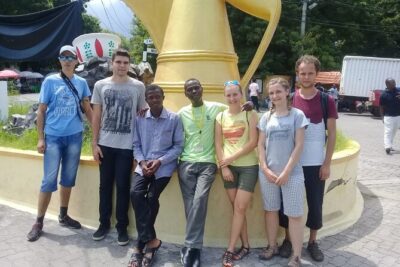
Walking Tour Through Old Town Mombasa and Fort Jesus
Read our review →

Nairobi Walking tour:Explore History Culture and Traditions
Read our review →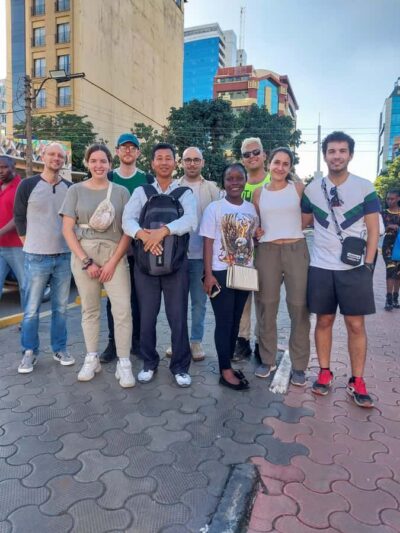
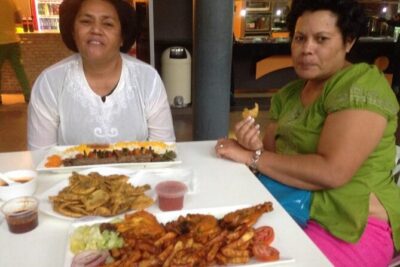
Nairobi City Walking Tour with Traditional Kenyan Lunch
Read our review →

Browse the lists this tour appears in