
Reviewed · COOKING CLASSES
Private Kenyan Cooking Class in Nairobi with a Local
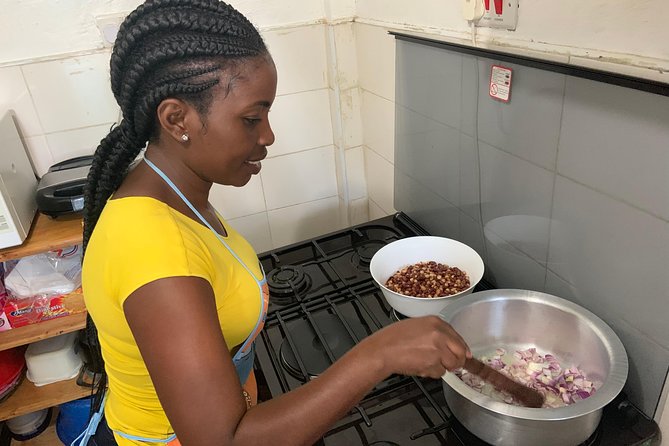
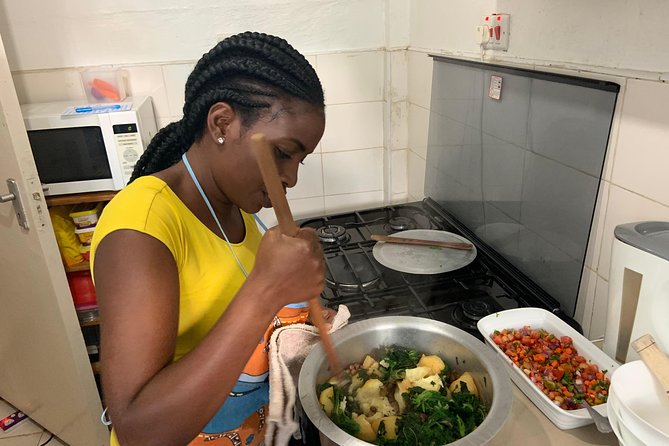
A private home cooking class in Nairobi is interesting because you are not just tasting Kenyan food, you are watching how it gets made where it is actually cooked. I like the tone of the experience, it centers on a warm, welcoming host named Grace, and she shares stories while you learn. One thing to consider up front, Grace’s kitchen is very small, so this is more of a cooking demonstration than a fully hands-on class.
The payoff is that you get a real Kenyan menu from scratch, then you sit down and eat the results together. I especially like the focus on Mukimo and Ugali, plus spiced rice and local vegetables, because those are the kinds of dishes you can recreate at home with confidence.
Key things to know before you go
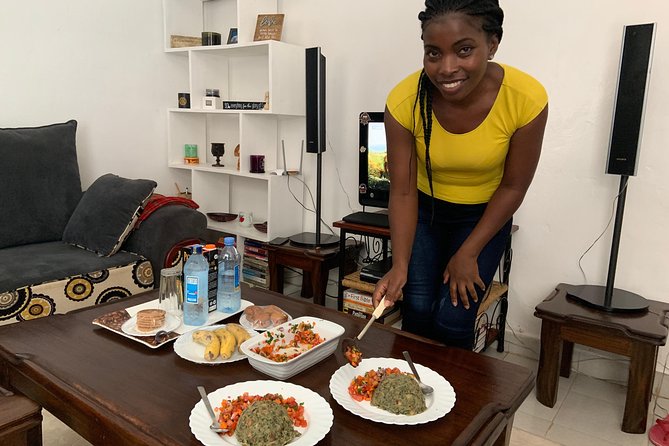
- Grace runs the show from her small kitchen, with you helping when space allows, so the pace stays relaxed and clear
- You learn a classic Kenyan menu, including mukimo (mashed potatoes and greens) and ugali (corn flour mixed with water)
- You cook and then share a home meal, so the class ends with a satisfying, lived-in dinner instead of a drop-off
- You get cultural context while cooking, including stories about Grace’s grandmother making mukimo over 100 years old
- It’s a private group experience, so your questions and pace stay with your party only
A Nairobi cooking class in a real home, not a show kitchen
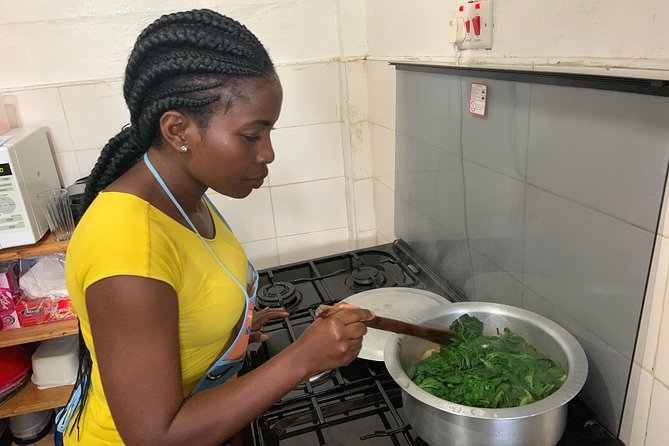
In Nairobi, food experiences can be polished and scripted. This one feels different because it is built around a local household and a family-style meal. You start by entering Grace’s kitchen, then you build the menu step-by-step, with the point being understanding how the food comes together, not just copying a trick.
Also, it is priced like a small luxury that stays practical. At $76 per person, you are paying for access to a home cook, a guided cooking session, and the meal that follows. If you usually spend that kind of money on one dinner out, this gives you more than a plate, it gives you a process you can repeat.
The hosting matters too. Grace comes across as welcoming and personable, and she answers questions while she cooks. That is key, because Kenyan home cooking is built on practical choices, like how things look and feel as they cook, not just exact timings.
More Cooking Classes in Nairobi:
- Traditional Kenyan Cooking Class & Local Market Tour
★ 5.0 · 129 reviews - Authentic Kenyan Cooking Class & Market Tour in Nairobi
★ 5.0 · 12 reviews - Private Traditional Kenyan Cooking Class with Lunch in Nairobi
★ 5.0 · 10 reviews
Your 11:00 am half-day rhythm, from kitchen to shared table
This experience starts at 11:00 am in Nairobi and ends back at the meeting point. The total duration is about 3 hours, and it often feels like two parts: a focused cooking demo window, then time to sit and eat together.
What you can expect during the cooking time:
- Grace explains what is being prepared as she goes
- You help whenever possible, especially with tasks that fit the kitchen size
- You learn how dishes like mukimo and ugali come together from basic ingredients
- You hear the family stories behind the recipes, including her grandmother’s mukimo
Because the kitchen is small, don’t expect a cooking station where you are fully in control of every step. Instead, think of it as a close-up lesson where you can watch, ask questions, and do the parts that work in that space.
After the cooking, you share the meal. That is not a separate add-on, it is the point. The food is the proof of what you learned, and you get to taste it in the same setting where it was made.
The menu you’ll learn: mukimo, ugali, spiced rice, and local vegetables
This is centered on a traditional Kenyan meal, built around several familiar staples and hearty sides. The menu typically includes mukimo, ugali, local vegetables, and spiced rice.
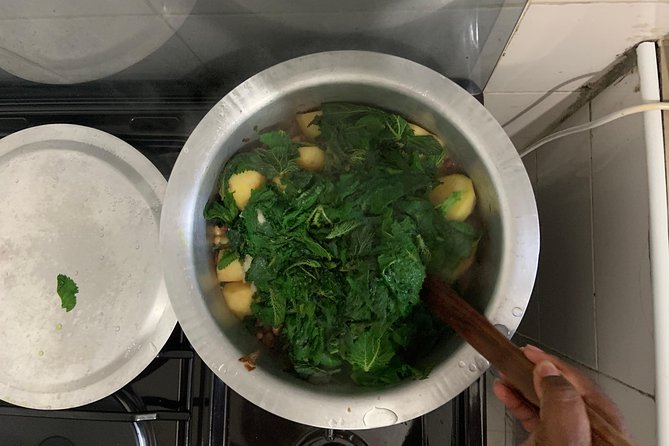
Mukimo: mashed potatoes and greens
Mukimo is one of the dishes you will spend time understanding. It is described clearly as mashed potatoes and greens, and Grace also shares stories about making variations of it that her family knows and keeps in rotation.
In a small kitchen demo like this, mukimo is a good anchor. It is not just about chopping and cooking, it is about texture. You learn what a mashed, mixed result should look like when it is ready to eat, and you can translate that into your own kitchen later by focusing on texture rather than memorizing a single step.
More Nairobi trips to compare
- Market Tour and Traditional Kenyan Cooking Class in Nairobi
★ 4.8 · 6 reviews - Local Market Tour and Traditional Meal Cooking Class
★ 5.0 · 4 reviews - Agro-Tourism Tea Workshop in Nandi Hills
★ 5.0 · 3 reviews - Beginner Swahili Woodcarving Classes with Woman Woodcarver
★ 5.0 · 3 reviews
Ugali: corn flour mixed with water
Ugali is another centerpiece, described as mashed corn flour mixed with water. This dish is all about consistency, and that is why it works well in this format. Even when you are not doing every step, watching Grace handle the mixture helps you understand what to aim for.
If you want to recreate it at home, ugali is one of the most doable dishes to practice because you can control the variables. The key lesson is to pay attention to how the mixture changes as it cooks, not to guess.
Spiced rice (pilau) and local vegetables
You also learn spiced rice and local vegetables. Spiced rice is the kind of dish where aroma tells you a lot. You get a feel for how spices move from raw to cooked, and how the finished rice is meant to taste as part of a whole plate.
Local vegetables round out the menu. The best part is that the flavors are practical, not complicated for the sake of being complicated. Even if you end up recreating them with your own pantry items, you will have a model for how Kenyan home cooking treats vegetables as something hearty and satisfying.
What makes this feel authentic: stories from Grace’s family

Cooking classes can become pure technique. This one is technique plus family context. Grace shares stories about her grandmother making mukimo for the family, including the fact that her grandmother is over 100 years old. That kind of detail matters because it turns recipes into something lived-in.
It also changes the tone of your questions. Instead of asking only how, you are more likely to ask why a dish is made one way versus another. Grace’s answers help you understand that these recipes are used, adapted, and repeated based on household habits.
That is where the experience becomes more than a class. You walk away with a sense of how food connects people at the table, especially when the cooking happens in a modest home kitchen where space is limited and the work is shared.
How hands-on is it, really? Plan for a demo, then help where you can
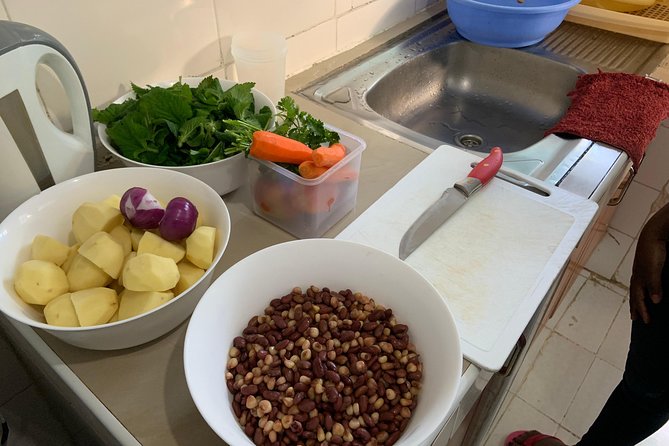
One detail to plan around: Grace’s kitchen is very small. Because of that, Grace does most of the cooking while you watch. She still invites you to help whenever possible, but the format leans toward demonstration.
So what does that mean for you on the day?
- You will learn by observing and asking questions, not by driving every station
- Your participation will be real, just shaped by space and timing
- You will likely do smaller tasks or assist with specific steps, when there’s room
If you want a chaotic, hands-on workshop where you are guaranteed to cook every item start to finish, this may not be the match. If you want a thoughtful lesson inside a real home kitchen, you will likely find this format easier and more enjoyable.
Practical tips to get more out of the 3 hours
You are paying for access, time, and a meal. You want to leave with usable knowledge, not just good memories. Here’s how to make the most of it during those 3 hours.
Ask texture questions, not just timing
For dishes like ugali and mukimo, the key is how things look and feel as they cook. When Grace is working, ask what you should watch for as the mixture thickens or as the greens are incorporated. That way, when you recreate it later, you will know what you are aiming for.
Take simple notes on the flow
Even if you don’t write down every measure, note the order of steps and the cooking checkpoints. Your goal is to recreate a process, not to guess from memory.
Taste as you go, especially for spiced rice and vegetables
You will be able to eat what you cook. Use that moment to understand balance. If the spicing feels right, you can look back at what you noticed during cooking and replicate that approach at home.
Price, value, and why $76 can make sense

At $76 per person, this is not the cheapest activity in Nairobi. But it also is not just a cooking lesson in a classroom. You are getting:
- Private, family-home access with a local host named Grace
- A cooking session timed to a traditional menu
- The meal that you cook together and eat afterward
- A small group format, so the experience stays personal
If you are traveling with one or two people, private home access is often what drives cost. Here, you are also adding the value of context, those family stories, and the fact that you can learn dishes you can reproduce.
There are group discounts listed, so if you are traveling with friends or family, ask how the pricing changes for your group size. With discounts, this starts to look even more like a practical value.
Logistics that matter day-of
This is a private activity, meaning only your group participates. You also get a mobile ticket, which is usually easier than juggling paper confirmations.
It’s near public transportation, which is useful if you prefer not to rely entirely on a ride-hailing app. And service animals are allowed, if that affects your planning.
Finally, the experience ends back at the meeting point, so you are not stuck figuring out transportation after the meal. That matters when you are already hungry and ready to be done.
Who should book this cooking class
This fits best if you want a few specific things from Nairobi:
- You want a food experience with real people in a real home kitchen
- You enjoy learning recipes you can recreate, not just eating something tasty once
- You like asking questions and hearing the stories behind dishes
- You are comfortable with a small-kitchen format where you watch most steps and help when possible
It is also a strong pick for travelers who don’t want a crowded group setting. Private format helps you get your questions answered without feeling rushed.
If you are the type who needs full hands-on control for every dish, you might feel limited by the small kitchen setup. But if you treat it as a guided demonstration, it can be surprisingly effective.
Should you book this private Kenyan cooking class with Grace?
I would book it if you want authentic home cooking in Nairobi, with a host who is welcoming and focused on explaining. The best part for me is the combination of a classic menu (mukimo, ugali, spiced rice, local vegetables) and the shared meal at the end. You leave fed, and you leave with a clear path to cook these dishes again.
Skip it if you are expecting a fully hands-on cooking camp where you do every step. This kitchen is small, so Grace does most of the cooking. But for the right traveler, that is not a drawback, it is the point: you get a close-up lesson inside a real household kitchen.
FAQ
How long is the Kenyan cooking class in Nairobi?
It lasts about 3 hours.
What time does the experience start?
The start time is 11:00 am.
What dishes will I learn to cook?
You will learn about cooking mukimo (mashed potatoes and greens), ugali (corn flour mixed with water), local vegetables, and spiced rice (pilau).
Is it a hands-on cooking class or a demonstration?
Because the kitchen is very small, it is more of a cooking demonstration. Grace does most of the cooking, and you help whenever possible.
Is this experience private?
Yes, it is private, and only your group will participate.
Where does the experience take place?
The class takes place in Nairobi, Kenya, at a local home kitchen, and it ends back at the meeting point.
How much does it cost?
It costs $76.00 per person.
Do I get a ticket on my phone?
Yes, it includes a mobile ticket.
What if I book and need to cancel?
You can cancel for a full refund up to 24 hours before the experience starts. Confirmation is subject to availability and you receive it within 48 hours of booking.
Recently reviewed from Nairobi
- Amboseli Day Trip from Nairobi★ 4.5 · 3 reviews
- Nairobi city tour★ 4.5 · 3 reviews
- Ngare Ndare Day Trip★ 5.0 · 3 reviews
- 1-Day Amboseli Safari★ 5.0 · 3 reviews
- Day Trip To Crescent Island And Hells Gate National Park★ 5.0 · 3 reviews
- Crescent Island Day Tour From Nairobi★ 5.0 · 3 reviews
- 13-Day Uganda Mgahinga Gorilla Trek, Maasai Amboseli Park★ 5.0 · 3 reviews
- 4 days group joining budget safari to Maasai Mara only★ 5.0 · 3 reviews
Cooking Classes, compared.

Traditional Kenyan Cooking Class & Local Market Tour
Read our review →
Authentic Kenyan Cooking Class & Market Tour in Nairobi
Read our review →
Private Traditional Kenyan Cooking Class with Lunch in Nairobi
Read our review →
Market Tour and Traditional Kenyan Cooking Class in Nairobi
Read our review →
Local Market Tour and Traditional Meal Cooking Class
Read our review →
Browse the lists this tour appears in