

Reviewed · KIBERA
Full Day Kibera Slum Tour
Kibera is not a box-ticking stop, and that is exactly what makes this tour so interesting. You get out of the hotel routine and spend a focused morning exploring Toi market and the community programs around Kibera from Nairobi.
I especially love two parts. The time at Hope and Shine Kibera Center, where you join in co-curriculum moments and see how the center supports local kids, feels meaningful and human. I also like the hands-on neighborhood texture, from talking with a women’s group to experiencing a ride in a matatu, which helps you understand daily life beyond the headlines.
One possible drawback: this is a sensitive, real-world area, so you will want a guide who communicates clearly. A past guest noted a guide knowledge or explanation gap, so I suggest you go in with a few questions ready and ask for context as you go.
Key things I’d put on your radar
- Hope and Shine Kibera Center volunteering time with hands-on co-curriculum activities
- Toi market walkthrough to see how the market is organized and how traders work
- Women’s group conversation for a direct look at daily community life
- Matatu ride experience to feel Nairobi’s local transport rhythm
- Youth group meeting to round out the day with more voices
- Private pacing so your group can move at a comfortable speed
Kibera From Nairobi, with Real Community Stops
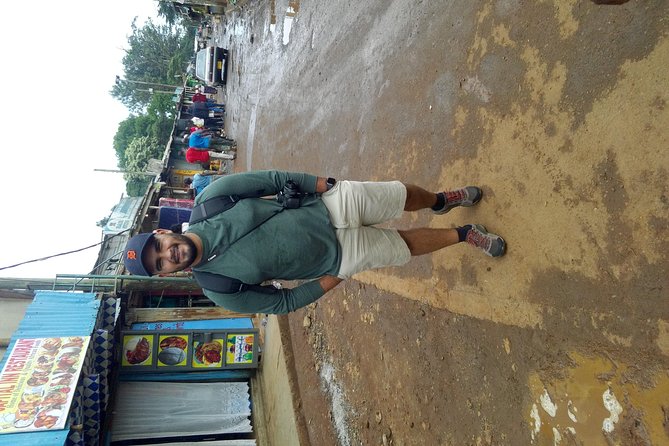
A Kibera slum tour can be either shallow and awkward or thoughtful and respectful. This one leans toward the thoughtful side because the day is built around conversations and community program time, not just photo stops.
You start with a briefing point at Greenhouse mall, then head out with private transportation. You also have a private format, meaning it is just your group. That matters because it gives your guide more room to explain, and it helps you ask the practical questions that come up when you are walking through markets and meeting groups.
I like that the schedule includes multiple viewpoints. You are not only shown one slice of life. You move through a market environment, a learning and support center, group discussions, and even a matatu ride. That combination helps you build a clearer picture of how people connect work, schooling, and community life in one urban area.
More Full-Day Tours in Nairobi
- Full Day Nairobi Cultural and Historical Tour
★ 5.0 · 153 reviews - Full Day Lake Nakuru Park and optional boat ride on Lake Naivasha
★ 4.5 · 95 reviews - Amboseli National Park: Guided Full Day Tour
★ 4.5 · 42 reviews
Pickup, Starting Point, and How the Day Actually Flows

Your tour includes pickup at your hotel of residence, and you’ll get a mobile ticket. Plan on a morning to early afternoon time window, since the experience is listed at about 4 to 6 hours.
You also have a starting point at Greenhouse mall for the briefing. That is useful if you want to time your day intelligently. If your hotel pickup timing is something you need to coordinate, Greenhouse mall gives a clear place to meet and settle in before heading into Kibera.
Because this is private transportation, you avoid the stress of stitching together local directions while you are also managing the emotional weight that can come with seeing hard realities. Instead, the day stays guided and structured.
Toi Market: The Traders, the Sections, and the Daily Grind
Toi market is where you get your bearings fast about how trade works in a dense urban setting. You’ll spend time seeing the extensive side of the market and learning how it is organized into different sections.
What I love about this part is that it is not just about shopping. Your guide explains daily life of traders and points out how the market is laid out. That turns what could be a confusing maze into something you can actually read, which makes your time more comfortable and more useful.
Practical note: market walking means you will likely want to keep your hands free for conversation and quick decisions. If you plan to buy something, you can do it during the market portion, then keep the rest of the day moving.
Hope and Shine Kibera Center: Volunteering with Co-Curriculum Activities
This is the heart of the day. You join the Hope and Shine Kibera Center community development program, and you volunteer at the center. You’ll also learn about the life of the children and the teacher, and you can be part of co-curriculum activity.
A previous guest described classroom time with children singing, learning, and sharing a meal together. Even if the exact rhythm changes by day, that kind of shared moment is exactly why this stop lands. You get more than a lecture. You get a relationship-based experience, where the day is about being present alongside the program.
One thing to keep in mind: centers and classrooms have their own pace. If you are the kind of person who likes strict schedules, this may feel different. But if you are open to flexibility, you will get a better sense of how teaching, community support, and everyday life connect.
More of Kibera:
- Nairobi: Explore Kibera Slum with Local Guides
★ 4.9 · 365 reviews - Kevins Kibera Slum Tours
★ 5.0 · 213 reviews - Nairobi: Kibera Slum storytelling tour with a Local
★ 5.0 · 185 reviews - Kibera Slum Tour with Lucas
★ 5.0 · 119 reviews
Aerial Views of the City of Hope and the Meaning of Place

You also see two aerial views of the city of Hope. This part is easy to miss when people think slum tours are only street-level, but I think it adds a lot.
Why it works: looking from above helps you understand that neighborhoods are not random. There are patterns, and there is structure to the way areas grow and function. It can also help you connect what you see on foot with the larger reality of Nairobi’s urban geography.
It is also a good “reset” moment mid-day. After market time and community center interactions, the aerial views give your brain a chance to organize what you just experienced into something more coherent.
Bead Shops and Shopping with Context
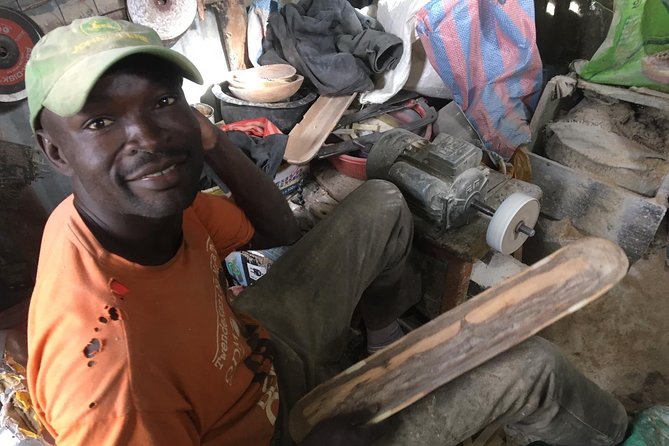
You’ll shop at one of the bead shops. This is a small stop, but it can be a smart one for two reasons: you get a local craft to take home, and you also get a chance to practice respectful, ordinary conversation around work.
The value here is in the context. When a guide explains what you are looking at, shopping stops being random. You can ask simple questions and understand how craft fits into daily life and local enterprise.
If you do plan to buy, set a realistic budget ahead of time. That way you can enjoy the experience without turning it into a negotiation you did not want.
Women’s Group Talk: Daily Life from Inside the Community

Meeting one women’s group is one of the clearest “insider” components of this tour. Instead of hearing general statements, you get a direct conversation about what they do day to day.
I like that this is not treated as a box labeled culture. It’s treated as a working community topic. Women’s roles in small businesses, caregiving, and local support systems are often the glue that holds neighborhoods together, and a conversation here helps you understand that.
The result is a shift in your perspective. By the time you leave this stop, you are not only thinking about buildings or crowded streets. You’re thinking about people doing tasks, making decisions, and solving problems in real time.
Matatu Ride and the Youth Group Stop

Experiencing life inside a matatu gives you another kind of perspective. It is not a museum ride, and it is not sightseeing. It is transport as a social environment, with the pace and rhythm that comes with how Nairobi moves.
This part can be a highlight if you are curious and you stay open-minded. If you prefer quiet or you dislike tight spaces, treat it like a cultural observation, not a comfort event.
Then you meet one youth group. This adds balance. Markets show economics, the center shows education and support, and the youth group meeting helps you see how younger people see their city and their future.
In many places, youth perspectives get ignored because tours focus on adults. Here, you at least get a chance to listen.
Guides Matter: Learning from Lucas and the Importance of Clear Communication

One of the standout points from a top-rated experience was the guide named Lucas. The guest described Lucas as pleasant, intelligent, and warm, and noted that his explanations shaped their view of Nairobi in a genuinely positive way.
That matters for a Kibera tour. You are dealing with complex topics, and the difference between a good and merely okay guide can be huge. If you are not getting clear context, you can miss the point or feel confused.
And there is a second lesson from a lower rating: a miscommunication or guide knowledge gap can happen. I cannot control what any specific guide will be like, but you can control how you show up. Ask questions early, and if something feels unclear, ask for clarification again in plain language.
Price and Value: What $65 Buys You in a Private Format
At $65 per person, this is not a cheap souvenir purchase, but it is also not priced like a luxury day. The main value is that you are paying for a structured, private way into the community through real stops and real conversations.
Your price covers all fees and taxes and includes private transportation. The day also includes an admission ticket as part of the center-focused segment. Lunch is not included, so you should plan to eat before or after, or bring a snack if you need one.
To judge whether it is a good value for you, think about what you would pay for otherwise:
- A guided market and community program day with transportation.
- Time with group conversations, not just walking.
- A private experience where your guide can keep pace with your questions.
If you want a tour that is more than a quick look, this pricing makes sense. If you only want a casual look and you are not interested in talking with community groups, you might feel like the cost is higher than the payoff.
Who This Tour Suits Best
This is a strong fit if you want:
- A Kibera slum tour from Nairobi that includes community program time, not just streets.
- Real conversations with groups, including women and youth.
- A guided day you can handle emotionally, because the experience is direct and human.
It may be less suitable if:
- You want a relaxed, purely recreational day.
- You dislike public transport experiences like matatus.
- You prefer museums and straightforward sightseeing over community-based interaction.
It says most people can participate, so you likely will not face major barriers, but the day does involve walking through a market area and moving between stops.
Should You Book This Full Day Kibera Tour?
I would book this if you are looking for a guided, respectful day that mixes market life, a center focused on children and co-curriculum activities, and conversations with women’s and youth groups. The private pacing and inclusion of a matatu ride help you build a fuller picture of daily life in Nairobi.
I would hesitate if you need everything to feel comfortable and predictable, because this is not the kind of tour where discomfort is eliminated. Still, the structure is designed to keep the day readable and purposeful.
If you do book, come with a mindset of listening. Your best moments will likely be the ones where you stop talking like a visitor and start paying attention like a neighbor for a few hours.
FAQ
How much does the full day Kibera slum tour cost?
It is priced at $65.00 per person.
How long is the tour?
The duration is listed as about 4 to 6 hours.
Is pickup included?
Yes. Pickup is offered from your hotel of residence.
Where do you meet for the briefing?
The briefing happens at Greenhouse mall, which is also listed as the starting point.
Is lunch included?
No. Lunch is not included.
What does the tour include for transportation and fees?
It includes private transportation and all fees and taxes.
Is it a private tour?
Yes. It is a private tour, and only your group will participate.
What ticket will I receive?
You’ll receive a mobile ticket.
What is the cancellation refund policy?
You can cancel for free up to 24 hours before the experience starts for a full refund. If you cancel less than 24 hours before, the amount paid is not refunded.
Recently reviewed from Nairobi
- Amboseli Day Trip from Nairobi★ 4.5 · 3 reviews
- Ngare Ndare Day Trip★ 5.0 · 3 reviews
- Nairobi city tour★ 4.5 · 3 reviews
- Day Trip To Crescent Island And Hells Gate National Park★ 5.0 · 3 reviews
- Crescent Island Day Tour From Nairobi★ 5.0 · 3 reviews
- 1-Day Amboseli Safari★ 5.0 · 3 reviews
- 13-Day Uganda Mgahinga Gorilla Trek, Maasai Amboseli Park★ 5.0 · 3 reviews
- 4 days group joining budget safari to Maasai Mara only★ 5.0 · 3 reviews
Kibera, compared.


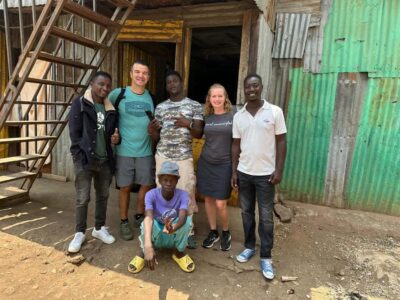

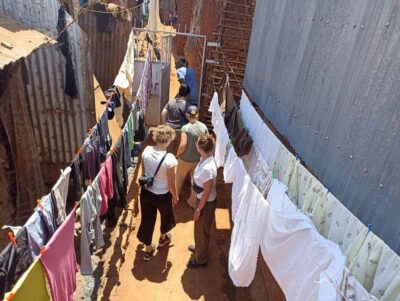
Kibera Slum Tour with Local Social Entrepreneurs
Read our review →


Browse the lists this tour appears in