

Reviewed · KIBERA
Ismael’s Kibera Slum Tour
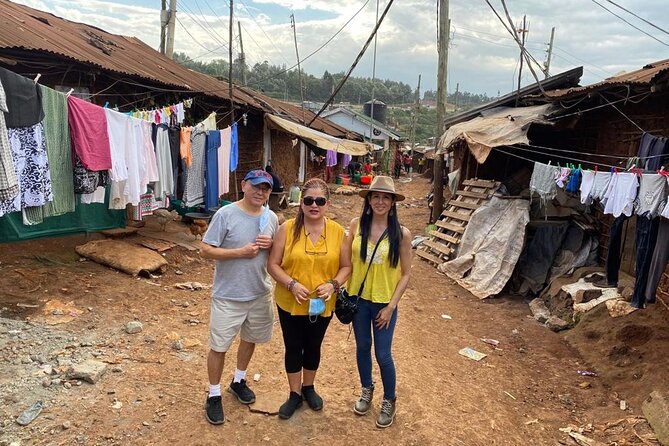
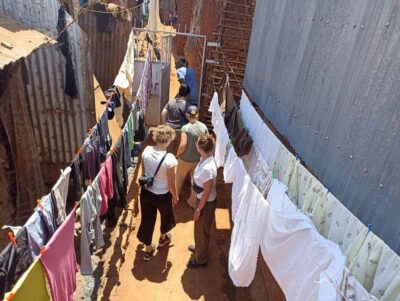
Kibera is one of the world’s largest informal settlements. A visit with a born-and-bred local guide is what turns it from sightseeing into real understanding. This private half-day tour is built around meeting residents, seeing community projects up close, and learning how daily life works when resources are limited.
I like the fact that Ismael does the guiding himself, including pickup and drop-off within Nairobi. I also love the practical focus on places you can see with your own eyes, like the African bone workshop and the children’s home and rescue center. Those stops give you context that you simply cannot get from driving past.
One consideration: this is a sensitive setting. You should be ready for emotional moments, respectful behavior, and a strong focus on listening rather than taking lots of photos or making demands.
Key things to know before you go

- Private, guided by Ismael with hotel pickup and drop-off inside Nairobi
- African bone workshop showing craft making from domestic animal bones and other materials
- Home visits that help you understand how people’s living spaces really look
- Children’s home and rescue center supporting rescued street children and orphaned kids affected by the 2007 to 2008 post-election violence
- Nairobi add-on time that may include a Maasai cultural village market and Mamba Village-type stops
- Mobile ticket and a tour window that runs daily during the listed opening period
Why a Kibera Slum Tour With Ismael Makes Sense
If you go to Kibera without a local guide, you are likely to miss the point and you could end up in the wrong place for the wrong reasons. This tour is designed specifically for a guided, structured visit, led by Ismael himself, who is described as an accredited guide and the owner of the company.
What makes this work well for you is the balance between “what it looks like” and “what it means.” Yes, you will see the settlement’s day-to-day reality. But the tour also takes time for context: community projects, social enterprises, and how residents respond to challenges with creativity and cooperation.
I also appreciate that this is a private group experience. You can move at the pace of your comfort level, and you are less likely to feel rushed or lost in a crowd.
More of Kibera:
- Nairobi: Explore Kibera Slum with Local Guides
★ 4.9 · 365 reviews - Kevins Kibera Slum Tours
★ 5.0 · 213 reviews - Nairobi: Kibera Slum storytelling tour with a Local
★ 5.0 · 185 reviews
Price, timing, and what $65 buys you
The price is $65 per person for a tour that typically runs about 3 to 4 hours. That might sound like a lot for an informal settlement visit, until you think about what goes into it: time with a local guide, guided entry to specific community spaces, and transportation coordination with free Nairobi pickup and drop-off.
What you are paying for is access plus interpretation. You are not just paying for someone to “show you around.” You are paying for someone who can explain what you are seeing, answer questions, and handle the real-world logistics of visiting places inside Kibera.
Booking-wise, the average booking window listed is about 54 days in advance, which is a hint to plan early if your dates are fixed. And because it is private, your group size matters. If you are traveling as a small group, the per-person cost stays the same, but the experience can feel more personal.
Pickup, meeting area, and how to plan your day

This tour includes free hotel pickup and drop-off within Nairobi, and it uses a mobile ticket. That combination is practical. It reduces the stress of trying to reach a meeting point in a big city, especially if you do not know Nairobi’s traffic patterns.
The start location is Nairobi, Kenya, and the listing notes it is near public transportation. That matters because it gives you flexibility if your hotel is easy to reach by car but not easy on foot. You still should plan to use the included pickup if possible.
The tour runs during the listed daily hours of 12:00 AM to 11:59 PM for the date range shown. Practically, that means you are likely to have some scheduling options, but you will still want to confirm your exact start time when you book.
Stop 1 at Ismael’s Kibera Slum Tours: crafts, homes, and real people

Stop 1 is where the tour sets its tone. You will be met at Ismael’s Kibera Slum Tours, and the guiding is described as personal: Ismael will do the pick up and drop off and also guide you himself.
This is not a “drop off and wander” style of tour. The tour is built to help you see the community through the lens of someone who grew up there. That changes everything. You will notice details you might otherwise skip, and you will understand why certain places matter.
More days out of Nairobi:
- Nairobi National Park Half-Day Tour; Free Wi-Fi connection
★ 5.0 · 878 reviews - Nairobi: National Park & Optional Elephants & Giraffe Center
★ 4.8 · 874 reviews - NAI NAMI: Nairobi Storytelling Tour with Street Children
★ 5.0 · 792 reviews - Nairobi National Park Half-Day Game Drive
★ 4.5 · 738 reviews
African bone workshop: turning materials into art
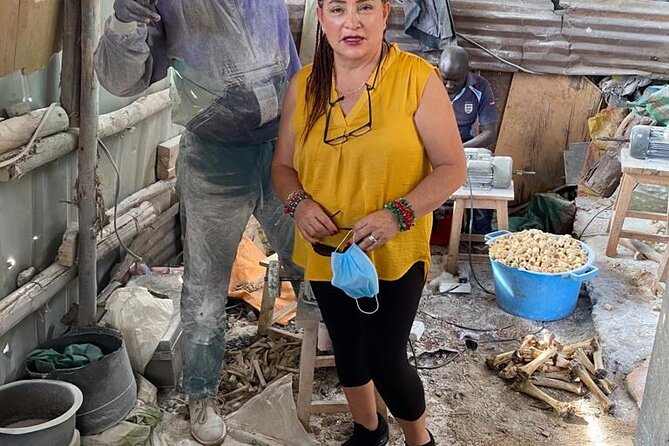
One major highlight is a visit to an African bone workshop. Here, a group of slum residents use domestic animal bones to make jewelry and small craft items. You will be shown items like bottle openers, wrist bands, finger rings, wooden crafts, brass crafts, and necklaces.
Why this matters for you: it is a concrete example of how people create income, skills, and pride even when the starting point is difficult. It is also a reminder that “informal settlement” does not mean “no industry.” This is working craftsmanship.
A possible drawback to keep in mind: workshops and craft production can feel intense if you are expecting a quick photo stop. Go in prepared for learning, watching carefully, and asking thoughtful questions.
Home visits: seeing housing in real conditions
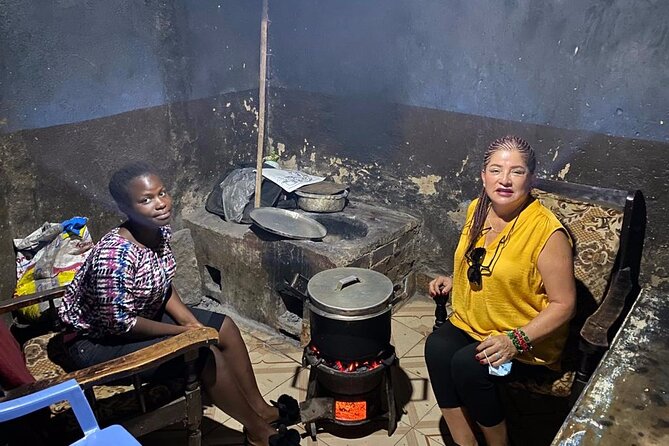
After the workshop, the tour includes home visits to see how slum houses look in real life. This is where the tour becomes more than a story. You will get a visual understanding of the spaces people live in, how families manage daily life, and what “home” can look like in a tightly packed environment.
For many first-time visitors, home visits are the moment the experience becomes emotional. You might find yourself thinking about privacy, dignity, and how to act respectfully. Keep your mindset calm and curious, and remember you are being invited into someone’s reality, not staging your own moment.
If you are the type who wants clear boundaries, you should know that home visits are inherently personal. The benefit is deeper context. The trade-off is that it can feel heavy.
Children’s home and rescue center: why this community support matters
The tour also includes a visit to a children’s home and rescue center. The focus is on rescued street children and orphaned kids who lost their parents during the 2007 to 2008 post-election violence in Kenya.
This stop is likely to be the hardest emotionally, and it is also one of the most meaningful. You get a clearer understanding of how community support structures show up in the lives of children, not just adults. And you learn why resilience often has a family and community backbone.
How to handle this well: plan for empathy. Ask questions that help you understand the support model, not questions that turn children into a spectacle. If you are bringing a camera, treat it as a tool you use carefully, not an automatic function.
Stop 2 in Nairobi: a short add-on that changes the flavor

Stop 2 is described as part of the Nairobi Region and includes additional local-site time. The exact mix can vary, but the tour mentions possibilities like a Maasai cultural village market in Nairobi and experiences associated with Mamba Village.
This section is only about 1 hour, so it is not the main event. Think of it as a way to connect your Kibera context to Nairobi culture and nearby attractions, without turning the day into an all-city marathon.
If you like variety, this is useful. If you prefer to keep your attention fully on Kibera, you may feel this add-on is brief. Either way, it can help you balance your itinerary and end the day with a broader view of Nairobi beyond one neighborhood.
The real value: context you can actually use
What I find valuable about this kind of private Kibera tour is the way it teaches you how to interpret what you see. The tour is designed around insider explanations tied to on-the-ground projects and everyday life.
You are shown:
- artisanal work and craft-making at the African bone workshop
- lived housing conditions through home visits
- child-focused support through the children’s home and rescue center
- a Nairobi cultural add-on, if your schedule includes it
That combination helps you avoid one of the most common mistakes visitors make: reducing a place to hardship alone. You will see challenges, yes. But you also see skills, community effort, and systems of care.
What to expect from a private guide, and why it matters

This tour is private, meaning only your group participates. That does more than reduce crowds. It changes the quality of conversation. If you have questions about materials used in crafts, daily routines, or how the children’s center support works, you can ask without feeling like you are holding up strangers.
Ismael’s role is emphasized as hands-on. He is not described as sending a driver or handing you to someone else. That direct guiding is often what makes these experiences feel human, not transactional.
I also took note of one detail mentioned in a guest story: some visitors were deeply moved by time spent with Ismael and his wife in his home. That kind of personal welcome can transform the day from “tour” into conversation and connection, when it happens and when you are ready for it.
Ethical and emotional reality check (so you can go in the right mindset)
Let’s be honest. Kibera can be overwhelming. This is not a place you visit like a museum. Even though the tour structure is clear, you should expect moments that are emotionally intense, especially at the children’s home and rescue center.
Here is how to make the experience better for everyone:
- Keep questions respectful and practical, not invasive
- Avoid treating people like props for your photos
- Follow your guide’s lead on what is appropriate
- Stay present. Listening is part of the visit, not a pause from it
If you are traveling with someone who gets upset easily by poverty-related realities, talk about expectations before you book. If everyone is emotionally prepared, the tour can feel powerful in a grounded way.
Who should book this Kibera tour?
This tour is a great fit if you want:
- a guided, context-heavy visit to Kibera
- a private experience with a local guide who knows the neighborhood
- stops that focus on real community spaces, including crafts, homes, and children’s support
It is also a good choice if you are short on time. A half-day format means you can understand a lot without sacrificing your entire day in Nairobi.
It might not be the best fit if:
- you want a purely sightseeing, low-emotion experience
- your group does not handle sensitive topics well
- you are looking for a casual walk with minimal structure
Practical tips for your day in Nairobi and Kibera
Bring normal day-trip comfort items, because you will be spending time on the move and visiting different types of spaces.
I recommend you plan for:
- Comfortable shoes for uneven footing and time spent walking
- A light layer for sun and shifting temperatures
- Patience. A guided visit with home and children’s center stops takes time, and it should
You can also set expectations about photography. Even when photography is possible, it is wise to ask first through your guide’s direction and treat people with dignity.
Finally, remember that the tour includes an African bone workshop. If you are sensitive to materials, craft processes, or the idea of using animal bones, think about it before you go. The point is understanding, not shock.
Cancellation, weather, and flexibility in plain terms
The tour notes free cancellation if you cancel at least 24 hours in advance for a full refund. It also says the experience requires good weather. If poor weather forces a change, you will be offered a different date or a full refund.
So if your Nairobi plans are tight, still book confidently, but keep at least some flexibility in your schedule. This kind of tour is better with good conditions.
Should you book Ismael’s Kibera Slum Tour?
Yes, I think you should book it if you want an honest, guided Kibera experience that prioritizes context over quick sightseeing. The standout strengths are clear: Ismael guiding personally, the structured stops like the African bone workshop and home visits, and the children’s home and rescue center tied to the real history of Kenya’s 2007 to 2008 post-election violence.
If your goal is to walk away with something more useful than photos, this tour is built for that. Go in prepared for emotion, go in with respect, and let your guide set the tone.
If you want a calm, low-intensity outing or you have a group member who will struggle with sensitive realities, consider whether this half-day might feel too heavy.
FAQ
How long is Ismael’s Kibera Slum Tour?
It is listed as about 3 to 4 hours.
How much does the tour cost?
The price is $65.00 per person.
Does the tour include hotel pickup and drop-off in Nairobi?
Yes. Free hotel pickup and drop-off within Nairobi are offered.
Is the tour private?
Yes. It is described as a private tour/activity, only your group will participate.
What will I see on the tour?
You will visit places within Kibera including the African bone workshop, home visits to see slum houses, and a children’s home and rescue center. The tour also includes a second stop related to Nairobi Region sites.
What is special about the African bone workshop stop?
It features residents using domestic animal bones to make crafts and jewelry such as bottle openers, wrist bands, finger rings, wooden crafts, brass crafts, and necklaces.
What is included in the children’s home and rescue center visit?
It focuses on rescued street children and orphaned kids who lost their parents during the 2007 to 2008 post-election violence in Kenya.
What ticket format do I receive?
You get a mobile ticket.
What is the cancellation policy?
Free cancellation is available up to 24 hours in advance for a full refund. If you cancel less than 24 hours before the experience’s start time, the amount paid is not refunded. The tour also notes it requires good weather, and if it is canceled due to poor weather you will be offered a different date or a full refund.
Recently reviewed from Nairobi
- Amboseli Day Trip from Nairobi★ 4.5 · 3 reviews
- Ngare Ndare Day Trip★ 5.0 · 3 reviews
- Nairobi city tour★ 4.5 · 3 reviews
- Day Trip To Crescent Island And Hells Gate National Park★ 5.0 · 3 reviews
- Crescent Island Day Tour From Nairobi★ 5.0 · 3 reviews
- 1-Day Amboseli Safari★ 5.0 · 3 reviews
- 13-Day Uganda Mgahinga Gorilla Trek, Maasai Amboseli Park★ 5.0 · 3 reviews
- 4 days group joining budget safari to Maasai Mara only★ 5.0 · 3 reviews
Kibera, compared.



Kibera Slum Tour with Local Social Entrepreneurs
Read our review →


Browse the lists this tour appears in