
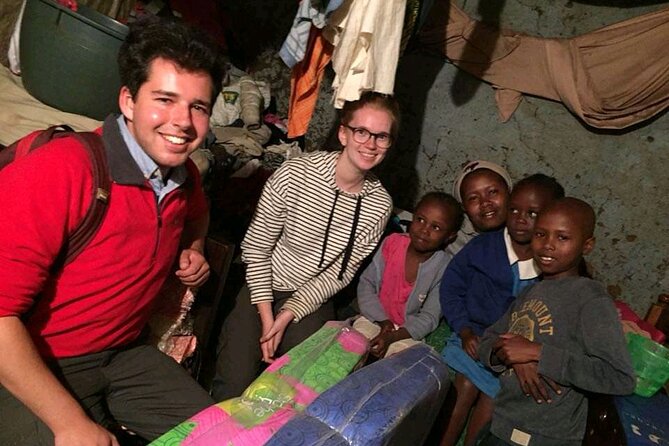
Reviewed · KIBERA
Private Tour in Kibera the Largest Slum
Kibera, Nairobi’s biggest slum area, is the kind of place you only truly understand by stepping into it with a local guide and a clear purpose. This private tour keeps things human and practical, starting at the Old Railway tied to the British era and moving through homes, school life, and community transport like matatu.
What I really like is the strong emphasis on resilience over pity, plus the hands-on, real-life stops that go beyond a quick drive-by, including interaction in a homestead and school-based edutainment like traditional dance. One thing to consider is that it’s a community visit, so your expectations should be focused on learning and respectful curiosity, not a polished tourist show.
Key Points at a Glance

- Private and budget-friendly, priced at $15 per person for about 4 hours
- Old Railway stop from 1805, so you connect everyday life to Nairobi’s older layers
- Home interaction and local materials, which helps you read the environment with context
- Bones recycling for ornaments and jobs, showing how people create work from what others discard
- School visits linked to Agape Hope for Kibera, with school-based dance as part of the visit
- Food-and-fun mix, including matatu transportation and a chance to play football
Kibera in 4 Hours, With a Real Purpose

If you’re coming to Nairobi and you want to see more than viewpoints and wildlife parks, this Kibera tour offers a straightforward way to understand life inside the settlement. It’s built around the idea that people deserve dignity, even when life is hard. And instead of turning the day into a poverty photo shoot, the experience frames what you’ll see as strength, community, and day-to-day problem solving.
A big reason this tour works for first-timers is that it has a structure. You start with a landmark tied to history, then shift into the places where people actually live and learn. Along the way, you meet the kinds of work and routines that keep a community moving, including a recycling stop and a school with a specific mission.
The tour also benefits from guides who grew up in the area. In the reviews, a guide named Rally comes up again and again for being professional and for making visitors feel safe while explaining what life is like. If you’re nervous about getting it wrong, that kind of guidance matters.
More of Kibera:
- Nairobi: Explore Kibera Slum with Local Guides
★ 4.9 · 365 reviews - Kevins Kibera Slum Tours
★ 5.0 · 213 reviews - Nairobi: Kibera Slum storytelling tour with a Local
★ 5.0 · 185 reviews
The Old Railway Start in Kibera, Plus a History Anchor
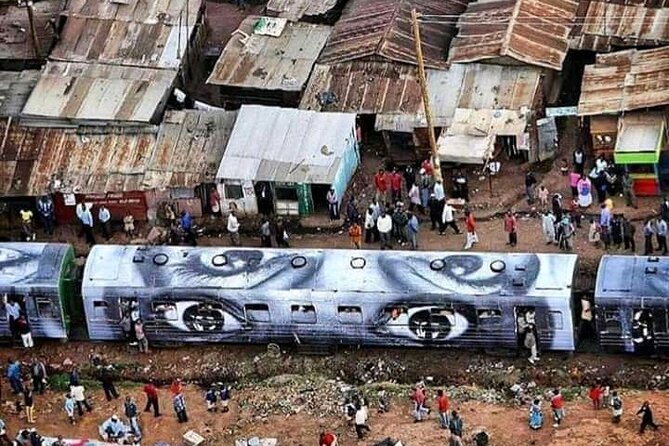
The tour begins in Kibera around Old Railway, described as the oldest railway brought in by the British in 1805. That matters because it gives you something solid to hold onto. You’re not just walking through scenes that feel random. You’re seeing a place where older infrastructure and older decisions still echo today.
In a lot of cities, people talk about history as buildings and museums. Here, history shows up in how neighborhoods formed and how movement happens. Starting with a tangible reference point helps you connect your surroundings to a timeline, so you can make sense of what you’re seeing later in the day.
Practical tip: since this is a neighborhood walk with several stops, wear shoes that handle uneven paths and dust. And keep your phone put away when you’re in tight moments with people. You’ll get more from conversations if you give your hands and attention where they matter.
Homestead Encounters and the “Built With What’s There” Lesson

Next up is a homestead stop, where you interact with local people in their home and learn about the materials used. This is one of the most valuable parts for first-time visitors, because it changes how you interpret everything you see afterward. You start noticing not just what the area looks like, but how residents solve basic needs with what’s available.
This kind of home visit can be emotionally intense, but it also tends to be grounding. It’s less about shock and more about understanding everyday choices, space, and practicality. And because you’re learning the materials and setup, you’re not just guessing. Your questions get to the point fast.
One consideration: you should expect a real interaction, not a staged display. Bring a respectful attitude, ask before taking photos, and remember that this is their home, not a set. If you can do that, you’ll come away with a clearer picture of how people live, not just how they struggle.
Bones Recycling Stop, Turning Waste Into Ornaments and Jobs

One itinerary highlight is a bones recycling stop, where you can see how bones are processed to make ornaments. The key takeaway here isn’t the craft itself. It’s the employment angle. You’re seeing a small economy at work, where materials that might be thrown away become something people can trade.
This stop also helps you avoid the trap of thinking only about hardship. Recycling projects usually exist because someone figured out a way to turn limited resources into income and purpose. When you watch a process like this up close, you start understanding how communities create work even when formal systems fall short.
Practical tip: approach this moment with calm curiosity. If you’re taking photos, keep it simple and ask first. If you’re unsure about what you’re looking at, ask your guide. The best tours here are the ones where you learn the story, not just the surface.
More days out of Nairobi:
- Nairobi National Park Half-Day Tour; Free Wi-Fi connection
★ 5.0 · 878 reviews - Nairobi: National Park & Optional Elephants & Giraffe Center
★ 4.8 · 874 reviews - NAI NAMI: Nairobi Storytelling Tour with Street Children
★ 5.0 · 792 reviews - Nairobi National Park Half-Day Game Drive
★ 4.5 · 738 reviews
School for Orphans, Meeting Students, and Agape Hope for Kibera
A major part of the experience is the school stop, described as a school for orphans and linked to support for a program called Agape Hope for Kibera. For many visitors, this becomes the emotional center of the day. You see children in school routines, and you understand that the tour is not just sightseeing. It’s connected to education support.
Importantly, the tour’s focus is not just on hardship. It’s on what school makes possible: learning, stability, and a future that feels more reachable. The reviews echo this idea, with visitors highlighting the hope and the smiles of children. You’ll also get a dose of edutainment, including traditional dances from the school.
What makes this stop particularly worthwhile is that it gives context. You’re not watching children as entertainment. You’re seeing them as students in a setting that the tour is supporting. If you keep that mindset, the visit feels meaningful without being invasive.
Practical tip: at school stops, keep your behavior calm and predictable. Follow your guide’s lead on how to interact, and don’t pressure kids for anything. If you want to share something, ask what’s appropriate first.
Football Time and Traditional Dance, Community Energy Up Close

Later, you’ll meet a football team and have the chance to play football with the local group. Then the day shifts into traditional dance, where you can watch and even take part.
This is a smart design choice for a slum tour, because it changes your role. Instead of staying a passive observer, you become part of the moment in a safe, respectful way. When you’re playing football, you learn fast that community life includes joy, sports, teamwork, and humor, not just survival.
Traditional dance works in a similar way. It isn’t only about performance. It’s about identity, belonging, and how culture stays alive even when resources are tight.
If you’re thinking about what to wear: something comfortable for movement helps a lot. Wear clothes you can move in, and bring a layer if it’s cooler than expected. If you’re not sure about participation, you can always watch closely first and join when you feel ready.
Matatu Transportation, How Nairobi Moves and What You’ll Notice

You’ll also get a matatu transportation segment, since matatu is one of the community transport ways. This part of the tour is valuable because it shows how people actually travel day to day. You get a sense of pace, navigation, and how the city and its neighborhoods interlock.
Matatu rides can be loud and crowded depending on timing, so keep expectations realistic. The point isn’t comfort like a private car. The point is seeing the real rhythm of Nairobi movement and understanding how locals get from one necessity to the next.
Practical tip: hold onto your belongings and keep your eyes up. You want to stay present, not distracted. And if you’re prone to motion sickness, plan accordingly.
The Ending at Toi Main Market, Where Everyday Shopping Continues

The tour ends at Toi Main Market. The listing notes that this is an open market where visitors can see things sold in the community. It’s a practical way to close the loop. You started at a historical marker, then moved through homes, school, work, and play. Ending at a market shows you another thread of daily life: trade, supplies, and small businesses.
If you want to keep the day going afterward, this is a useful final stop because a market is naturally busy and full of options. Just remember, you’re walking through someone’s work environment, so keep your shopping casual and respectful.
Price and Value: What $15 Buys in a Private 4-Hour Tour
At $15 per person, this tour is positioned as one of the cheapest slum tours while still aiming for a high-quality experience. The private format matters here. Private doesn’t just mean less waiting. It usually means you get more direct explanations, more room for questions, and a smoother flow between stops.
You also get bottled water included. That’s small, but it’s a real comfort factor when you’re outside for hours. Coffee and tea are not included, so if you like a mid-tour drink, plan for it.
To judge the value honestly, think about what you want from a Kibera visit. If your goal is a quick drive-through, you’ll feel let down. If your goal is understanding everyday life through guided context and structured stops, $15 can feel like excellent value for a full half-day.
How to Get the Most From This Tour, Without Getting It Wrong
This kind of tour works best when you bring three things: respect, patience, and questions that help you learn.
First, keep your expectations aligned with the purpose. The tour isn’t trying to “sell” hardship. It’s designed around resilience and community life, with school support for Agape Hope for Kibera and cultural moments like dance.
Second, listen more than you talk. You’ll learn faster, and people feel more comfortable. The reviews emphasize guides who explain things clearly and keep you feeling safe, and that dynamic is easiest when you stay present.
Third, treat photos like permission-based moments. If you want a picture, ask. If someone says no or hesitates, accept it. That simple habit goes a long way in any community visit.
Who Should Book This Kibera Tour, and Who Might Skip It
This tour is a good fit if:
- You want a first-time Kibera experience that’s structured and explained
- You prefer cultural participation, like football and dance, not only sightseeing
- You’re motivated by education support tied to Agape Hope for Kibera
- You want a private tour with the chance to interact at multiple stops
It might be less ideal if:
- You want minimal interaction and maximum comfort, because it is an on-the-ground community tour
- You dislike the idea of spending time in busy public areas like markets and shared transport
The age note says children are from 5 years and most people can participate. That suggests it’s built to be accessible for families, as long as everyone is comfortable walking and staying engaged.
Should You Book It? My Take
I’d book this tour if you’re coming to Nairobi with a genuine desire to understand Kibera through daily life, school, work, and culture, not through pity or sensational photos. The strongest reason is the focus on people’s resilience, backed by clear stop-by-stop context and a guide like Rally who shows up as professional, kind, and safety-minded in the reviews.
Book it if you can handle a real neighborhood experience and you’re willing to be respectful and curious. Skip it only if you’re searching for a polished “tourist product” rather than an authentic, community-centered day.
FAQ
How long is the Kibera private tour?
It runs for about 4 hours.
What does the tour cost, and is it private?
The price is $15.00 per person, and it is a private tour, meaning only your group will participate.
Where does the tour start and end?
It starts at Olympic Primary School in Nairobi and ends at Toi Main Market in Nairobi.
What is included in the tour?
Bottled water is included, and admission ticket coverage is included as well.
Is coffee or tea included?
No, coffee and/or tea are not included.
What activities are part of the route?
You’ll see and experience stops including a homestead interaction, bones recycling for ornaments, a school for orphans with traditional dance, a football team interaction, and matatu transportation.
What is the minimum age for children?
The age for children is from 5 years.
What weather conditions apply?
The experience requires good weather. If it’s canceled due to poor weather, you’ll be offered a different date or a full refund.
Recently reviewed from Nairobi
- Amboseli Day Trip from Nairobi★ 4.5 · 3 reviews
- Nairobi city tour★ 4.5 · 3 reviews
- Ngare Ndare Day Trip★ 5.0 · 3 reviews
- Day Trip To Crescent Island And Hells Gate National Park★ 5.0 · 3 reviews
- Crescent Island Day Tour From Nairobi★ 5.0 · 3 reviews
- 1-Day Amboseli Safari★ 5.0 · 3 reviews
- 13-Day Uganda Mgahinga Gorilla Trek, Maasai Amboseli Park★ 5.0 · 3 reviews
- 4 days group joining budget safari to Maasai Mara only★ 5.0 · 3 reviews
Kibera, compared.



Kibera Slum Tour with Local Social Entrepreneurs
Read our review →


Browse the lists this tour appears in