

Reviewed · KIBERA
A Visit To KIBERA The Chocolate City.
Kibera, often called the Chocolate City for its creative energy, is interesting because this tour connects daily life in one of the biggest informal settlements in Africa with real neighborhood stories, not distant viewpoints. I like the local, community-connected guide who translates what you see into everyday reality, and I like the Chocolate City stop that shows how people put creativity and work into their neighborhood. One consideration: it is a walking slum tour, so expect tight paths, serious topics, and less comfort than a typical city stroll.
You’ll start at Olympic Primary School, get oriented, then move through Kibera on foot with time for sightseeing and small, human-scale stops like local snacks and a food market visit. Some guides, including names like Moses and Musa, are praised for explaining clearly and sharing close-up details about family and the areas around them, which makes the experience feel grounded. If you want light, hands-off sightseeing only, this may feel too real.
Key things that make this tour worth your time
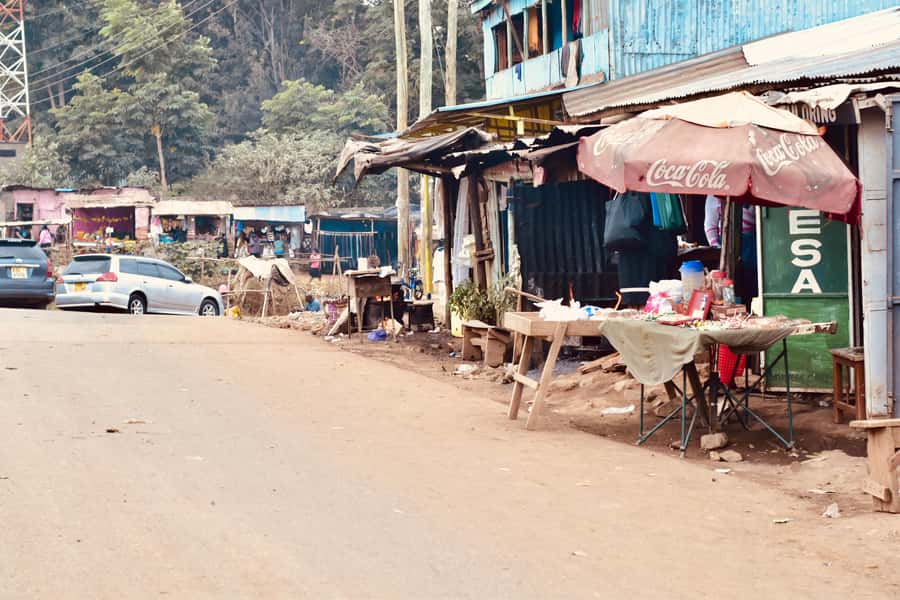
- A community guide in English who can explain what daily life is really like, from past to present
- Chocolate City on the route, so you see both challenge and creativity in the same walk
- Walking through narrow pathways, where the pace helps you understand how people move and live
- Local snacks and a food market visit, so you’re not just looking, you’re experiencing
- A structured safety briefing plus clear guidance, which many people say makes the trip feel safe
Why Kibera and Chocolate City deserve a slot on your Nairobi trip

Kibera isn’t a theme park. It’s one of Nairobi’s defining neighborhoods, and it takes your attention off postcards and onto people. What I find compelling is that the tour doesn’t treat the area as only a problem to photograph. It treats it as a place with plans, routines, businesses, and community problem-solving.
The Chocolate City stop matters because it adds context. You’re not only hearing about hardship. You’re seeing how residents build value with art, local work, and shared spaces. That combination is what makes this tour feel more honest than a standard “poverty tour” style experience.
This is also a good way to understand Nairobi from the ground up. You’ll get a lens on how government efforts and local initiatives interact with daily needs, like infrastructure upgrades and basic services. That kind of perspective is hard to pick up if you only visit museums and major attractions.
More City Tours in Nairobi
- Nairobi Historical Walking City Tour
★ 5.0 · 258 reviews - Nairobi City Walking Tour with Traditional Kenyan Lunch
★ 5.0 · 106 reviews - Nairobi: Private 4-Hour City Tour
★ 4.5 · 68 reviews
Getting oriented at Olympic Primary School, then moving with a local lead
The tour meets at the Main gate of Olympic Primary School, then you head out with a guide who has ties to the area. I like this setup because it gives you a clear start point and keeps the day from feeling chaotic. Instead of being dropped at a random street corner, you get a guided flow.
Public transport is part of the experience, which helps you understand the neighborhood in motion. It’s not only about what you see on foot. It’s also about how people get around and how the city connects to Kibera.
Before you spend time walking deeper into the settlement, there’s a safety briefing. That’s not a small detail. In a place with dense foot traffic and tight lanes, your guide’s instructions set the tone for staying calm, staying together, and respecting boundaries. People consistently mention that when you follow the guide’s directions, the experience feels safe.
Time-wise, plan on about 3 hours total. It’s long enough to see multiple stops and hear real stories, but short enough that you’re not exhausted by the end.
Walking Kibera on foot, where you learn by paying attention
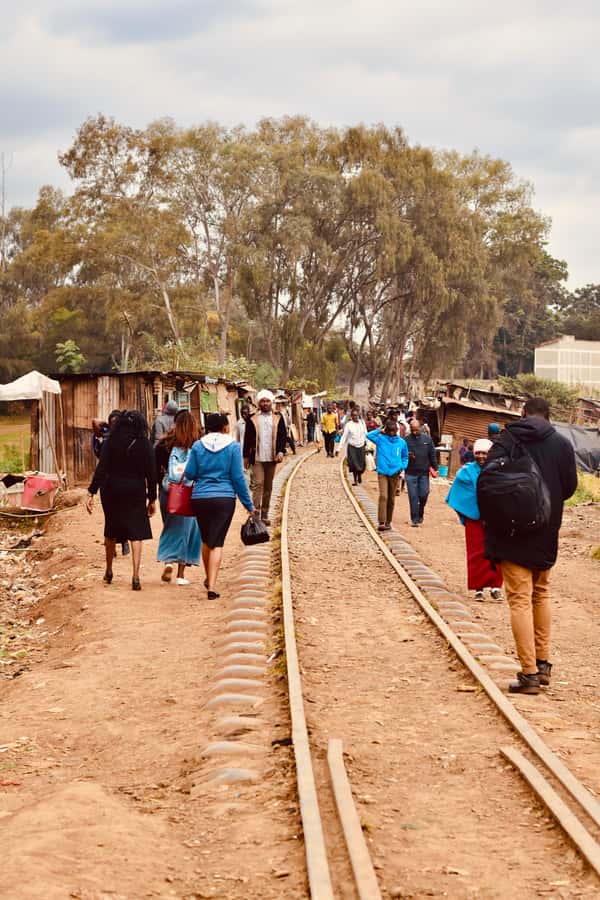
This isn’t a drive-by. The tour is a Kibera walking slum tour, and that changes everything. When you’re walking narrow pathways, you notice what planners and maps often miss: where people gather, how spaces feel in real life, and how daily tasks shape the neighborhood.
You’ll pass landmarks that connect to Kibera’s history. The goal isn’t to memorize dates. It’s to understand identity: why certain places are meaningful, how residents describe their past, and what they hope for next. A big part of the value here is that the guide can translate what you’re seeing into human terms.
There’s also a built-in rhythm to the day. You get time for sightseeing along the route, and you’re not rushed through everything. That matters because you’ll likely feel a range of emotions. The tour is designed to keep the pacing respectful and structured, not frantic.
One practical drawback to keep in mind is that a walking route can be physically demanding. This experience is not suitable for wheelchair users, and it has age limits, so it’s worth choosing only if you can handle steady walking and attention.
Chocolate City: creativity, commerce, and why it changes the story you tell yourself
The Chocolate City visit is one of the highlights, and it’s more than a name. It helps you see how a neighborhood makes room for work, expression, and community activity even when resources are limited.
I like that this stop gives you a different angle on the word “slum.” Instead of treating Kibera as a single narrative about need, you get another narrative about creation and local enterprise. The Chocolate City scene also makes it easier to have a more balanced conversation when you’re back in Nairobi proper or on the road after the tour.
You might notice small details that reflect everyday economics: who’s selling, who’s working, how people use shared spaces. Some routes include a mix of places that show daily life beyond your first assumptions, including community-focused spots like a pub, a house, or a factory-like workspace area.
The takeaway for you: this is where the tour often shifts from “watching” to “understanding.” You’ll still learn about challenges, but you’ll also see how residents handle limited resources by building networks that make life workable.
More of Kibera:
- Nairobi: Explore Kibera Slum with Local Guides
★ 4.9 · 365 reviews - Kevins Kibera Slum Tours
★ 5.0 · 213 reviews - Nairobi: Kibera Slum storytelling tour with a Local
★ 5.0 · 185 reviews - Kibera Slum Tour with Lucas
★ 5.0 · 119 reviews
Food market stops and local snacks that make the day feel human

One of the simplest, most effective parts of this tour is that it includes local snacks and a food market visit. Food has a special power on tours like this because it pulls you out of pure observation. It makes the visit feel like a lived-in place, not an outside exhibit.
In practical terms, the snacks help keep your energy up during a 3-hour walk. And the market stop gives you a window into how people manage everyday needs. You’ll likely see the kinds of small transactions that keep households running, and that can be a reality-check in the best way.
What I find useful is that these stops tend to reinforce what your guide is saying. When someone explains how residents plan around scarce resources, the market and snacks make that explanation concrete. It turns abstract ideas like infrastructure or affordability into something visible.
If you’re the type of traveler who learns best by doing, this is where you’ll feel it. It’s also a nice break in pace, especially if you’re not used to walking dense areas.
What you learn from a guide who can show more than the street

The biggest strength of this tour is the guide. The experience is built around a local perspective, and the difference shows up fast. People describe guides who explain things clearly, share meaningful context, and connect stories to specific places.
Some guides are especially praised for the closeness of their storytelling. For example, guides like Moses and Musa are noted for taking visitors to personal, nearby areas connected to family and daily surroundings. That kind of access can feel intense, but it also makes the tour more grounded. You’re not only hearing facts. You’re seeing how people describe their relationships to the places they live.
You’ll also hear how residents and organizations work on improvement over time. That includes the role of local initiatives and government agencies in infrastructure and living conditions. The value for you is that you get nuance, not slogans. Instead of a single story about poverty, you get a picture of ongoing change, uneven progress, and resident agency.
One thing to be mentally prepared for: when a guide shares close-up knowledge, you’ll likely feel more responsible as a visitor. This isn’t a “check off a destination” walk. It’s a moment of real listening, and your job is to stay respectful and follow instructions.
Safety, respect, and the kind of behavior that keeps things smooth

This is a walking tour with close proximity to everyday life. That means safety depends heavily on your actions and your attention, not just the tour operator. The experience includes a safety briefing, and multiple people mention that it’s safe when you follow the guide’s instructions.
For your part, the best “do this, not that” advice is simple. Stay with your guide. Keep your pace consistent with the group. Treat homes and family areas with care, because this is someone’s real neighborhood, not a set.
The tour is designed to be culturally sensitive. So if you’re the kind of traveler who tends to treat unfamiliar places like a photo opportunity first, adjust your mindset before you go. Let the guide lead. Ask what you need to understand. Focus on learning rather than collecting.
Also, remember that the subject matter can be emotionally serious. Even if the day includes snacks and lively community spaces, this is still about real challenges and real daily constraints. Go in ready for that, and you’ll get more out of it.
Price and timing: why $20 can feel like good value for what you get
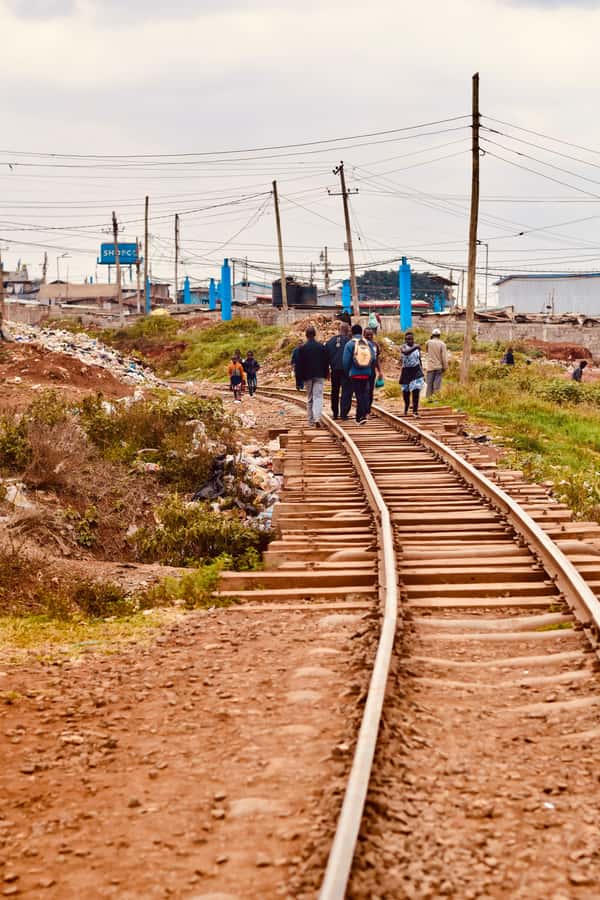
At about $20 per person for roughly 3 hours, this tour is priced as an accessible, practical experience rather than a luxury production. What you’re paying for is not only access. You’re paying for a local guide, a guided walking route, a safety briefing, and logistics that make it possible to move through the neighborhood confidently.
Public transport is included as part of the tour approach, and that matters because it reduces the burden on you to plan the route yourself. The tour also includes local snacks and a food market visit, which adds small but real value to your day.
There’s also the “why” of the tour. If you want to understand Kibera as a living community, not just a headline, the guide’s context is the core product. Reviews strongly emphasize that the best moments are tied to explanation quality and the guide’s ability to show personal, nearby details. That kind of guide-led value is hard to replicate if you self-tour with no context.
So, for you, the pricing question is not only cost. It’s whether you’re willing to spend 3 hours listening and walking. If you are, $20 can be a fair trade for a meaningful Nairobi perspective.
Who should book this Kibera Explorer tour, and who should skip it
This tour works best for adults and older teens who want a guided, community-led view of Nairobi. The day includes walking and close neighborhood interaction, so it’s not a good fit if you need step-free access or assisted mobility.
It is not suitable for:
- Children under 5 years
- Wheelchair users
- Visually impaired people
- Babies under 1 year
- People over 95 years
If you fall into those categories, you’ll be safer skipping this specific tour and looking for an alternative that matches your needs.
It also helps if you like learning from a local guide who can answer questions and connect what you see to everyday life. The best fit is the traveler who asks, pays attention, and wants a respectful, practical connection to the neighborhood.
If you’re looking for something light and purely entertainment-based, this may feel too serious or too educational. But if you want a story with real context, it’s the kind of tour that can change how you see Nairobi.
Should you book? My take for the kind of traveler this is made for
Book this tour if you want to understand Kibera through a local English guide, with the Chocolate City stop adding balance to the narrative. You’ll walk through the neighborhood, take in key landmarks, and have time for snacks and a food market visit that makes the experience feel lived-in.
I would not book it if your priority is comfort over context, or if you need accessibility support it does not offer. Also, if you dislike walking routes or if you want a quick photo session only, you might feel frustrated.
The best sign you made the right call is simple: if you’re the type of traveler who values listening, following guidance, and learning how communities work, you’ll probably leave with a much clearer, more human view of Nairobi.
FAQ
How long is the Kibera The Chocolate City tour?
The duration is 3 hours.
Where does the tour start and where does it end?
You meet at the Main gate of Olympic Primary School. The tour finishes at Olympic Estate, Nairobi.
Do I need an entry ticket to access the slum?
No entry is needed to access the slum.
Is public transportation included in the tour?
Yes. The tour includes using public transport as part of the experience.
What language is the guide?
The live tour guide is available in English.
Who should not book this tour?
This experience is not suitable for children under 5, wheelchair users, visually impaired people, babies under 1 year, and people over 95 years.
What cancellation and payment options are available?
There is free cancellation up to 24 hours in advance for a full refund. There is also a reserve now & pay later option so you can book your spot and pay nothing today.
Recently reviewed from Nairobi
- Amboseli Day Trip from Nairobi★ 4.5 · 3 reviews
- Ngare Ndare Day Trip★ 5.0 · 3 reviews
- Nairobi city tour★ 4.5 · 3 reviews
- Day Trip To Crescent Island And Hells Gate National Park★ 5.0 · 3 reviews
- Crescent Island Day Tour From Nairobi★ 5.0 · 3 reviews
- 1-Day Amboseli Safari★ 5.0 · 3 reviews
- 13-Day Uganda Mgahinga Gorilla Trek, Maasai Amboseli Park★ 5.0 · 3 reviews
- 4 days group joining budget safari to Maasai Mara only★ 5.0 · 3 reviews
Kibera, compared.




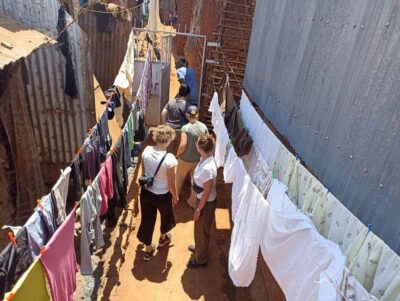
Kibera Slum Tour with Local Social Entrepreneurs
Read our review →


Browse the lists this tour appears in