

Reviewed · KIBERA
Kibera Chocolate City Tour
This Kibera Chocolate City Tour is interesting because it trades myths for everyday details, with guides who know the area and visitors walk at a human pace. I love that you get market and craft time at Toi Market and Victoria Bones Craftshop, and I love the stop at Agape’s school and library, where kids are learning and playing.
One consideration is that this is a working community walk, so it can feel emotional and it also requires good weather. The good news is the tour is short, about 2 to 3 hours, and it circles back to where you start.
You’ll meet at Kibera Town Centre (Kamukunji Grounds) and go from spot to spot with experienced local guidance. In the reviews, guides named Collins (and sometimes Rama or Allan) stand out because they keep the day personal, respectful, and grounded in how life actually works in Kibera.
Key highlights you should care about

- Local guides who bring context: Guides like Collins help you connect what you’re seeing to how the community lives and hopes for the future.
- Toi Market stop you can actually observe: It’s not just a “look here” moment, it’s where small businesses operate day to day.
- Victoria Bones Craftshop: Crafts are a practical window into work, skills, and creative problem-solving.
- Agape school and library visit: Kids’ education and play are part of the real story, not an afterthought.
- A historical beat with the railway: You get a wider view as you walk past a landmark that adds depth to the neighborhood.
- Small group feel: With a maximum of 30 travelers, you’ll have more space to ask questions and move at a manageable pace.
Kibera Chocolate City Tour: what you actually experience in Nairobi
This tour is built for people who want to understand Kibera as a place where people live, work, build, and care for each other. The goal is not to shock you, it’s to challenge stereotypes with specifics: where people go, what they do, and why community life matters.
You’re not doing a checklist of famous sights. You’re doing a short, guided walk through everyday areas that shaped the neighborhood’s identity, from commerce to education to a historic railway line.
If you’re the type who likes your cultural experiences to be interactive and practical, you’ll likely enjoy the structure. The tour is also flexible, and if you want a private tour or specific topics and places, you can ask.
More City Tours in Nairobi
- Nairobi Historical Walking City Tour
★ 5.0 · 258 reviews - Nairobi City Walking Tour with Traditional Kenyan Lunch
★ 5.0 · 106 reviews - Nairobi: Private 4-Hour City Tour
★ 4.5 · 68 reviews
Starting at Kibera Town Centre near Kamukunji Grounds

The day begins at Kibera Town Centre at Kamukunji Grounds. From there, you’ll get oriented with a broader feel for where you are in Kibera, before the tour starts narrowing into specific places.
Meeting at a central point matters. It helps you avoid confusion, and it also means the tour can keep a smooth pace for a 2 to 3 hour experience. The tour ends back at the same meeting point, so you do not get dropped off with no plan.
The tour is open daily from 8:00 AM to 6:00 PM. Start times can vary by schedule, so pick a slot when you can comfortably handle Nairobi walking time and shifting light.
Toi Market: watching local business in motion
One of the best parts of this kind of tour is the chance to see what people do for a living. At Toi Market, you’ll visit a cluster of local businesses, which gives you a grounded look at the daily economy of the area.
What I like about this stop is that it’s observational without being distant. You’ll have time to ask questions and interact with people in a way that feels more like conversation than performance.
A market stop also helps you understand Kibera as something active, not just a place people talk about from far away. You can notice the small details: how goods are presented, how errands get handled, and how people move through the space.
Quick tip: keep your expectations simple. The point is to understand how people live and work, not to treat this like a shopping spree. If you want to buy crafts or goods, ask first and follow your guide’s lead on respectful interaction.
Victoria Bones Craftshop: creativity as survival skills

After the market, the tour heads to Victoria Bones Craftshop. This is the kind of stop that changes how you interpret what you see, because crafts show skill and intention.
Crafts in settings like this are rarely just about decoration. They often reflect training, problem-solving, and the ability to turn limited resources into something useful and saleable. In the reviews, this kind of work comes up as part of what makes the tour feel real, not staged.
You’ll likely leave with a better sense of resilience. Not the inspirational-poster kind, the practical kind: people find ways to make income, build community ties, and keep going.
Consideration: go with patience. Some parts of a craft visit are slower by nature, because people are working while you observe. If you want fast photo stops, this may feel more thoughtful than hurried.
More of Kibera:
- Nairobi: Explore Kibera Slum with Local Guides
★ 4.9 · 365 reviews - Kevins Kibera Slum Tours
★ 5.0 · 213 reviews - Nairobi: Kibera Slum storytelling tour with a Local
★ 5.0 · 185 reviews - Kibera Slum Tour with Lucas
★ 5.0 · 119 reviews
Agape school and library: why kids are central to the story
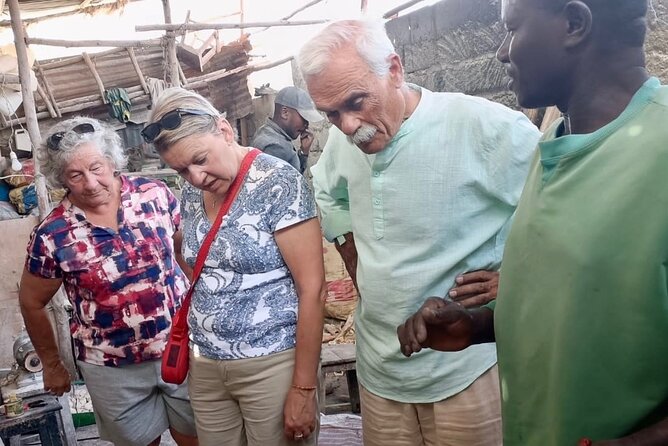
Next up is a visit to the school and library where children of Agape get education and also have space to play and make friends. This is one of the most meaningful stops on the route, and it explains a lot about why the tour’s mission is framed around challenging perceptions and supporting the community.
Why it works so well: it reframes your mental image of Kibera. You’re not only seeing challenges. You’re seeing outcomes people are building, day by day. Education is also a clear way to measure hope in action.
The reviews repeatedly point to the emotional impact of seeing kids engaged, especially on days when children were playing in the streets. That kind of contrast is what stays with you, because it reminds you that childhood continues even in difficult conditions.
How to be respectful: treat this stop like you’re visiting a learning space. Follow your guide’s cues, keep your tone calm, and avoid the urge to turn kids into your photo project. A warm greeting and basic courtesy usually do more than extra attention.
Walking past the historical railway for a wider view

The tour ends with a walk by the historical railway, which helps you widen your perspective. It’s easy to look at Kibera as a single story, but landmarks like this hint that the neighborhood has layers, timelines, and connections to Nairobi beyond the immediate blocks you’re standing on.
This part of the walk is useful because it slows the day down a bit. You get a broader view while still staying within the tour’s overall theme: understanding place, not just collecting impressions.
Even if you do not know the full history before you arrive, your guide can help you connect what you’re seeing to why it matters. In reviews, guides such as Collins are praised for offering context on Kibera’s past, what life looks like now, and how people imagine the future.
Guides like Collins, Rama, and Allan, and what that changes for you

The tour is organized around experienced local guides, and the names that show up in feedback are Collins, Rama, and Allan. What’s important is not celebrity, it’s authority. When a guide grew up in the community, they can explain things without turning the experience into a lecture.
You also get a better sense of respectful interaction. When you move through a community with local guidance, you’re more likely to ask the right questions, notice the right details, and avoid accidental missteps like wandering off or misunderstanding what is private.
For me, the biggest win is that the tour feels relationship-based. The mission includes breaking stereotypes and highlighting resilience and community spirit. Guides who treat residents like neighbors, not exhibits, make that mission feel real.
Price and value: is $22 for Nairobi Kibera worth it?

At $22.00 per person, this tour is priced in a way that many visitors find approachable. The value is not just that you’re paying for a walk. You’re paying for a guided route that includes multiple stops, time to interact, and access to specific community spaces like the school and library.
Also, the itinerary includes admission ticket free time for the tour itself, which matters because it means you are not paying extra at every step. The tour lasts roughly 2 to 3 hours, so you’re not burning a whole day either.
Now the key question you should ask yourself: are you comfortable with a tour that’s partly about empathy and education? If yes, this price feels fair because you’re supporting a local organization, Agape Hope for Kibera Tours, whose activities connect to the kids’ education and community support mentioned in the tour description and echoed in the reviews.
What to do before you go: ask your guide what your fee helps with, in practical terms. You’re likely to hear specifics about education and support, and that turns a ticket price into something tangible.
Practical tips for this Kibera walk, especially in Nairobi weather
This experience requires good weather, so plan around dry, comfortable conditions. If rain is in the forecast, take it seriously. Nairobi downpours can make walking hard and muddy, and that can affect the day.
Bring the basics you’d bring for a city walk, but pack for uneven surfaces. Comfortable shoes are a must. Also consider a hat and water. The tour is only a few hours, but the heat and sun can be real.
Because the tour is near public transportation, you can usually plan your start and finish without needing a long taxi chain. Still, give yourself time to arrive a bit early at Kamukunji Grounds, since the tour starts at Kibera Town Centre and ends back there.
One more practical note: the tour is capped at 30 travelers. That’s big enough to meet other people, but small enough that you can still follow the guide’s pace.
Who should book this tour, and who might prefer something else
This tour is a strong match for you if you:
- want to see Kibera with local context, not distant headlines
- like hands-on interaction, questions, and real-life observations
- care about education and community support, not just sightseeing
It might feel less ideal if you:
- need a low-emotion, purely lighthearted outing
- dislike close-up human conversations and prefer only museum-style experiences
- want a rigid schedule with no flexibility at all
The good news is that the tour is flexible, and you can request a private tour or specific topics and places if you want more control over the day.
Should you book the Kibera Chocolate City Tour?
I’d book it if you want a meaningful Nairobi experience that focuses on real people and real places, in a short time window. The combination of Toi Market, Victoria Bones Craftshop, and the Agape school and library gives you a balanced view: work, creativity, and learning all in one route.
It also sounds like your experience depends a lot on the guide. When Collins, Rama, or Allan is leading, the tour is praised for feeling safe, welcoming, and well explained. That matters in a community setting, because comfort and clarity help you ask better questions.
Just go with the right mindset. This is not a theme park. It’s a walk through daily life, with moments that can hit emotionally. If you’re ready for that, this tour is a solid value at $22 and a genuinely memorable way to understand Kibera beyond stereotypes.
FAQ
How long is the Kibera Chocolate City Tour?
The tour runs about 2 to 3 hours.
What does the tour cost?
It costs $22.00 per person.
Where is the meeting point, and where does the tour end?
You start at Kibera Town Centre, Kamukunji Grounds, Nairobi, Kenya, and the tour ends back at the same meeting point.
What stops are included on the itinerary?
You’ll visit Kibera Town Centre, Toi Market, Victoria Bones Craftshop, the school and library connected to Agape, and then walk by the historical railway.
Is there an admission ticket fee for the activities?
The tour lists admission ticket free for the experience.
How big is the group?
This tour/activity has a maximum of 30 travelers.
What if the weather is poor or I need to cancel?
The experience requires good weather. If it’s canceled due to poor weather, you’ll be offered a different date or a full refund. You can also get free cancellation up to 24 hours in advance for a full refund.
Recently reviewed from Nairobi
- Amboseli Day Trip from Nairobi★ 4.5 · 3 reviews
- Nairobi city tour★ 4.5 · 3 reviews
- Ngare Ndare Day Trip★ 5.0 · 3 reviews
- Day Trip To Crescent Island And Hells Gate National Park★ 5.0 · 3 reviews
- Crescent Island Day Tour From Nairobi★ 5.0 · 3 reviews
- 1-Day Amboseli Safari★ 5.0 · 3 reviews
- 13-Day Uganda Mgahinga Gorilla Trek, Maasai Amboseli Park★ 5.0 · 3 reviews
- 4 days group joining budget safari to Maasai Mara only★ 5.0 · 3 reviews
Kibera, compared.





Kibera Slum Tour with Local Social Entrepreneurs
Read our review →


Browse the lists this tour appears in