

Reviewed · KIBERA
Kibera Slum Guided Tour from Nairobi
Kibera is interesting because it forces you to look at city life in a way most visitors never see, a real neighborhood where about 250,000 people make daily choices amid huge pressures. I especially like how this tour pairs movement through the community with practical context, not just quick photos. You also get direct access to places like schools and small workshops, where you can see how people solve problems and keep life moving.
One thing to consider: this is not a polished sightseeing day. Expect uneven, hilly ground on a walk of about 3 kilometers into the Main Kibera area, plus sights and conditions that may feel uncomfortable if you are used to cleaner, tourist-built spaces.
The payoff is strong if you want understanding, not just a box-checking experience. I also like the small group size, capped at 8 travelers, and the hotel pickup and drop-off that keeps you from stressing about Nairobi traffic. Still, you’ll need to follow the rules closely, including covering up, keeping photos minimal, and not treating people like a spectacle.
Key Things Worth Knowing Before You Go

- Hotel pickup at 8:30am, then a guided drive route into Kibera so you start oriented instead of guessing
- A 3-kilometer walk into the Main Kibera area, so bring covered shoes for hills and uneven paths
- Soweto Village homesteads, where you get a ground-level sense of daily living
- Curio (handcrafts) workshop making ornaments from animal bones, a clear example of creativity under tough conditions
- School time plus practical community stops, including nursery schools, a water vendor, and a shower shop
- Photo and behavior guidelines, including asking permission and avoiding flashy electronics
Getting Your Bearings: What This Tour Really Helps You Understand
A Kibera guided tour works best when you treat it like a conversation you can see, not a performance you watch from behind a lens. The point is to learn day-to-day life, including the challenges and the opportunities your guide talks through as you move from place to place. That guided commentary matters because it gives you a framework for what you’re seeing, especially when it looks confusing at first glance.
I also like that you visit specific kinds of community spaces rather than only walking past homes. You’ll see workshops where people create and sell items, plus schools, vendors, and everyday services. That blend is important. It shows how a neighborhood functions when formal systems are limited, and it helps you spot the resilience that is there even when conditions are hard.
One more practical truth: your own comfort level will vary. Some parts may feel gritty, and you may notice sanitation issues. A couple of people described the contrast between what’s visible and how people manage to get along anyway as almost unbelievable. If that kind of reality-check is what you want from travel, this day can hit hard in a good way. If you want everything neat and controlled, you’ll likely feel stressed.
More of Kibera:
- Nairobi: Explore Kibera Slum with Local Guides
★ 4.9 · 365 reviews - Kevins Kibera Slum Tours
★ 5.0 · 213 reviews - Nairobi: Kibera Slum storytelling tour with a Local
★ 5.0 · 185 reviews
Nairobi Pickup and the Route Into Kibera (8:30am Start)

Your day starts at 8:30am with hotel pickup. From there, you’ll travel along Ngong Road, with key landmarks on the way including Uchumi Supermarket. The route includes a turn left near Nakumatt Supermarket, then continues toward the Kibera DO headquarters area through Bombolulu stage.
Why this matters: the drive is not just “transport.” It helps you understand Kibera’s location relative to major Nairobi corridors. You also get dropped into the area with less friction, so you can focus on the walking portion and the community stops instead of trying to navigate on your own.
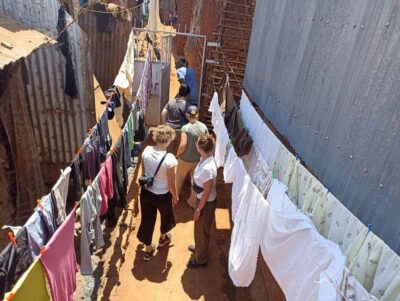
Then comes the transition from vehicle to foot. At Bombolulu stage, you descend and begin the walk into the Main Kibera slum road for about 3 kilometers. This is when good shoes become non-negotiable. The route is hilly and uneven, and you’ll feel it if you show up in sandals.
Entering the Main Kibera Area: The 3-Kilometer Walk and How to Handle It
The walk is the heart of the tour because it puts you at street level. You’re not arriving at one single viewpoint. You’re moving along the main slum road, passing through the neighborhood in a way that makes it easier to understand the layout of daily life.
A few practical tips make the difference between a tiring day and a doable one:
- Wear covered, sturdy shoes. The walk can be uneven, and you can expect mud if it’s recently rained.
- Keep your pace steady. Don’t stop suddenly or wander off the group line.
- Bring a calm, respectful mindset for photo situations. You’ll be asked to keep pictures minimal and ask permission first.
One review note that stuck with me is how quickly conditions can change after rain. People described walking between homes in thick mud. That’s not a reason to avoid the tour, it’s a reason to arrive prepared, because the neighborhood’s texture and ground conditions are part of what your guide is trying to show you.
Soweto Village Homesteads: Seeing Daily Life Up Close

After you begin walking, you’ll visit the Soweto Village homesteads. This is where the tour shifts from “moving through” to “seeing how life is arranged.” Homesteads are a good choice for a first community stop, because they help you understand the scale of everyday routines and how homes relate to shared space.
What you’re looking for is not “pretty.” You’re looking for the pattern: how people organize space, how work connects to home, and how the day flows. Your guide’s commentary becomes especially valuable here, since the purpose is to give you a deeper understanding of Kenyan life outside the typical tourist bubble.
This is also a good time to practice the tour’s behavioral expectations. Keep your attention on what people are doing and avoid treating the moment like a background for your own photos. The rules about minimal photography and permission are not just etiquette. They help you avoid making people feel like the attraction.
More days out of Nairobi:
- Nairobi National Park Half-Day Tour; Free Wi-Fi connection
★ 5.0 · 878 reviews - Nairobi: National Park & Optional Elephants & Giraffe Center
★ 4.8 · 874 reviews - NAI NAMI: Nairobi Storytelling Tour with Street Children
★ 5.0 · 792 reviews - Nairobi National Park Half-Day Game Drive
★ 4.5 · 738 reviews
Curio Workshop and Bone-Ornament Crafts: Creativity You Can Actually Watch

Next up is the Curio (handcrafts) workshop. This is one of the most memorable parts because you can witness hands-on making: ornaments crafted out of animal bones.
Why I think this stop is valuable: it gives you a real window into innovation under constraints. When formal jobs are limited, crafts and small-scale production become a way to earn money and express skill. Watching the work means you’re not only hearing about opportunities, you’re seeing them.
It’s also a good time to ask questions with your guide’s help. You can learn how the workshop fits into community life and how people turn available materials into saleable products. Your guide should be able to explain both the challenges and the upsides, which is exactly what makes this tour more than a photo walk.
One balancing note: if you take pictures, do it carefully and only with permission. A workshop is active space, and people are working. Respecting that moment makes your questions and curiosity feel human instead of intrusive.
Nursery Schools, a Kitchen, and What a School Stop Can Reveal

The tour includes nursery school visits. This kind of stop often becomes emotional quickly, because children’s schedules and spaces are so visible. You’ll get a closer look at school life rather than hearing abstract statements about education.
One review detail that felt especially grounded: someone mentioned seeing pupil rooms and even a kitchen area during a school visit. That matters because it makes the school more real. It’s not just classrooms as an idea, it’s rooms, routines, and the practical side of feeding and caring for kids.
Even if you’re not sure what you’re looking at from a visitor’s perspective, your guide’s explanation can connect it to the broader picture: opportunities exist inside the school system, but there are also pressures and limitations that shape what schools can provide.
Water Vendor and a Shower Shop: The Practical Side of Daily Services

After school, your route takes you past community services including a water vendor and a shower shop. These stops are not “side quests.” They are the day-to-day infrastructure that visitors often never notice.
This is also where the tour can feel challenging to process. You might see how water access and hygiene services work in a context where options may be limited. One person described it as unbelievable how people manage day to day despite the conditions, and that reaction is completely understandable.
But try to keep the perspective balanced. Your guide is there to explain both the struggles and the coping systems, including any local innovations that help residents manage. That balanced commentary is what prevents the day from becoming only shock value.
How Long Is It, and What Does $80 Buy You?

Plan for around 6 hours. That’s long enough to get traction and see multiple types of places, but not so long that you’re trapped for a whole day with no rhythm. The tour is capped at a maximum of 8 travelers, which keeps it from feeling like a chaotic herd.
At $80 per person, the value is mainly in three areas:
- Professional guide plus commentary that helps you interpret what you’re seeing
- Hotel pickup and drop-off, which saves time and makes the experience simpler to arrange
- A structured route with multiple community stops, including homesteads, a workshop, schools, and vendors
What’s not included matters. Food and drinks are not part of the price, and lunch is not included either. So you’ll want to budget for at least a snack or a light meal plan before or after the tour, depending on how your timing works.
Also, the included admission ticket plus the group size cap suggest this is designed as an organized visit, not casual wandering. If you’re paying for anything in Nairobi, you typically pay for access and interpretation. This tour spends the money where it counts.
What to Pack and Wear (So You Don’t Regret It at 9am)
This is a walking tour through uneven, hilly terrain. The guidance is clear: wear covered shoes and skip sandals. You should also dress in a way that isn’t flashy or revealing. Avoid bright clothing.
I’d also follow the “keep your belongings quiet” approach:
- Leave passports, backpacks, purses, and large amounts of money at home
- Avoid shiny attention grabbers like SLR cameras or miscellaneous electronics
Why this helps: it reduces unwanted attention and keeps you focused on people and places instead of managing your gear. It also supports the tour’s intent, which is to treat the day as learning and respectful observation.
Photo Etiquette and Money Rules That Keep the Day Human
You’ll be asked to keep photos to a minimum and always ask permission first. That rule is especially important in a neighborhood context, where cameras can feel like power imbalance.
You’ll also want to follow the money guidance: avoid giving out money, because it can reinforce the idea that tourists equal money. If you feel compelled to help, do it through the channel your guide suggests, or ask what’s appropriate. The goal is to reduce harm, not create misunderstandings.
And yes, you should expect the day to include awkward moments. That’s normal. A little humor helps, like reminding yourself this is a real community, not a stage, and adjusting your behavior quickly when you notice yourself drifting into spectator mode.
Who This Kibera Tour Suits Best
This tour fits best if you want a guided view of Kenyan life outside the usual checklist.
You’ll likely enjoy it if you:
- Like structured walking tours where context is part of the experience
- Want to see schools, workshops, and services, not just street views
- Are prepared for uneven ground and potentially uncomfortable sights
- Prefer a small group setting, with a guide to help you ask questions appropriately
You might want to skip it if you:
- Need a fully comfortable, clean, and low-stress day
- Get overwhelmed by reality-check travel quickly
- Want food included or a short, easy experience
Should You Book This Kibera Guided Tour?
I’d book it if your goal is understanding, not just looking. The strongest reasons are practical: you get hotel pickup and drop-off, a small group setup, and you see multiple real community spaces like homesteads, a curio workshop making bone ornaments, nursery school areas, plus practical stops tied to water and hygiene.
I’d think twice if you’re uneasy with messy conditions, crowded-feeling streets, or the idea of following strict etiquette like minimal photos and no flashy gear. This is a respectful visit, not a comfort-focused outing.
If you do book, prepare your body and your behavior. Good shoes, modest clothing, and an open mind will make the difference between a stressful day and a genuinely meaningful one.
Recently reviewed from Nairobi
- Amboseli Day Trip from Nairobi★ 4.5 · 3 reviews
- Nairobi city tour★ 4.5 · 3 reviews
- Ngare Ndare Day Trip★ 5.0 · 3 reviews
- 1-Day Amboseli Safari★ 5.0 · 3 reviews
- Day Trip To Crescent Island And Hells Gate National Park★ 5.0 · 3 reviews
- Crescent Island Day Tour From Nairobi★ 5.0 · 3 reviews
- 13-Day Uganda Mgahinga Gorilla Trek, Maasai Amboseli Park★ 5.0 · 3 reviews
- 4 days group joining budget safari to Maasai Mara only★ 5.0 · 3 reviews
Kibera, compared.




Kibera Slum Tour with Local Social Entrepreneurs
Read our review →


Browse the lists this tour appears in