

Reviewed · KIBERA
Nairobi: Kibera Slum Compassionate Walking Tour
Kibera is one of those places where the usual headlines fall apart, fast. What makes this tour interesting is its focus on real people and everyday work, not drama. I love the empathy-first rules, like taking fewer photos and treating interactions as a two-way moment. I also love the craft workshops, including necklace and bracelet making from magazine paper and a jewelry workshop using bones.
The main drawback is practical, not emotional. You walk for about three hours in local conditions, and the tour asks you to keep your behavior respectful and low-impact, including restrictions on commercial photos and random cash giving. If you have mobility limits, breathing issues, or you are pregnant, this may not be the right fit.
Key things that make this Kibera tour worth your attention

- Empathy-first interaction rules: greeting with Habari, letting locals move first, and doing small acts of service
- Hands-on local crafts: necklace and bracelet making from repurposed magazine material
- Bone-jewelry workshop: a serious look at creativity using reclaimed materials
- Community geography, not just “a slum”: guidance on different sections and areas of Kibera
- Safety and safeguarding built in: no commercial photography and advice against exchanging phone numbers
Why Kibera’s Compassionate Walk Feels Different Than Most Nairobi Tours

Most Nairobi tours try to show you the city. This one tries to change how you see a neighborhood. Kibera is often described in ways that stop you cold, with words tied to disease, poverty, and crime. Those realities can exist, but they are not the whole picture. The tour’s point is to help you notice other truths, like talent, hard work, laughter, and endurance.
I like how the experience is built around responsibility, not pity. You are encouraged to show basic kindness in ways that do not put locals on the spot. Instead of acting entitled, you are asked to smile, greet people, and interact with care. That mindset shifts the tone immediately, and it also makes your questions better, because you are not hunting for shock.
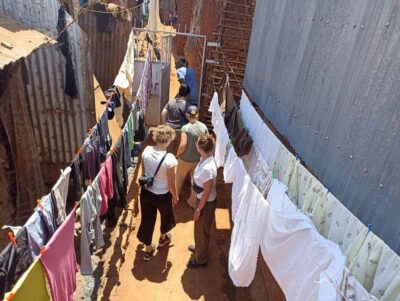
You’ll also see how normal life works in tight spaces. Kids from different communities play together. Adults help each other cross a bridge. Women sell groceries on the street to support their families. Men make jewelry from bones of different animals. And you might catch glimpses of the small industries around it, like makeshift movie theatres, music studios, art spaces, and workshops that turn raw materials into useful goods.
More Walking Tours in Nairobi
- Nairobi: Historic and Modern Highlights Walking Tour
★ 4.8 · 703 reviews - Nairobi Historical Walking City Tour
★ 5.0 · 258 reviews - Nairobi Downtown Walking Tour
★ 4.7 · 208 reviews
The 3-Hour Experience Flow, From Hotel Pickup to Returning to Nairobi
This tour runs for about three hours, so it is a practical half-afternoon plan rather than a full-day commitment. It starts with pickup from your hotel in Nairobi. The tour includes bottled water, which matters because the walk is outdoors and you do not get food on this outing.
You should plan around timing. If you book close to the start time, you are told to message the company right away. The provider also notes a smart workaround for meeting points, they might arrange an Uber for you and pay for it, especially if multiple people are coming from distant locations. In other words, they try to minimize delays, but you still need to be responsive so you do not hold up the group.
Once you are in Kibera, the rhythm is walking plus stopping to meet people and look closely at what they do. You will have guidance on the different sections and areas, which helps you understand you are not just seeing one stretch of streets. Then you return back to Nairobi at the end.
The tour is not designed to be a nonstop photo session, and that is the biggest mindset shift. If you want a classic slideshow, this is not that. If you want a more human kind of experience, you will probably appreciate how slow and intentional it feels.
Getting Your Bearings in Kibera’s Different Sections and Areas

One of the most valuable parts is orientation. Kibera is not one single block with one single story. Even if you only spend a few hours there, the guide helps you understand the neighborhood as a place with different zones, and different patterns of work and daily life.
This matters for first-time visitors because it changes what you notice. Without context, you can reduce everything to stereotypes. With context, you start to see how people organize communities, trade services, and make the best of limited resources. The guide’s role is to connect what you see with why it exists, and how it functions now.
If you get a guide like Bravin, as some past guests did, you might also get a more historical throughline, from the beginning of Kibera to more modern realities. That kind of explanation does not excuse hardship, but it does add clarity, which makes your conversations feel more grounded.
Also, you will be reminded to move politely. Narrow streets mean you should let locals pass first. This is not just good manners, it is practical safety and comfort in a crowded space.
What You’ll See at the Magazine-Relics Necklace and Bracelet Workshop
One of the tour highlights is meeting widows who make necklaces and bracelets from magazines. The concept is simple, repurpose printed material into wearable craft. But what you’re really seeing is how skills travel through households, not just through formal workplaces.
The details matter. Magazine material is often glossy, patterned, and easy to shape once you know the method. Turning that into jewelry creates something people can use and also something they can sell. The emotional impact of the workshop often comes less from spectacle and more from the quiet dignity of the work and the craft process itself.
This is also where the tour’s behavior rules feel most important. The experience encourages empathy, and it discourages treating people like photo props. You are encouraged to gift small items, smile, and encourage people, but you are also asked to avoid big entitlement behaviors that can make locals feel pressured.
If you want to make this part meaningful, focus on listening and asking respectful questions. If you want to take photos, keep it minimal and non-intrusive, because the tour has safeguards that include restrictions on commercial photography.
More of Kibera:
- Nairobi: Explore Kibera Slum with Local Guides
★ 4.9 · 365 reviews - Kevins Kibera Slum Tours
★ 5.0 · 213 reviews - Nairobi: Kibera Slum storytelling tour with a Local
★ 5.0 · 185 reviews - Kibera Slum Tour with Lucas
★ 5.0 · 119 reviews
The Bone-Jewelry Workshop, Where Creativity Shows Up in Reclaimed Materials

Another standout stop is a workshop where jewelry is made from bones of different animals. This can sound unusual at first, especially if you are expecting the tour to focus only on “traditional crafts.” But that reaction is exactly why the stop is powerful.
The workshop shows that creative problem-solving happens everywhere. When materials are limited or when people need flexible income streams, they often use what they can access. Bone jewelry is not presented as a novelty. It is presented as a craft process with intent, technique, and a clear place in local livelihood.
You might also notice how these workshops fit into the bigger ecosystem of small industries around Kibera. The tour encourages you to see the possibility of other creative spaces nearby, like small art areas, music studios, and handmade shoe production. You may not visit every one of those places during your three-hour walk, but the point is that they are there, and they shape the neighborhood’s identity.
This stop also supports responsible tourism. You are not meant to treat it like an attraction. Instead, treat it like a working space. Move carefully, be polite, and let the craft come through in how you engage, not in how you consume the moment.
Responsible Interaction Rules That Make the Tour Work for Everyone

The tour takes safeguarding seriously, and it sets clear expectations for visitors. You are encouraged to practice empathy and compassion as you walk and interact with locals. You are told to take fewer pictures, say hello, and keep behavior from creating expectations that do not match reality.
Here are the specific behaviors the tour highlights:
- Greet people with hello, you might hear Habari used
- Buy something small if you want to support daily life, bottled water or soda from local shops is specifically mentioned as welcome
- Let locals pass first on narrow streets, this keeps things calm and safe
- Cheer kids as they play, so the energy stays positive
- Help in small ways, including helping older people during movement through the area
At the same time, the tour discourages random cash giving. The reason is practical and ethical, random money can create a negative cycle of high expectation. The provider also says donations are handled carefully, converted directly into food, school, and household supplies.
On top of that, there are boundaries designed to prevent exploitation. Commercial photography is prohibited. You are also advised against exchanging phone numbers with anyone during the tour. These are not random rules. They reduce the risk of visitors being pulled into complicated or unsafe situations after the walk ends.
If you want a simple mental script, think of yourself as a respectful visitor, not a customer. Your job is to learn and connect lightly, not to extract stories for entertainment.
Price and Value: Is $35 Fair for a Compassionate Kibera Walk?

The tour costs $35 per person for about three hours. That price includes bottled water, hotel pickup and drop-off in Nairobi, and a local guide. No food is included.
On value, I think the key question is what you are buying. You are not paying for a vehicle tour or a photo-driven program. You are paying for human guidance, time, and a structure that aims to reduce harm while still opening a door into the neighborhood.
A big part of the cost is local expertise. The guide helps you understand Kibera’s layout, and they also manage the social pace of interactions. That kind of guidance can be hard to replicate on your own, especially when you are new and you do not yet know what is appropriate.
The $35 also buys an experience that is explicitly about responsible tourism. That matters because the tour includes strict rules around photography and discourages behavior that can create unhealthy expectations. So the value is not just seeing sights, it is how those sights are presented and how you are coached to behave.
What to Bring, What to Avoid, and How to Stay Comfortable

Comfort is not a luxury on this tour. You are walking for around three hours, in local conditions. Wear closed-toe shoes, because it reduces the chance of blisters and protects your feet. Choose comfortable clothes that can get dirty.
Bring a sun hat, and also consider a hat for shade. You will be outdoors, and the tour includes bottled water, but it does not replace good sun protection.
You should also plan for a practical reality, you might need to keep your bag simple. Luggage or large bags are not allowed, and plastic bags are also not allowed. Alcohol and drugs are prohibited.
One small extra detail that helps, they clean your shoes after the experience. That means you do not have to leave with the stress of figuring out how to de-mud everything before dinner.
If you use the tour’s added Uber option, be ready to follow messages quickly and match the meeting plan. That reduces stress for you and for the guide.
Who This Tour Suits Best, and Who Should Skip It

This tour is built for respectful walking, and it has clear safety notes. It is not suitable for pregnant women, people with respiratory issues, people with low level of fitness, babies under 1 year, and people over 95 years.
That list tells you the tour probably involves steady walking and time on foot. It is also likely to involve close interactions and some time in tight spaces, which can be tiring.
So who will enjoy it most? People who want a meaningful Nairobi experience that goes beyond postcards. People who are comfortable asking questions, listening, and following behavior guidance. And people who like craftsmanship and local industry, especially when it is not simplified into a single stereotype.
If you are hoping to do lots of shopping, this is not positioned as a marketplace stop. But you might have chances to see work and potentially support small businesses in ways the tour encourages, like buying bottled water or soda from local shops.
Should You Book This Kibera Compassionate Walking Tour?
I’d book it if you want more than a surface tour and you are willing to follow the empathy-first approach. The necklace and bracelet workshop using magazine material, plus the bone-jewelry workshop, give you real examples of work and skill, not just talk about poverty.
Skip it if walking three hours in local streets sounds like a problem for your body, or if you are not comfortable with the tour’s rules around photography and random cash giving. This experience works best when you treat it like a respectful visit with guidance, not a chance to collect stories on demand.
If you go, go with curiosity, go with patience, and keep your focus on people and craft. That is where the tour delivers its real value.
FAQ
How much does the Nairobi: Kibera Slum Compassionate Walking Tour cost?
The tour costs $35 per person.
How long is the tour?
The duration is 3 hours.
Is hotel pickup and drop-off included?
Yes. Pickup and drop-off from your hotel is included, and you return to Nairobi after the walk.
What is included in the price?
The included items are bottled water, pick and drop off from your hotel, and a tour guide.
Is food included?
No. Food is not included.
What languages will the guide speak?
The live tour guide speaks English and Swahili.
Are there rules about photography or sharing personal contact?
Yes. Commercial photography is prohibited, and you are advised against exchanging phone numbers with anyone during the tour. The tour also discourages taking lots of pictures and asks for responsible behavior.
Who should not take this tour?
It is not suitable for pregnant women, people with respiratory issues, people with low level of fitness, babies under 1 year, and people over 95 years.
Recently reviewed from Nairobi
- Amboseli Day Trip from Nairobi★ 4.5 · 3 reviews
- Nairobi city tour★ 4.5 · 3 reviews
- Ngare Ndare Day Trip★ 5.0 · 3 reviews
- 1-Day Amboseli Safari★ 5.0 · 3 reviews
- Day Trip To Crescent Island And Hells Gate National Park★ 5.0 · 3 reviews
- Crescent Island Day Tour From Nairobi★ 5.0 · 3 reviews
- 13-Day Uganda Mgahinga Gorilla Trek, Maasai Amboseli Park★ 5.0 · 3 reviews
- 4 days group joining budget safari to Maasai Mara only★ 5.0 · 3 reviews
Kibera, compared.




Kibera Slum Tour with Local Social Entrepreneurs
Read our review →


Browse the lists this tour appears in