

Reviewed · KIBERA
Nairobi: Visit Kibera Slum with a Social Entrepreneur
What makes this Kibera experience interesting is that it is not just a look at poverty. You get a home visit that explains daily life, and you also see where support goes through KCOOP Children’s Centre. I love that your tour is led by people who were born and raised in Kibera, and I love the fact that 50% of the booking fee is reinvested locally to help kids stay in school. One consideration: it is not suitable for people with mobility impairments or wheelchair users.
You meet up, get a quick briefing, then head inside the community with a small team of local guides such as Erick, Samuel, Benta, and Jack. Expect a respectful, information-heavy outing that mixes practical realities with an education-focused mission.
Key things to know before you go

- 50% of your fee supports school and community programs, including help for orphans and vulnerable kids
- Local guides live in Kibera, so your explanations tend to be grounded in how things actually work day to day
- KCOOP Children’s Centre is part of the route, so you can connect your money to real services
- OAC Kenya Crafts uses fixed prices and no bargaining, which keeps shopping transparent
- It is about 3 hours, and it can be adjusted based on your interest
- Bring practical basics like water, sunscreen, and comfortable shoes, since this is not a sit-down tour
A 3 hour Kibera walk with social impact built in

This is a Nairobi social impact tour that is designed to connect three things that often get separated when you travel: place, people, and purpose. Kibera is Nairobi’s best-known informal settlement, and it can feel overwhelming from the outside. On this outing, you start with orientation and then move through five stops that each teach you something different.
The vibe is not about entertainment. It is about learning how life functions in this neighborhood and how community-run programs try to reduce harm, especially for children. You do not just hear stories, you visit spaces that are part of day-to-day life, plus a children’s centre and an artisan workshop.
Also, you will notice something in the way the guides explain things: they keep returning to practical details. That is the kind of insight that makes the experience feel more real than a standard sightseeing tour.
More of Kibera:
- Nairobi: Explore Kibera Slum with Local Guides
★ 4.9 · 365 reviews - Kevins Kibera Slum Tours
★ 5.0 · 213 reviews - Nairobi: Kibera Slum storytelling tour with a Local
★ 5.0 · 185 reviews
Price and value: what your $16 actually does
The tour price is $16 per group (listed as up to 1). That sounds modest, but the value is tied to the way the business is structured.
Here is the key point: 50% of the booking fees goes back to the community. The tour description connects that support to paying school fees for orphans and vulnerable kids and funding other local social projects. In other words, you are not simply paying for a guide’s time, you are also helping run the support system that the visit highlights.
The other 50% covers the costs of organizing the experience and keeping the team operating. In a place like Kibera, that matters because it supports local employment and local leadership, not just outside “tourism labor.”
One more detail that affects value: the tour includes an expert guide, and the stops are chosen around education and livelihoods, not just photo stops. If you care about where your travel spending lands, this is the type of tour that gives you a clear answer.
Meeting at Prestige Plaza on Ngong Road, right in the city rhythm

Your meeting point is PRESTIGE PLAZA SHOPPING MALL on Ngong Road, and you should meet in front of JAVA HOUSE inside the mall. After you meet, you will take a taxi to the first stop, which is inside the slum community office area.
This matters for two reasons. First, the meeting point is easy to find compared with meeting somewhere deeper into the neighborhood. Second, the taxi transfer helps you transition from Nairobi’s main road energy to the community route without wandering around trying to figure out logistics.
If you are traveling alone, or you prefer clear instructions, this setup tends to reduce stress. You are not guessing where to start.
Your guides are the point: Erick, Samuel, Benta, and Jack
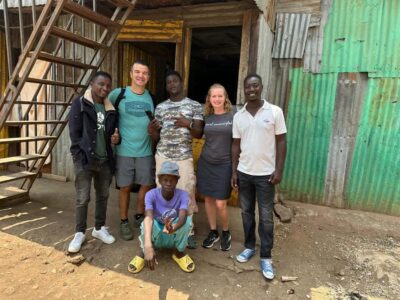
This is a team of four local guides, all born, raised, and still living in Kibera: ERICK, SAMUEL, BENTA, and JACK. In the reviews, people consistently call out how well the guides explain things and how safe they felt.
That “safe” feeling is not magic. It comes from the fact that you are walking with people who know the area and how to manage the flow of the group. It also comes from how the guides set expectations early.
A good way to think about it: you are not getting a script. You are getting an on-the-ground explanation from residents, including first-hand insight into daily life in the community.
More days out of Nairobi:
- Nairobi National Park Half-Day Tour; Free Wi-Fi connection
★ 5.0 · 878 reviews - Nairobi: National Park & Optional Elephants & Giraffe Center
★ 4.8 · 874 reviews - NAI NAMI: Nairobi Storytelling Tour with Street Children
★ 5.0 · 792 reviews - Nairobi National Park Half-Day Game Drive
★ 4.5 · 738 reviews
Stop 1, the office briefing with free Wi-Fi

The tour begins at an office in the community. You will get introductions and a briefing here, and the office includes free Wi-Fi.
Why this matters: a Kibera visit can be emotional and intense. A briefing helps you focus on what you are seeing and how to behave. You also get context before you step into private spaces.
It is also where you can reset yourself before the more personal stops. If you like structure, you will appreciate this early stage.
Stop 2, a home visit where you learn water, power, and space
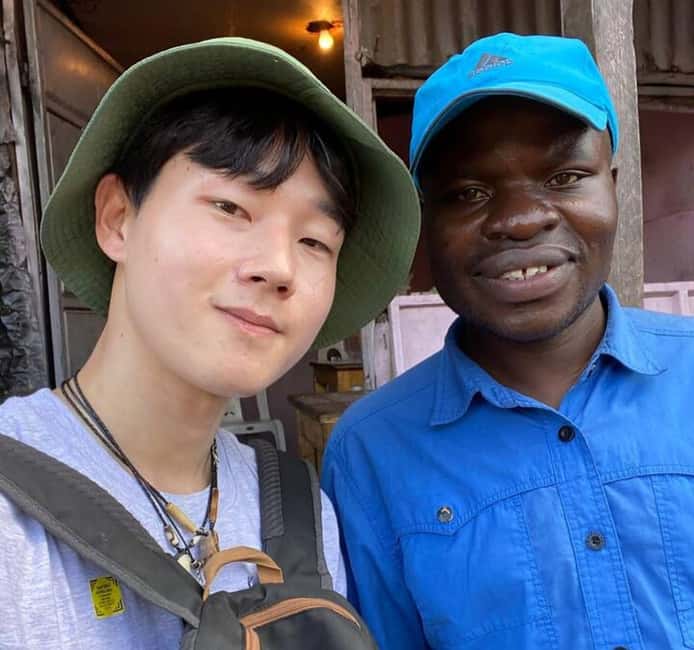
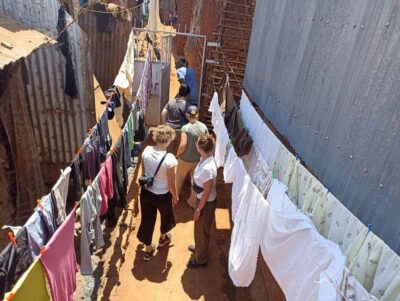
The main stop is a home visit, where you go inside a residential house to understand how daily life works. This is where the tour shifts from general impressions to real-world details, like:
- how people get water
- how electricity works
- how bathrooms are set up
- what typical house size feels like
This kind of stop is valuable because it teaches you to stop thinking in stereotypes. Instead of imagining a single, uniform experience of hardship, you see how families manage limited space and basic services.
The drawback is obvious but worth saying plainly: this is a personal look at living conditions. It is not comfortable sightseeing. Wear shoes you can walk in, keep your attention on the guide’s explanations, and try to avoid photographing in a way that makes people feel like they are being studied.
Stop 3, a handicrafts center where recycling becomes income
Next you head to a handicrafts centre to see how locals recycle materials into handmade items, including jewelry and other crafts.
This stop matters for two reasons. First, it shows how skills and creativity become practical income. Second, it connects to the tour’s overall social enterprise model, where crafts are not only souvenirs, they are part of supporting local livelihoods and funding support for kids.
You will likely come away with a new appreciation for craftsmanship. Even if you are not shopping heavily, watching the process helps you understand what makes the final products meaningful.
Stop 4, KCOOP Children’s Centre and the programs behind the visit
Then you visit KCOOP Children’s Centre, a children’s centre the tour team runs to serve orphans and vulnerable kids.
KCOOP is a non-profit organization founded and registered in 2022. The programs listed include:
- After school program
- Education program
- Combating child hunger
- Empowerment through arts and sports
- Community outreach
This stop is often the emotional anchor of the day. It is also the place where you can connect what you learned in the home visit to what support looks like when it is organized.
If you are trying to decide how to spend your limited time in Nairobi, this is a reason to choose this tour over a purely observational one. It gives you a clearer view of “then what,” meaning how people try to improve outcomes.
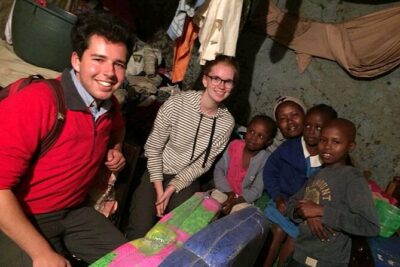
In the reviews, people mention the children being welcoming and smiling, even though the circumstances are difficult. That combination can hit you emotionally, but it also keeps the experience grounded in human reality, not only hardship.
Stop 5, OAC Kenya Crafts with fair, fixed prices

The final stop is a curio shop called OAC Kenya Crafts. You can explore handmade African crafts and souvenirs.
Here the tour makes one thing very clear: prices are fair, regular, transparent, and fixed. Every item is marked with a price tag, and there is no bargaining. That matters because bargaining can create awkward moments in a place where people are trying to make ends meet. Fixed prices help keep the transaction respectful and predictable.
If you want souvenirs, plan to bring some cash. This is listed as optional, but it helps if you decide to buy.
Also, look at the pricing as part of the mission. OAC Kenya Crafts is described as a social enterprise that creates economic opportunities for local artisans and generates income that supports needy kids in Kibera.
If you buy, you are not just taking home a trinket. You are contributing to a local economic channel tied to the children’s programs you saw earlier.
Getting the most out of the tour: practical, respectful tips
This experience lasts about 3 hours, and the team says they can make it longer or shorter depending on your interest. That flexibility is helpful if you are the type who wants time for questions.
To make the day easier on your body and your mind, bring:
- comfortable shoes
- sunscreen
- water
- hand sanitizer or tissues
If you like, you can also bring optional gifts for children, such as candies, biscuits, school supplies, used clothes, sports supplies, art supplies, indoor games, or food supplies like rice and sugar. The word here is optional, so do not feel pressured.
Finally, come with the expectation that this is an informational walk through a real community. That means being patient with the pace and respectful in how you interact and take photos. If you keep your focus on the guide’s explanations and the mission behind the stops, the tour will feel more meaningful and less like a stunt.
Safety, comfort level, and who should book
From the reviews, people consistently say they felt safe, and that is tied to the fact that you are walking with residents and an organized team.
Still, this is not a “sit back and relax” tour. It is a structured route with home interiors and community spaces. If you have mobility challenges, it is explicitly not suitable for wheelchair users and people with mobility impairments.
This tour fits best if you:
- want a social impact experience in Nairobi that connects spending to education support
- enjoy guided explanations and question time
- are comfortable with the emotional weight that can come with learning about hardship
You might want to skip it if you want light, carefree sightseeing, or if you are looking for a standard museum-style tour with minimal human contact.
Should you book this Kibera experience?
Yes, if your goal is to understand Kibera through resident leadership and to see what your money supports. I like that this tour is built around KCOOP Children’s Centre and OAC Kenya Crafts, so your visit does not stop at observation.
It is also a strong pick if you value transparency: fixed prices at the crafts shop and a clear statement that 50% of the booking fee returns to the community.
The main reason not to book is simple: the tour is not designed for wheelchair users or visitors with mobility impairments, and it is not a casual outing. If that is fine with you, you will likely come away with clear context, practical insights, and a better sense of how local programs work.
FAQ
How long is the Kibera experience?
It takes about 3 hours, and the team says they can adjust the length depending on your interest.
Where do I meet for the tour?
Meet inside PRESTIGE PLAZA SHOPPING MALL on Ngong Road, in front of JAVA HOUSE.
Does the tour include meals or drinks?
No. Meals and drinks are not included.
What does the tour price include?
The tour includes an expert guide.
What happens to the booking fees?
The information provided says 50% of the booking fees goes back to the community to support kids in need, including paying school fees for orphans and vulnerable kids and funding other social projects.
Can I bring gifts for children?
Yes, it is optional. You can bring items like candies, biscuits, school supplies, used clothes, sports supplies, art supplies, indoor games, or food supplies.
Are souvenir prices negotiable at OAC Kenya Crafts?
No. Prices are fixed and clearly marked on tags, and there is no bargaining.
Is this tour suitable for wheelchair users or people with mobility impairments?
No. It is not suitable for wheelchair users or people with mobility impairments.
Recently reviewed from Nairobi
- Amboseli Day Trip from Nairobi★ 4.5 · 3 reviews
- Nairobi city tour★ 4.5 · 3 reviews
- Ngare Ndare Day Trip★ 5.0 · 3 reviews
- Day Trip To Crescent Island And Hells Gate National Park★ 5.0 · 3 reviews
- Crescent Island Day Tour From Nairobi★ 5.0 · 3 reviews
- 1-Day Amboseli Safari★ 5.0 · 3 reviews
- 13-Day Uganda Mgahinga Gorilla Trek, Maasai Amboseli Park★ 5.0 · 3 reviews
- 4 days group joining budget safari to Maasai Mara only★ 5.0 · 3 reviews
Kibera, compared.



Kibera Slum Tour with Local Social Entrepreneurs
Read our review →

Browse the lists this tour appears in