
Reviewed · KIBERA
Tembea Kibera
Kibera is Nairobi’s largest urban informal settlement, and this half-day private tour turns it from a map label into daily street life you can actually talk with. The private group format, plus pickup along Ngong Road, makes the whole day feel organized and personal, not chaotic.
I love the local perspective. You’ll walk with Kibera guides like Luca, who can explain how people get around and how the matatu system works, right there in the neighborhood. I also love the food portion, where you can try Kenyan street food and learn how to prepare traditional Kenyan food during the visit.
One consideration: this is not a soft, sanitized experience. The environment can feel shocking at first if you’re used to high-comfort travel, so come with respect, patience, and an open mind.
Key highlights at a glance

- Private half-day route in Kibera, sized for just your group
- Kibera guides like Luca, plus real talk about matatu culture and daily routines
- Street art projects and community-focused stops you can see with your own eyes
- Kenyan street food and traditional cooking lesson as part of the walk
- Pickup and drop-off along Ngong Road, with a mobile ticket for the day
Nairobi first, Kibera next: what this tour is really about

This tour is interesting because it puts you inside a living neighborhood, not outside it. You’re there to learn how people live and work in Africa’s largest urban informal settlement, and to do it through conversation and observation, not a classroom style presentation.
It also helps that the visit is private. When it’s just your group, you can ask questions at your pace. You can slow down at a street art wall. You can focus on food and daily routines instead of rushing through “checklist stops.”
Just keep your expectations grounded. You are not going to Kibera to collect pretty photos. You’re going to learn how community members make life work, including through creative local projects.
More of Kibera:
- Nairobi: Explore Kibera Slum with Local Guides
★ 4.9 · 365 reviews - Kevins Kibera Slum Tours
★ 5.0 · 213 reviews - Nairobi: Kibera Slum storytelling tour with a Local
★ 5.0 · 185 reviews
Price, time, and why 3 to 4 hours works
The price is $40.90 per person for a 3 to 4 hour tour. That’s not the cheapest thing you can book in Nairobi, but for what you get, it’s fairly good value: private guiding, pickup and drop-off from the Ngong Road area, and a structured visit that includes street art and a food experience.
Time matters here. A half-day format means you get meaningful contact with the neighborhood without turning the day into something that drains you. It’s also easier to fit into a Nairobi itinerary that already includes traffic, museums, or safari planning later.
Also, this is the kind of tour that benefits from planning ahead. It’s commonly booked about 71 days in advance, so if your dates are fixed, grab a slot early.
Pickup along Ngong Road and how you’ll get moving
You’ll get pickup and drop-off from any hotel or commercial address along Ngong Road. That’s a practical detail because it saves you from trying to navigate local routes on your own before you’re even oriented.
In one of the experiences connected with this tour, Luca picked guests up at their residence and traveled to Kibera by matatu. That matters because it gives you more than transport. It’s a chance to understand the matatu system and why it’s such a core part of moving through Nairobi.
In a neighborhood like Kibera, getting around is part of the story. When you travel as a group with a guide who knows the area, you spend more energy observing and asking questions, and less time worrying about logistics.
Kibera walk: streets, culture, and community connections

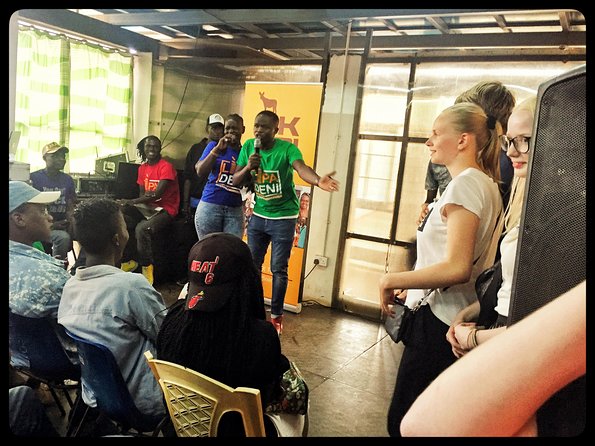
The heart of the tour is the Kibera visit itself, usually around a 4 hour stretch within your half-day window. You’ll see the largest slum in Africa and interact with local communities in a way that’s meant for cross-cultural exchange, not sightseeing from a distance.
What you can expect in practice is a guided walk that mixes:
- everyday life you can observe
- conversations with people connected to the community
- stops that connect community challenges to local solutions
One of the strongest themes you’ll feel is the balance between hardship and agency. Some homes and streets may hit you hard emotionally. But you’ll also see ways people sustain themselves and build stability through community effort.
A big plus is that guides are from Kibera. Luca and Lucas are two names that show up in experiences linked to this tour. Having someone who lives there gives you context you can’t fake. The explanations can feel grounded, not generic.
More days out of Nairobi:
- Nairobi National Park Half-Day Tour; Free Wi-Fi connection
★ 5.0 · 878 reviews - Nairobi: National Park & Optional Elephants & Giraffe Center
★ 4.8 · 874 reviews - NAI NAMI: Nairobi Storytelling Tour with Street Children
★ 5.0 · 792 reviews - Nairobi National Park Half-Day Game Drive
★ 4.5 · 738 reviews
Street art projects and local organizations you can actually see

This isn’t only about walking through narrow lanes. You also get to experience street art projects connected to the neighborhood. That kind of stop matters because it reframes Kibera from a single story into many stories.
Street art gives you a visual map of expression. It can signal pride, creativity, and community identity. It can also point to the broader push to improve the neighborhood, including through programs supported by local groups.
In one experience, the route included visits to three organizations that work on improving quality of life. That kind of stop is valuable because it turns your questions from abstract to specific. Instead of only seeing the environment, you also get to see the work happening inside it.
The caution here is simple: keep your tone respectful. Photography is not always the right move in tight community spaces. If you want photos, ask your guide first and follow their lead.
Kenyan street food and a traditional cooking lesson

One of the most practical reasons to choose this tour is the food. You’re not just promised food, you’re offered a chance to try Kenyan street food and learn how to prepare traditional Kenyan food.
Food experiences can become touristy fast, so I like how this one is tied to the neighborhood context. You’re learning alongside the people who live that reality daily. Even if you only take away a few steps from the cooking lesson, the point is understanding technique and taste in a real setting.
Kenyan street food also works as an icebreaker. It’s easier to start conversation when you can point, taste, and ask questions about ingredients and cooking methods.
If you have strong dietary requirements, you’ll want to communicate them when booking or on the day. The tour data confirms traditional cooking and street food as parts of the experience, but it does not spell out menus or specific ingredients, so your best move is to flag needs early.
What makes the interaction meaningful (and what to do with it)

A private tour is not automatically meaningful. The difference is how you behave and what you ask.
Here’s the mindset that tends to work best on a visit like this:
- Ask about everyday routines, not only about problems.
- Listen for practical details, like how people navigate transport and community life.
- Keep your expectations humble. You’re learning, not judging.
The people side is the core value. This tour is designed as a cross-cultural exchange, and it’s built around local interaction. That means your curiosity matters.
You can also help the experience by being careful with energy. If you arrive tense, the neighborhood will feel harsher. If you arrive ready to be respectful and patient, the conversations land better.
And one more thing: don’t treat the visit like a photo safari. Your guide will have a plan for what to see and when. Let that shape your attention.
Weather and comfort realities you should plan for

This experience requires good weather. That’s not a small detail. If it’s rainy or rough out, the tour may be canceled and you’ll be offered a different date or a full refund.
On the ground, a neighborhood walk also means you should expect uneven paths and lots of standing and walking. The tour is marketed for most travelers to participate, so you should generally be fine if you’re able to do a moderate walk for a few hours. Still, if you know you struggle with rough terrain or long standing, plan accordingly.
Because the tour is private, the pacing can often be smoother than group tours. Your guide can typically manage the group’s movement better than a large bus crowd.
Who should book Tembea Kibera, and who should pause
This is a strong fit if you want:
- a private way to learn about life in Kibera through real conversations
- a guided explanation of matatu culture and neighborhood movement
- a food-focused experience with both tasting and a traditional cooking lesson
- street art and community project stops, not just a quick walk-by
You might pause if you:
- want a highly comfortable, low-emotion style tour
- are easily overwhelmed by the sight of poverty in close quarters
- have limited flexibility for weather, since the tour depends on good conditions
The biggest “yes” factor is curiosity paired with respect. If you can hold both, you’ll get much more out of the time you spend there.
Should you book this tour? My take
I think you should book Tembea Kibera if your Nairobi trip includes time for one experience that’s about people, not just sights. The value is in the structure: private guiding, pickup along Ngong Road, a real Kibera walk, street art stops, and food that connects you to everyday life.
The main trade-off is emotional. This is a neighborhood with real hardship. If you are prepared for that reality and you choose respect over shock, the experience can be genuinely memorable and human.
If you’re the type who wants a deeper understanding of Nairobi beyond the skyline, this half-day format is a smart way to do it. And with guides from Kibera like Luca showing you how things work, you’ll leave with more than photos. You’ll leave with practical stories you can actually explain.
FAQ
How long is the Tembea Kibera tour?
It lasts about 3 to 4 hours.
How much does the tour cost?
The price is $40.90 per person.
Is pickup included, and where does it happen?
Pickup and drop-off are offered from any hotel or commercial address along Ngong Road.
Is this a private tour?
Yes. It is a private tour/activity, and only your group participates.
What are the opening hours for the tour?
The tour runs Monday through Sunday from 7:00 AM to 6:00 PM.
Does the price include admission?
An admission ticket is included.
Do you get a mobile ticket?
Yes. Mobile ticket is part of the experience.
Is it near public transportation?
Yes, it is near public transportation.
What if the weather is poor?
The experience requires good weather. If it is canceled due to poor weather, you will be offered a different date or a full refund.
How late can I cancel for a full refund?
You can cancel up to 24 hours in advance for a full refund. If you cancel less than 24 hours before the start time, the amount paid is not refunded.
Recently reviewed from Nairobi
- Amboseli Day Trip from Nairobi★ 4.5 · 3 reviews
- Ngare Ndare Day Trip★ 5.0 · 3 reviews
- Nairobi city tour★ 4.5 · 3 reviews
- Day Trip To Crescent Island And Hells Gate National Park★ 5.0 · 3 reviews
- Crescent Island Day Tour From Nairobi★ 5.0 · 3 reviews
- 1-Day Amboseli Safari★ 5.0 · 3 reviews
- 13-Day Uganda Mgahinga Gorilla Trek, Maasai Amboseli Park★ 5.0 · 3 reviews
- 4 days group joining budget safari to Maasai Mara only★ 5.0 · 3 reviews
Kibera, compared.





Kibera Slum Tour with Local Social Entrepreneurs
Read our review →


Browse the lists this tour appears in