

Reviewed · KIBERA
Visit kibera Slum the chocolate city
What makes this Kibera tour interesting is that it’s not just a quick photo stop. You get a guided walk through Nairobi’s largest informal settlement, with time for community engagement and cultural insights that help you understand daily life beyond headlines. I also like the clear focus on responsible interaction, plus stops centered on empowerment projects rather than shock value.
One thing to consider is that this is a real, working community, so the experience can feel intense and emotional. You’ll be walking for about 2.5 hours, and some visitors may want extra mental prep for the challenges residents face.
Key things to look for on this tour

- Meet local residents and community leaders to hear lived experiences and ongoing initiatives
- See empowerment projects focused on education, skills training, and community development
- Learn the cultural mix through art, music, and entrepreneurial energy
- Get historical context on how Kibera developed and why it matters in Kenya’s urban story
- Practice responsible tourism with a respect-first approach to visiting marginalized communities
Kibera, Nairobi’s city inside the city

Kibera is Nairobi’s largest informal settlement, and it’s also one of the best places in the city to learn how urban life really works on the ground. This tour is designed around conversation and observation, not a checklist of sights. You’ll move through the area with a guide and spend the 150 minutes focused on understanding people, projects, and context.
What I like about this kind of guided format is that it turns your visit into something useful. You’re not just passing through, you’re listening to why things are the way they are and what residents are trying to change. That makes it easier to leave with a more accurate picture, and less confusion.
And since it’s offered by Royal safaris with a live English guide plus other language options, you can match the experience to your comfort level. The tour is available in English, Chinese, Esperanto, German, Italian, Spanish, and French, which is a nice touch if you don’t want to wing it.
More City Tours in Nairobi
- Nairobi Historical Walking City Tour
★ 5.0 · 258 reviews - Nairobi City Walking Tour with Traditional Kenyan Lunch
★ 5.0 · 106 reviews - Nairobi: Private 4-Hour City Tour
★ 4.5 · 68 reviews
Price and time, what $25 actually buys you
At $25 per person for about 150 minutes, you’re paying mainly for two things: a live guide and a structured route through a neighborhood you’d otherwise struggle to navigate safely and respectfully on your own. Since the tour includes a guide, that cost goes beyond logistics and into interpretation, context, and introductions.
Is it a bargain? It can feel that way because this is a short, focused block of time rather than an all-day outing. You get community engagement, cultural insights, and historical background packed into a compact visit. On the other hand, you should plan for the fact that not everything is included, which affects true total cost.
Entrance fees are not included, and pickup is not included either. The tour also notes skip the ticket line, so you should expect less waiting once you arrive at the right place, but you still need to check what, if any, on-site costs apply.
Responsible tourism, the rule that keeps the visit human

This tour puts responsible tourism directly into the plan, and that matters. When you visit marginalized communities, your behavior shapes the whole experience. Your guide’s job is to set expectations and help you approach questions in a way that doesn’t turn people into a spectacle.
In practice, that means you should show up ready to listen. If you’re taking photos, keep it respectful and ask first when appropriate. Keep your curiosity grounded in dignity, and remember that the people you meet are not a backdrop for your learning.
You’ll also notice that the tour content includes empowerment projects. That’s a clue to how you’re meant to frame the visit. It’s not only about problems, it’s about solutions residents are building through education, skills training, and community development.
Meeting at Equity Ayani: start where the tour is anchored
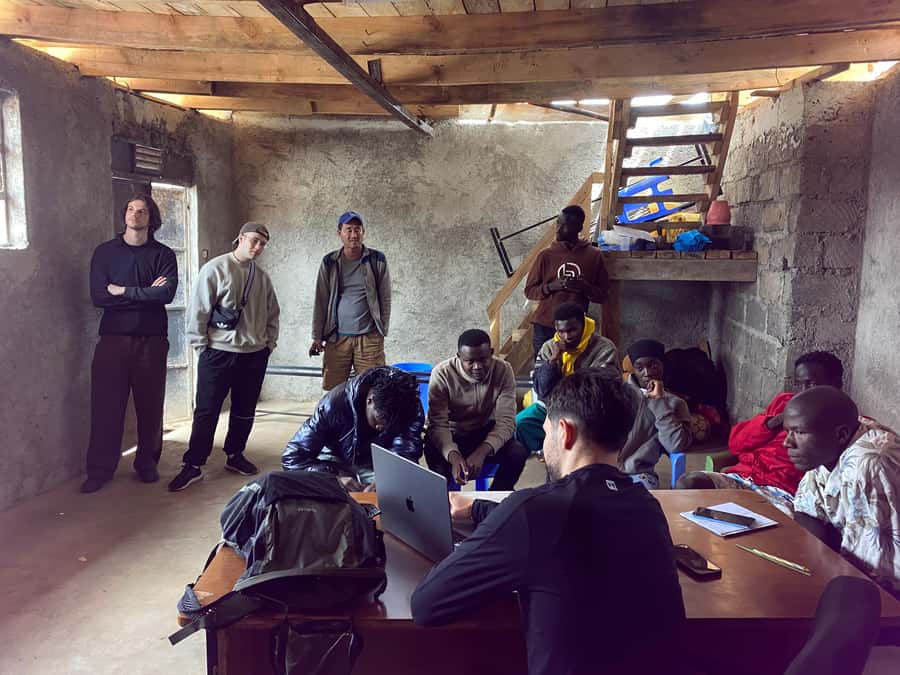
The tour starts and ends at Equity Ayani. That’s useful because it simplifies your planning, especially if you’re already in Nairobi and want a clear place to meet. You’ll get the tour guide there before heading out into Kibera.
From a practical standpoint, a fixed start point helps you avoid getting stuck in the wrong area before the walk begins. It also helps you measure time, since the total duration is about 150 minutes. Expect the tour to feel like a guided walk with sightseeing along the way, not a bus tour with long gaps.
More of Kibera:
- Nairobi: Explore Kibera Slum with Local Guides
★ 4.9 · 365 reviews - Kevins Kibera Slum Tours
★ 5.0 · 213 reviews - Nairobi: Kibera Slum storytelling tour with a Local
★ 5.0 · 185 reviews - Kibera Slum Tour with Lucas
★ 5.0 · 119 reviews
Inside Kibera: community engagement on foot
The heart of the experience is community engagement. You’ll interact with local residents and community leaders to learn about experiences, initiatives, and the challenges they face. That kind of conversation is powerful because it replaces vague impressions with real details people are willing to share.
This is also where your mindset matters most. If you come in expecting a purely visual experience, you may miss what’s happening. What you’re really collecting are perspectives: how people describe daily life, what they think matters, and what they want visitors to understand.
Because the tour is 2.5 hours and includes walking, you’ll get time for a meaningful pace. Still, it’s a good idea to keep your energy steady. Plan to be present, ask thoughtful questions, and give yourself a moment to reset if things feel overwhelming.
One more useful note is the guide praise you can look for. A verified booking highlighted Daniel as a kind and very professional guide. That’s a big deal for this kind of tour, because good guiding can make conversations feel natural and respectful instead of awkward or intrusive.
Empowerment projects: education, skills training, community development

Another key part of the tour is visiting empowerment projects and social enterprises. The focus is on how residents are supported through education, skills training, and community development.
This section helps you understand Kibera beyond a single story. Yes, the settlement exists in challenging conditions, but the tour is built to show what people are doing with those challenges. When you see the work aimed at practical skills and learning, you get a clearer view of how resilience can look day to day.
For you, this changes how you interpret the rest of the visit. Instead of asking only why life is hard, you start asking what pathways are being created, what support structures exist, and what residents believe will help their community move forward.
Also, the tour structure suggests you’ll be learning from organizations with a mission, not just touring homes. That usually makes the conversation more constructive and less random. It’s also easier to understand what’s working when the tour is framed around outcomes like education and training.
Cultural insights you can actually feel: art, music, and enterprise

Kibera has a cultural identity, and this tour tries to show it in a direct way. You’ll experience rich cultural diversity through art, music, and entrepreneurial spirit.
This matters because music and art are often the easiest entry points for respectful curiosity. They also help you notice something important: culture is not separate from daily life. It grows in response to it.
Entrepreneurial energy is another big theme here. Even without specific stop names, the tour is explicitly designed to help you recognize how people create livelihoods and solve problems in everyday ways. That gives you a more complete view than a visit focused only on hardship.
If you like tours that let you observe how people build community through creativity and work, this is the section that tends to stick with you.
Historical context: how Kibera fits into Kenya’s urban story

This tour includes historical context about Kibera’s development and significance in the broader context of urbanization and social challenges in Kenya. That background is essential if you want your visit to make sense after you leave.
Without context, it’s easy to see a settlement and stop at the surface. With history, you understand why the settlement exists in the way it does, and why issues around housing, services, and urban growth keep repeating across many cities.
This part of the tour also helps you ask better questions. Instead of asking only what is broken today, you can ask how people arrived here, what changed over time, and what residents believe should happen next.
Getting value from the guide, and how language options help

You’re not going without help. The tour includes a tour guide, and the listing offers multiple languages. That matters because interpretation changes everything on a visit like this.
If you’re choosing between languages, pick the one where you can ask follow-up questions comfortably. Even in a guided setting, your experience depends on communication. A guide who can explain clearly and translate nuance makes the visit feel more human and less like a scripted walk.
The reviews point to strong guide quality. A Spanish review praised a guide named Daniel and used language that signals genuine admiration for the tour. Another verified booking described the guide as very kind and highly professional. That’s exactly what you want for a community-based visit, where the tone can’t be careless.
Practical tips so your 2.5 hours feel smooth
You can’t control everything in a community setting, but you can control how you show up. Here are the practical things that will help:
- Dress and behave with respect. This is a community visit, not a theme attraction.
- Keep a steady pace. The tour lasts about 150 minutes and includes walking and sightseeing along the way.
- Bring patience for real-world conditions. Even with a guide and a clear plan, you’ll likely move through areas with limited access and uneven flow.
- Use your questions well. Ask about initiatives, education, skills training, and what support looks like from the community’s point of view.
- Remember the tour includes responsible tourism guidance. Follow it. It’s there because your comfort is part of ethical visiting too.
Also, plan around what’s not included. Entrance fees are not included, and pickup isn’t included. If you’re comparing options, include those factors in your total planning so you don’t get surprised later.
Should you book the Kibera Slum and Chocolate City experience?
If you want a guided, structured way to understand Nairobi’s largest informal settlement with a strong emphasis on community engagement, cultural insights, empowerment, and historical context, this tour is a solid pick. The time is reasonable at about 2.5 hours, so it fits into a busy Nairobi itinerary without swallowing your whole day.
It’s especially worth booking if you value responsible tourism and prefer learning through conversation rather than detached sightseeing. The guide quality seems to be a standout point, with praise that specifically mentions Daniel as kind and professional. That matters for trust and for how the visit feels once you’re there.
Skip this tour if you need a low-emotion experience or if walking in tight spaces will be a deal breaker for you. Some visits to marginalized communities are hard on the heart, even when they are handled thoughtfully.
FAQ
How long is the Kibera Slum the Chocolate City tour?
The duration is 150 minutes.
How much does the tour cost?
The price is listed as $25 per person.
Where does the tour start and end?
The tour starts and returns to Equity Ayani.
Is a tour guide included?
Yes. A live tour guide is included.
What languages are offered for the tour guide?
The tour guide is available in English, Chinese, Esperanto, German, Italian, Spanish, and French.
What is not included in the tour price?
Entrance fee and pickup are not included.
Can I cancel for a full refund?
Yes, you can cancel up to 24 hours in advance for a full refund.
Does the booking allow pay later?
Yes. The option is reserve now & pay later, meaning you can book your spot and pay nothing today.
Recently reviewed from Nairobi
- Amboseli Day Trip from Nairobi★ 4.5 · 3 reviews
- Nairobi city tour★ 4.5 · 3 reviews
- Ngare Ndare Day Trip★ 5.0 · 3 reviews
- Day Trip To Crescent Island And Hells Gate National Park★ 5.0 · 3 reviews
- Crescent Island Day Tour From Nairobi★ 5.0 · 3 reviews
- 1-Day Amboseli Safari★ 5.0 · 3 reviews
- 13-Day Uganda Mgahinga Gorilla Trek, Maasai Amboseli Park★ 5.0 · 3 reviews
- 4 days group joining budget safari to Maasai Mara only★ 5.0 · 3 reviews
Kibera, compared.





Kibera Slum Tour with Local Social Entrepreneurs
Read our review →


Browse the lists this tour appears in