
Reviewed · KIBERA
Visit Kibera The Largest Slum With a Local
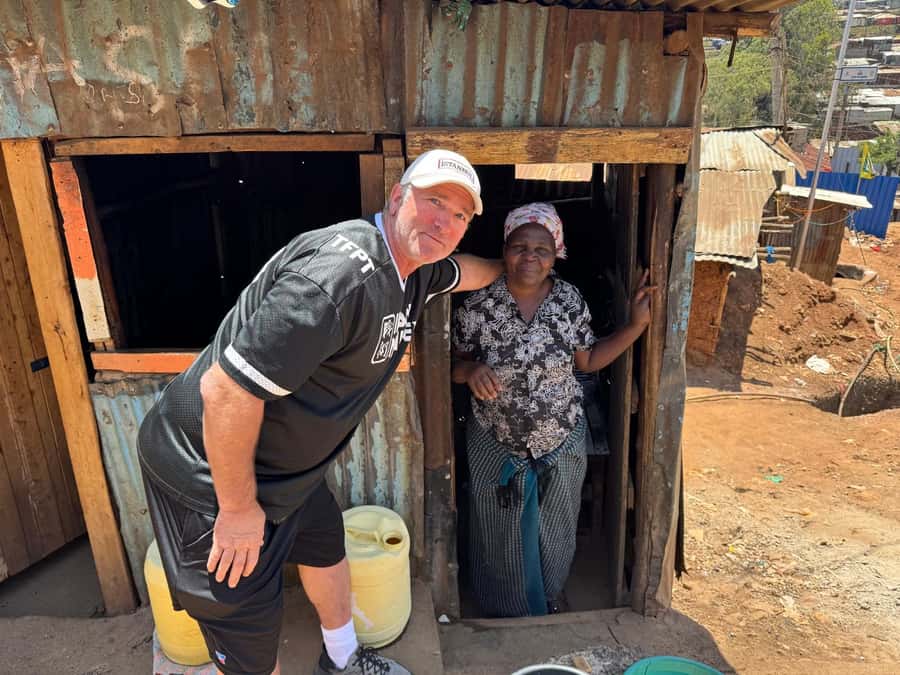
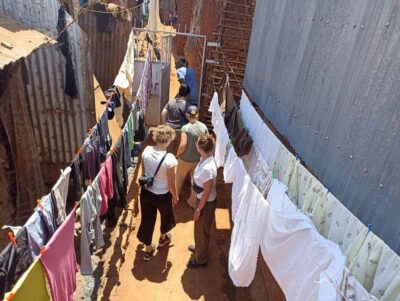
Kibera, often reduced to a statistic, turns human when you walk it with Jack and a small team who grew up there. I love the way they guide you end to end with clear, in-person context, and I love the craft and market stops where you can bargain and buy handmade pieces made from recycled materials.
One possible drawback: this is a real neighborhood, not a performance. The home visit and everyday scenes can feel intense, so bring patience, a respectful attitude, and expectations that this is about people and daily life, not polished sights.
Key highlights at a glance

- Full-time guidance with a team of four local guides
- Five structured stops that balance work, home life, and food
- Craft center and market time, including bargaining for local prices
- A home visit to see living standards from the inside
- Street food and tea, plus a chance to chat with mechanics
- Return to Prestige Plaza after the experience
Entering Kibera With Jack: what makes this tour different
This tour is interesting because you do not just look from the outside. You walk through Kibera with people who are from the area, so you get answers as you go, not a rehearsed speech.
Jack, the guide behind it all, is a social entrepreneur, social worker, and volunteer. His focus is education for orphans and vulnerable children, and the tour fee is part of that mission.
You should also know the pacing is not rushed. You are with the guides the whole time, and the experience ends by bringing you back to the meeting point at Prestige Plaza. That matters when you are visiting a place that is unfamiliar and busy.
More of Kibera:
- Nairobi: Explore Kibera Slum with Local Guides
★ 4.9 · 365 reviews - Kevins Kibera Slum Tours
★ 5.0 · 213 reviews - Nairobi: Kibera Slum storytelling tour with a Local
★ 5.0 · 185 reviews
Getting started at Prestige Plaza and meeting in front of Java House
Your trip begins at Prestige Plaza Shopping Mall on Ngong Road. Meet in front of JAVA HOUSE inside the mall.
If you like arriving on time but want a backup plan, there is a WhatsApp number you can text or call: 0112011131. Having that contact helps you get your bearings fast, especially if Nairobi traffic changes your timing.
The tour duration is 3 hours, and it is run in English. That makes it easier to ask questions without guessing what a guide means.
The purpose behind the walk: education support and community benefit
This is not a sightseeing side-trip with a donation tacked on at the end. The tour is directly tied to school support in the community.
The organizers share that 50% of the booking fee goes back to the community. That support is used for school supplies and school fees for orphans and vulnerable children.
Jack explains his personal motivation too. He lost both parents when he was 9, and he says that experience is why he stays focused on helping kids who need a hand.
Stop 1: the office welcome, introductions, and a quick safety reset
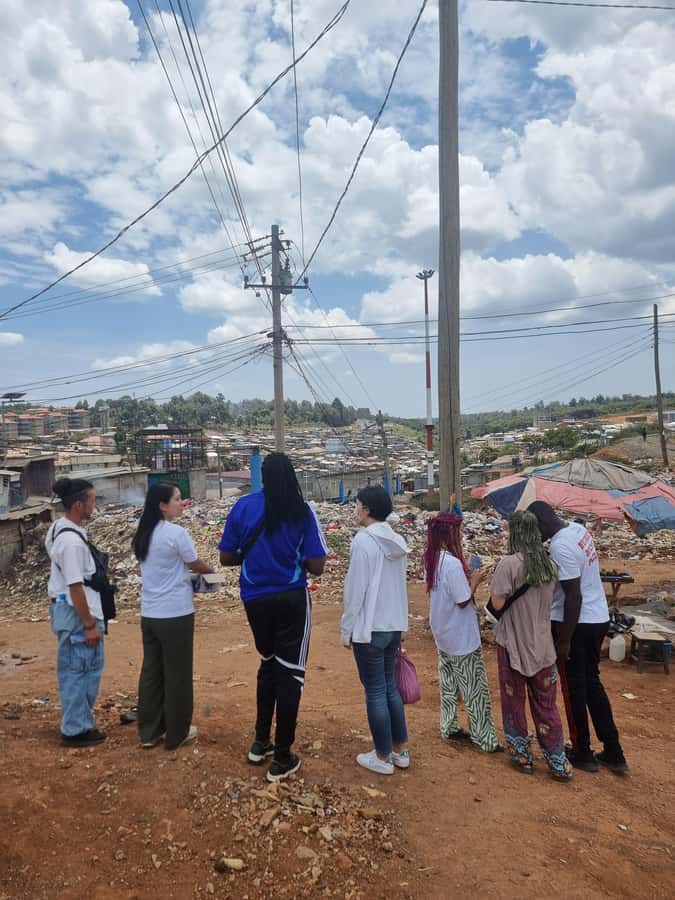
The first stop is the office, before you head into Kibera. You start with introductions and a briefing about what the experience will include.
The office is described as safe and super clean, which is a nice way to begin. It helps you settle in, ask questions, and understand what respectful behavior looks like during the visit.
This setup also helps the tour run smoothly. When you know the plan, you spend more of the three hours actually seeing life, not trying to figure it out.
More days out of Nairobi:
- Nairobi National Park Half-Day Tour; Free Wi-Fi connection
★ 5.0 · 878 reviews - Nairobi: National Park & Optional Elephants & Giraffe Center
★ 4.8 · 874 reviews - NAI NAMI: Nairobi Storytelling Tour with Street Children
★ 5.0 · 792 reviews - Nairobi National Park Half-Day Game Drive
★ 4.5 · 738 reviews
Stop 2: the crafts center where recycling becomes income

Next you head to the crafts center. This is where locals recycle materials to make jewelry and other handmade items.
What I like about this stop is the focus on work, not just artistry. You get to see how people turn what others discard into something sellable, and that kind of practical creativity is the heartbeat of many small local economies.
If you buy something, you are not just taking home a souvenir. You are supporting a maker directly, and you will often have the chance to bargain with your guide to help you reach a local price.
Stop 3: an open-air market for second-hand goods
Then you visit an open-air market where locals buy second-hand items. This part of the itinerary is not just visual, you get to walk through the space and see how the market feeds everyday needs.
Markets can be chaotic for first-time visitors, so it helps that you are never sent off alone. Your guides stay with you and help translate what you are seeing into real context.
This is also where the bargaining culture comes in. The tour includes time to shop at local markets and negotiate with your guides so you are aiming for a fair, local price, not a tourist inflated one.
Stop 4: a home visit, living standards, and how to be respectful

The home visit is one of the most important stops. You enter a house to see the inside living standards of the people living there.
This is where you should slow down mentally. You are not entering a museum set. You are seeing a home, with daily routines and personal space to consider.
A key point from the tour’s style is that guides from the slum lead the conversation. That matters because they know how to frame what you are seeing, and they can explain things without turning people into a “lesson” for outsiders.
Plan for photos and conversations to be sensitive. If you want to take pictures, keep it respectful and follow your guide’s cues.
Stop 5: cafeteria time, local foods, soft drinks, and tea with mechanics

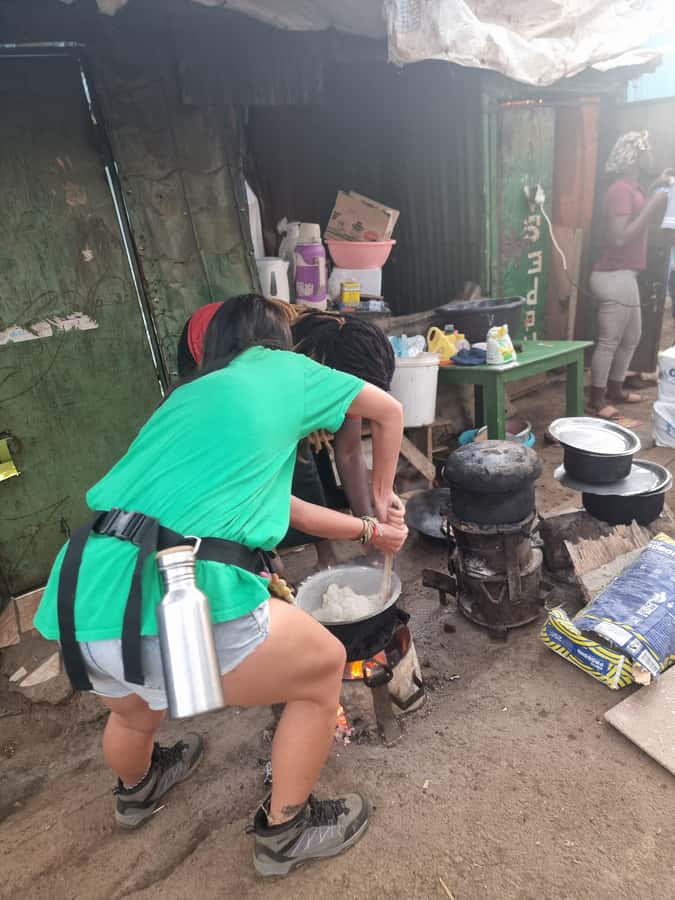
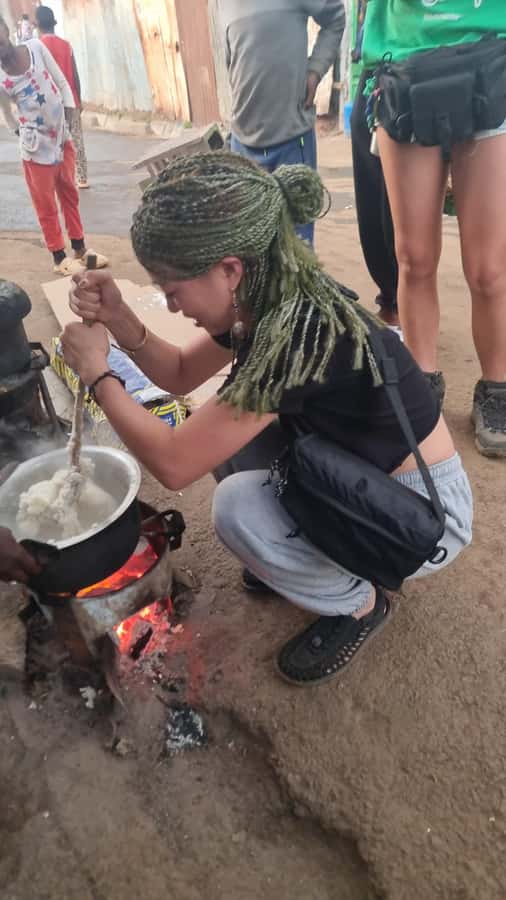
After the home visit, the tour moves to a cafeteria stop for rest and food. You are set up with soft drinks and local foods, plus short downtime before the wrap-up.
One of the standout highlights is that you also eat street food and have tea with mechanics. That is a great mix because it changes the social angle from household life to the working world outside the home.
And this is where many people get the best conversations. Mechanics working on cars, scooters, and everyday machines can tell you what the neighborhood sounds and feels like beyond the walls you just visited.
The tour then ends by bringing you back to the meeting point at Prestige Plaza, so you are not trying to navigate Nairobi on your own after a packed three hours.
What the “full-time guide” setup really means in practice

A lot of tours promise local knowledge, but fail on execution. Here, the emphasis is that you go with a team of four guides, and they stay with you.
That matters for two reasons. First, it keeps you oriented in a dense, active area. Second, it creates space for questions in the moment, not after you leave.
The office briefing plus the stop-by-stop flow also makes the experience easier on your brain. You are not constantly deciding what to do next, and you can focus on observing and learning.
Children you may meet: how the tone stays human
The tour notes that children you meet during the experience are joyous. That is a reminder that this is not only about hardship.
When you meet kids, treat the moment like a respectful exchange, not a photo opportunity contest. Keep your interactions brief, kind, and follow the guide’s lead on what is appropriate.
If you walk away feeling grateful, that is normal. But the best outcome is practical, support for the education effort linked to the tour fee.
Price and value: is $10 really enough to do this well?
The price is $10 per person for 3 hours. At that cost, it is easy to wonder if it is “too cheap.”
Here is why it still works as value: the tour is built around multiple stops, guided walking, crafts and market time, a home visit, and food and drinks. You also get the kind of local interpretation you cannot fake with a brochure.
Most importantly, the organizers state that 50% of the booking fee goes back to the community for school fees and supplies. If your goal is to see Kibera while supporting education, this is the clearest model of where your money is intended to go based on the information provided.
Transportation is not included, so factor that into your total cost depending on where you start your day in Nairobi.
Who should book, and who should skip this one
This tour fits best if you want reality, not just photos. You should like walking, asking questions, and learning from people who live the story every day.
It can also work well for people who want to support education without sending money randomly. The tour ties the fee to school supplies and fees for orphans and vulnerable children.
One caution: it is not suitable for people over 95 years. The walking and home visit components likely make it less comfortable at that age.
And if you want a polished, low-emotion experience, this may not match your style. This visit is about daily life, including parts that may feel difficult.
Quick tips for a smoother day in Kibera
Come ready to move. The structure includes walking, market time, and a home visit, so comfy shoes help.
Bring a respectful camera mindset. If photography is important to you, ask your guide for the right moments and permissions.
Bring cash for crafts or market purchases. The tour highlights shopping and bargaining for local prices, and you will likely want to buy directly from makers.
If you are sensitive to street sounds and crowd movement, mentally prepare. Kibera is active, and your guide cannot pause daily life for you.
Should you book this Kibera tour?
If you want a 3-hour Kibera experience that is guided by locals and tied to education support, this is a strong option. The itinerary hits the places that explain how people earn money and how life is lived inside the neighborhood, from recycled crafts to markets and a real home visit.
Book it if you value clear guidance, you can handle some emotional heaviness, and you want to spend your time with purpose. Skip it if you need a soft, easy day with no intensity, or if mobility concerns make a walk and home visit hard for you.
FAQ
How long is the Kibera experience?
It lasts 3 hours.
Where do I meet for the tour?
Meet at Prestige Plaza Shopping Mall, Ngong Road, in front of the Java House coffee shop inside the mall.
Do I need transportation to get to the meeting point?
Transportation is not included.
What does the booking fee support?
The organizers state that 50% of the booking fee goes back to the community to help with school supplies and school fees for orphans and vulnerable children.
What stops are included during the tour?
There are 5 stops: the office for introductions and briefing, a crafts center, an open-air market, a home visit, and a cafeteria stop for rest and local food and drinks.
Is the tour available in English, and is it wheelchair accessible?
Yes, the live tour guide speaks English, and the activity is wheelchair accessible.
Is there an age limit?
Yes, it is not suitable for people over 95 years old.
Recently reviewed from Nairobi
- Amboseli Day Trip from Nairobi★ 4.5 · 3 reviews
- Nairobi city tour★ 4.5 · 3 reviews
- Ngare Ndare Day Trip★ 5.0 · 3 reviews
- Day Trip To Crescent Island And Hells Gate National Park★ 5.0 · 3 reviews
- Crescent Island Day Tour From Nairobi★ 5.0 · 3 reviews
- 1-Day Amboseli Safari★ 5.0 · 3 reviews
- 13-Day Uganda Mgahinga Gorilla Trek, Maasai Amboseli Park★ 5.0 · 3 reviews
- 4 days group joining budget safari to Maasai Mara only★ 5.0 · 3 reviews
Kibera, compared.




Kibera Slum Tour with Local Social Entrepreneurs
Read our review →


Browse the lists this tour appears in