

Reviewed · KIBERA
Nairobi: Chocolate City Kibera Slum Walking Tour
What makes this tour interesting is that it gives you a street level view of Nairobi’s Kibera community through the people who live there. You get practical context, not just photos, plus real interaction points like the Agape Hope Children Centre and a beadwork stop. Resident guides like Collins and Allan bring the story to life, guide you step by step, and help you understand daily routines and challenges.
I like two things most. First, you see how your money connects to local initiatives rather than staying abstract. Second, the tour builds in safety so you can walk without feeling lost or reckless. One possible drawback is that the experience is not set up for everyone, especially people with mobility limits or anyone who might struggle with the physical demands of walking in an informal settlement.
Key Things To Know Before You Go

- Guides from the community lead the walk and explain what daily life looks like in Kibera, including points you can ask questions about.
- Agape Hope Children Centre visit is part of the route, with time that feels respectful and focused on the community.
- Beadwork project and factory stop let you connect skills and livelihoods, not just watch from a distance.
- A home visit is included, which means you should come with a polite, low-key attitude.
- Safety briefing and guided navigation are built in, and guides help you feel steady throughout.
Entering Kibera With Resident Guides at Ayany Equity Bank
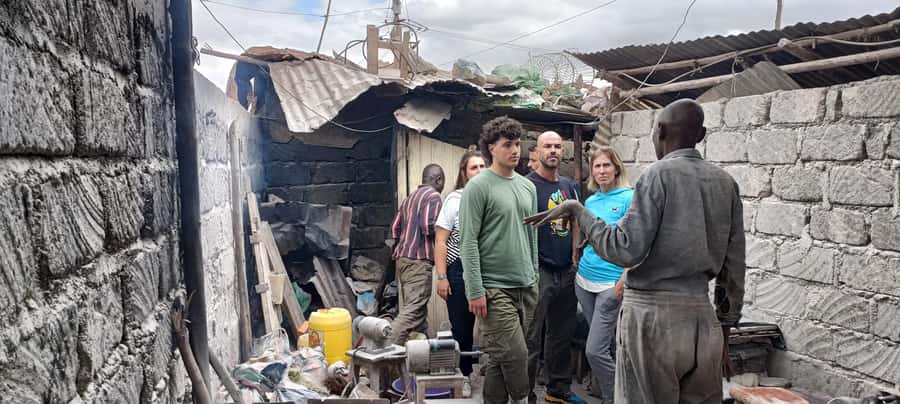
The tour starts at a real Nairobi gathering point, Ayany Equity Bank Kibera, a busy, practical place where locals go about their day. That matters because it sets the tone. You are not dropped into a staged attraction. You begin where people actually live, work, and move through the neighborhood.
From there, your guide steers you through Kibera’s maze of streets. You’ll hear the “why” behind what you see, and you’ll get prompts for questions. In the reviews, Collins stood out as a guide who checked in with guests and taught you what to look for, including good spots for photos. Allan also got praised for being kind and attentive, including helping people get safely sorted at the end.
For me, the most useful part of a resident led start is how it changes your pace. You slow down, you ask, and you understand that the settlement is not a single story. It’s a living place with routines, tradeoffs, and community systems that keep working despite pressure.
More City Tours in Nairobi
- Nairobi Historical Walking City Tour
★ 5.0 · 258 reviews - Nairobi City Walking Tour with Traditional Kenyan Lunch
★ 5.0 · 106 reviews - Nairobi: Private 4-Hour City Tour
★ 4.5 · 68 reviews
A Safety Plan That Helps You Feel Steady
This tour is built around safety protocols and a guided approach. The listing emphasizes safe exploration and a structured safety briefing. In practice, that means you are not wandering at random. Your route is guided, and the group stays together.
There are also clear rules on what you should bring and wear. Stick to comfortable, closed-toe shoes. Leave high heels at home. The tour also states you should not bring weapons or sharp objects, and you should not bring anything explosive. Bare feet and nudity are not allowed.
One detail I really appreciate is that the guide doesn’t only talk safety. The reviews mention guides staying with you until you’re back on track for transport, including waiting for a taxi. That is a small thing that can mean a lot when you’re out of your comfort zone.
If you hate feeling rushed, this is still a walking tour, so you’ll want to be ready for some uneven ground and tight paths. Bring patience for the kind of slow, human pace that comes with walking through a residential neighborhood.
Agape Hope Children Centre: Where Your Ticket Turns Practical

A key stop is Agape Hope Children Centre, described as a sanctuary in the middle of a hard reality. This is where the tour shifts from seeing to understanding. The center is part of the experience for a reason: it links your visit with education, care, and empowerment efforts run by people connected to Kibera.
The route also mentions how guides handle the visit with respect and sensitivity. That matters because a center like this can easily turn into a one-way photo moment if you’re not careful. Here, the framing is about connection, not spectacle.
I also like that the tour does not just point at problems and move on. It offers you a place where support is active. The reviews explicitly connect the ticket to impact in children’s lives, and that connection helps you understand why this tour exists beyond “sightseeing.”
You can think of it like this: Nairobi can be all skyline and big attractions, but this stop reminds you that local solutions are happening right now, and your role is to show up respectfully and support the work through the tour structure.
Photo Stops and the Chocolate City Route Through Kibera

Kibera is sometimes called the Chocolate City, and you’ll likely see why in the way people reference it in local conversation and photo culture. But on this tour, that nickname is not the point. The point is what the route teaches you as you walk.
The tour includes photo stops and guided touring. It also lists a bus tour and a self-guided segment, plus a safety briefing that sets boundaries and expectations. That mix can be useful. Walking shows you the texture of streets. A short bus segment can help you cover distance without exhausting the whole group. A self-guided segment can give you a moment to look, take a breath, and process what you just learned with your guide nearby.
In the reviews, one common theme is that guides explained what you were seeing and why conditions look the way they do. Get ready for frank answers. If you ask good questions, your guide can connect details to the bigger picture, like how the settlement functions day to day.
My practical tip: treat the photo stops like checkpoints. Use them to ask, Where are we? Why is this spot important? What should I notice here that tourists usually miss?
More Walking Tours in Nairobi
- Nairobi: Historic and Modern Highlights Walking Tour
★ 4.8 · 703 reviews - Nairobi Downtown Walking Tour
★ 4.7 · 208 reviews - Nairobi Walking Tour: Downtown & City Tour
★ 4.8 · 32 reviews - Day tour to Hells Gate, Lake Naivasha and Crescent Island Walk
★ 5.0 · 26 reviews
Toi Market: Learn the Rhythm Without Getting Pushed
Another stop on the route is Toi Market. This is where you’ll feel Kibera’s daily energy through commerce and community life. Expect color, sound, and smells that come from people selling, buying, and bargaining.
This part is valuable because markets are where the settlement’s normal life shows up. You’re not just seeing housing and alleys. You’re seeing work, trade, and social interaction.
The reviews also highlight something I’m glad you can count on: there’s no forced shopping. One Japanese review specifically appreciated that there was no pressure to buy during the tour. That’s a huge deal for me, because I don’t want “buy something now” to hijack the experience.
Even so, if you want to buy something, ask casually and keep it respectful. If you don’t want to buy, just focus on conversation and observation. A market visit can be a two-way street when you treat it like real life, not a souvenir aisle.
Beadwork Factory and the Community Project That Puts Skills on Display
One of the most concrete parts of this tour is beadwork. You’ll visit a beadwork factory and also participate in a community based beadwork project. That gives you a chance to see craft skills and the kind of small-scale economic activity that supports families.
Why this matters: handmade goods are more than objects here. They represent training, patience, and the ability to turn a skill into income in a place with limited options. When a tour includes both a project participation element and a factory visit, you’re not just passing through. You can understand where the work happens and how it connects to livelihoods.
I suggest treating beadwork as a conversation topic. Ask how the process works. Ask what kinds of pieces they make and who buys them. A guide can help you translate what you’re seeing into something meaningful.
Also, if you end up buying a beadwork item, you’re likely supporting the people behind the craft. It’s a more direct purchase than a generic souvenir. Your guide can tell you what makes a piece part of the community project.
The Home Visit Moment: Be Respectful, Then Let It Land

The tour includes a home visit. That’s powerful and also delicate. A home visit changes how you should behave. You should keep your tone low, your movements gentle, and your questions thoughtful.
The tour framing emphasizes safety and comfort throughout, and guides are there to manage the situation. Still, you should mentally prepare for an experience that feels personal. This is not a museum. It’s someone’s space.
A useful way to approach it is to focus on listening. If you’re offered context about daily routines, take it in. Avoid turning the visit into a checklist of what you want to photograph. If you do take photos, follow the guide’s direction and be polite.
After the home visit, you often feel the strongest shift in perspective. That’s when the tour stops being information and becomes understanding, the kind you can’t unsee once you’ve heard a story from inside a home.
Time, Pace, and What Two Hours Really Means
The experience is listed at about two hours. Realistically, that includes the safety briefing and the moving between stops like Agape Hope Children Centre, markets, beadwork, and the home visit component.
The itinerary also indicates a range of formats. You’ll have guided walking, photo stops, a bus segment, and a self-guided part. That blend helps different comfort levels, but it also means you should expect a schedule with some tight turnarounds.
Your best move is to dress for traction and endurance. Comfortable, closed-toe shoes are required. Avoid anything that slows you down, like stiff new shoes or anything with tricky soles. Bring a bottle of water needs are covered with bottled water included.
If you get motion sickness, note that the activity is not suitable for people with motion sickness, likely because of the bus segment. Also, this is not a laid-back stroll. You’re moving through streets and tight areas with a group, so keep your mindset flexible.
Price and Value: Why $15 Can Add Up to More Than Sightseeing

The price is $15 per person. For Nairobi, that’s a low ticket for a guided, structured visit that includes multiple stops and direct community connections.
What you’re paying for is not just a guide walking with you. You’re paying for:
- A professional English speaking guide (and other language options)
- Bottled water
- A visit to Agape Hope Children Centre
- A beadwork factory visit and community beadwork project participation
- A home visit
- Time spent on safety briefing and guided navigation
That combination is why the value can feel strong. Many budget tours in big cities give you a camera route. Here, you’re given entry points into real local efforts and daily life. The review from Monique described the tour as more than a tour, tied to impact in children’s lives through the ticket.
Still, manage expectations. This is not a luxury experience. It’s an honest one. The value is in respect, understanding, and supporting local initiatives directly.
Language Options, and One Practical Booking Tip
The tour offers English, French, German, Japanese, Italian, and Spanish. That’s great on paper.
Here’s the practical reality to keep you comfortable: one Japanese review said the guide was still working in English even though Japanese was selected in the booking language field. I can’t guarantee how that will work for your departure, but if Japanese matters a lot for you, I’d plan for the possibility that English may be used.
If you want to feel confident, learn a few basic phrases or be ready to ask questions in English. Collins and Allan were praised for being informative, and the tone in the reviews suggests guides make space for questions.
Who Should Book This Kibera Tour, and Who Should Skip It
This tour is a strong fit if you want a grounded Nairobi experience and you’re open to learning through conversation with residents. It’s also a good match if you care about practical support like education and local livelihoods, because the route includes Agape Hope and beadwork elements.
It’s not a fit if you’re dealing with mobility issues. The tour is not suitable for wheelchair users or people with mobility impairments. It’s also listed as not suitable for pregnant women and people with epilepsy. Children have age limits: children under 2 years, under 3 years, under 4 years, and babies under 1 year are not allowed, so check the exact age policy that applies to your group.
If you’re prone to motion sickness, skip it because the itinerary includes a bus tour segment. And if you don’t handle crowd and street conditions well, prepare mentally. This is an informal settlement environment, and your guide will help, but you still need a respectful, realistic mindset.
Should You Book the Nairobi Kibera Chocolate City Tour?
I’d book this tour if you want more than postcards, and you like experiences where your presence supports something real. The biggest reasons to go are resident guide storytelling and the stop pattern that ties the visit to Agape Hope and beadwork. The reviews also consistently praise guides like Collins and Allan for being kind, safety minded, and attentive.
I would not book if you need wheelchair access or you are sensitive to uneven walking conditions, motion, or a more serious human context. This is not a quick, carefree city stroll.
If you decide to go, show up ready to ask questions, follow the guide’s rules, and treat homes and community spaces with respect. Do that, and you’ll leave with understanding that sticks, not just photos on your phone.
FAQ
How long is the Nairobi Kibera Chocolate City walking tour?
The tour duration is listed as 2 hours.
How much does it cost?
The price is $15 per person.
Where is the meeting point?
The meeting point may vary depending on the option booked. Options listed include Agape Hope for Kibera and Prestige Plaza Shopping Mall.
What is included in the tour besides the guide?
The tour includes bottled water, a visit to a Agape Children Centre, participation in a community based beadwork project, a visit to a beadwork factory, and a home visit.
Does the itinerary include any transport besides walking?
Yes. The route description includes a bus tour and also mentions a self guided tour segment.
Which languages are available for the live guide?
Live tour guide languages listed are English, French, German, Japanese, Italian, and Spanish.
What should I bring and wear?
Bring comfortable shoes and wear closed-toe shoes.
What is not allowed during the tour?
High-heeled shoes are not allowed. The tour also states weapons or sharp objects, explosive substances, nudity, and bare feet are not allowed.
Are there age restrictions?
Yes. The tour lists that children under 2 years, under 3 years, and under 4 years are not allowed, and babies under 1 year are also not allowed.
Is free cancellation available?
Yes. Free cancellation is listed, with cancellation up to 24 hours in advance for a full refund.
More of Kibera
- Nairobi: Explore Kibera Slum with Local Guides
★ 4.9 · 365 reviews - Kevins Kibera Slum Tours
★ 5.0 · 213 reviews - Nairobi: Kibera Slum storytelling tour with a Local
★ 5.0 · 185 reviews - Kibera Slum Tour with Lucas
★ 5.0 · 119 reviews
Recently reviewed from Nairobi
- Amboseli Day Trip from Nairobi★ 4.5 · 3 reviews
- Ngare Ndare Day Trip★ 5.0 · 3 reviews
- Nairobi city tour★ 4.5 · 3 reviews
- Day Trip To Crescent Island And Hells Gate National Park★ 5.0 · 3 reviews
- Crescent Island Day Tour From Nairobi★ 5.0 · 3 reviews
- 1-Day Amboseli Safari★ 5.0 · 3 reviews
- 4 days group joining budget safari to Maasai Mara only★ 5.0 · 3 reviews
- 13-Day Uganda Mgahinga Gorilla Trek, Maasai Amboseli Park★ 5.0 · 3 reviews
Kibera, compared.




Kibera Slum Tour with Local Social Entrepreneurs
Read our review →


Browse the lists this tour appears in